Dove Highlights Minnesota 2026-2027: Season for Early Fall Hunting Tradition
Minnesota dove hunters finally have a clear statewide framework to work with for the current regulations cycle. Under the current 2026-2027 Minnesota hunting regulations, the published mourning dove season runs statewide from Sept. 1 through Nov. 29, 2026, with legal shooting hours from one-half hour before sunrise to sunset. The daily bag limit is 15 doves, and the possession limit is 45. Hunters also need to pay attention to licensing, HIP certification, private-land permission, and the special rules that apply on federal lands.
This guide is built for real hunters, not bots. It pulls together the latest published season structure, legal methods, bag limits, access advice, and field tips based on the current Minnesota DNR hunting regulations and the current U.S. Fish & Wildlife Service migratory bird hunting regulations. One important note: Minnesota’s current regulations booklet publishes the 2026 dove season dates within the 2026-2027 license year. Fall 2027 dove dates will be published in a later regulations cycle.
Quick Answer
Minnesota Dove Season 2026-2027 currently lists a statewide mourning dove season of Sept. 1-Nov. 29, 2026. Shooting hours are one-half hour before sunrise to sunset. The daily bag limit is 15, and the possession limit is 45. Hunters need a valid small game license if required by age/residency rules, plus HIP certification. Minnesota does not list separate dove zones or split seasons in the current official season table.
🗓️ Minnesota Dove Season 2026-2027 Overview
| Species | Season | Zone | Opening Date | Closing Date | Daily Bag Limit | Possession Limit | Status |
|---|---|---|---|---|---|---|---|
| Mourning dove | Open | Statewide | Sept. 1, 2026 | Nov. 29, 2026 | 15 | 45 | Officially published |
| White-winged dove | No separate season listed | Not separately zoned | Pending separate listing | Pending separate listing | Not separately listed | Not separately listed | Not separately listed in current Minnesota dove table |
| Eurasian collared dove | May be taken at any time where otherwise lawful | Statewide/local-law dependent | Year-round | Year-round | No season-table limit listed | No season-table limit listed | Unprotected bird in current regulations |
Official Dove Season Dates
Minnesota’s officially published mourning dove season for the current 2026-2027 regulations cycle is simple and easy to follow: Sept. 1 through Nov. 29, 2026, statewide.
That matters because Minnesota does not currently use the kind of dove split seasons you see in some southern or western states. There is no early segment, late segment, north zone, or south zone for doves in the current Minnesota table. It is one continuous statewide season.
Here is how the species breakdown looks in practical terms:
- Mourning dove: This is the main regulated dove hunting season in Minnesota.
- White-winged dove: Minnesota’s current official regulations do not publish a separate white-winged dove season or bag limit.
- Eurasian collared dove: This species is listed as an unprotected bird in the current regulations, which means it may be taken at any time where otherwise lawful.
If you hunt near the Wisconsin line, it can also help to compare nearby Midwest rules before traveling. A quick cross-border reference is Wisconsin dove season.
🌎 Dove Hunting Zones in Minnesota
For doves, Minnesota keeps things straightforward.
No dove zones in the current official season table
Minnesota does not list:
- a north zone
- a south zone
- a central zone
- a coastal zone
- special dove management units
Instead, the current mourning dove season is statewide.
That is worth highlighting because federal migratory bird frameworks allow states to use zones and split seasons for some migratory birds. Minnesota simply is not using separate dove zones in the current published season structure.
For hunters, that means less confusion and easier trip planning. If you are legal in Minnesota during the published statewide season, the main variables become land access, habitat, and local conditions, not zone boundaries.
🎯 Daily Bag Limits
| Species | Daily Limit | Possession Limit | Special Rules |
|---|---|---|---|
| Mourning dove | 15 | 45 | Counts under the official statewide dove season |
| White-winged dove | Not separately listed | Not separately listed | No separate Minnesota season table entry found |
| Eurasian collared dove | No official season-table limit listed | No official season-table limit listed | Listed as an unprotected bird |
For most hunters, the number to remember is easy: 15 daily, 45 in possession for mourning doves.
⏰ Legal Hunting Hours
Minnesota legal shooting hours for mourning doves are:
- One-half hour before sunrise
- Until sunset
That applies throughout the statewide dove season.
Opening day exceptions
Minnesota’s current official dove pages and regulations do not list a special first-day noon opener or another opening-day exception for doves. So hunters should plan around the standard legal hours from day one.
Federal rule backdrop
Federal migratory bird regulations set the outer framework for season dates, bag limits, and shooting hours. Traditionally, dove shooting hours remain one-half hour before sunrise to sunset, and Minnesota follows that standard in its published dove rules.
🪪 Licenses Needed
License price summary
| License/Requirement | Minnesota Resident | Nonresident | Notes |
|---|---|---|---|
| Small game license, age 18-64 | $22 | $102 | Required if otherwise license-eligible |
| Small game license, age 16-17 | $5 | $5 | Low-cost youth rate |
| Small game license, age 65+ | $13.50 | N/A | Resident senior rate |
| Under age 16 | No small game license required | No small game license required | Check all general youth rules before hunting |
| HIP certification | No separate fee listed | No separate fee listed | Required for licensed dove hunters |
| State waterfowl stamp | Not required for doves | Not required for doves | Dove hunting is different from duck/goose hunting |
| Federal duck stamp | Not required for doves | Not required for doves | Only needed for federal waterfowl requirements, not doves |
What most Minnesota dove hunters need
Most adult dove hunters need:
- A valid small game license
- HIP certification
- Permission for private land, if applicable
Important exemptions and special cases
- Residents may hunt small game at their principal residence without a license.
- Resident military members on qualifying leave may hunt small game without the usual license requirement.
- Recently discharged qualifying residents may also have small game exemptions.
- Residents with a 100% service-related disability may obtain a free small game license.
- Nonresident active members of the Minnesota National Guard may qualify for resident rates.
🔫 Legal Hunting Methods
Minnesota’s dove regulations are hunter-friendly, but they still have a few rules that matter.
Shotguns
Dove hunters must use a shotgun that is not capable of holding more than three shells total. If needed, use a plug that keeps the gun within the legal limit.
Gauge restrictions
I did not find a dove-specific Minnesota gauge restriction in the current official rules. Standard lawful shotgun use still applies.
Nontoxic shot
Lead shot is generally allowed for dove hunting in Minnesota, but not everywhere.
Use nontoxic shot on:
- Federal wildlife refuges
- Waterfowl Production Areas
- Any property with area-specific nontoxic requirements
Retrievers
Dogs are not just legal; they are smart insurance. Doves disappear fast in weeds, stubble, and grass. Minnesota also allows limited retrieval entry rules on foot in some situations, which can help recover birds cleanly and ethically.
Decoys
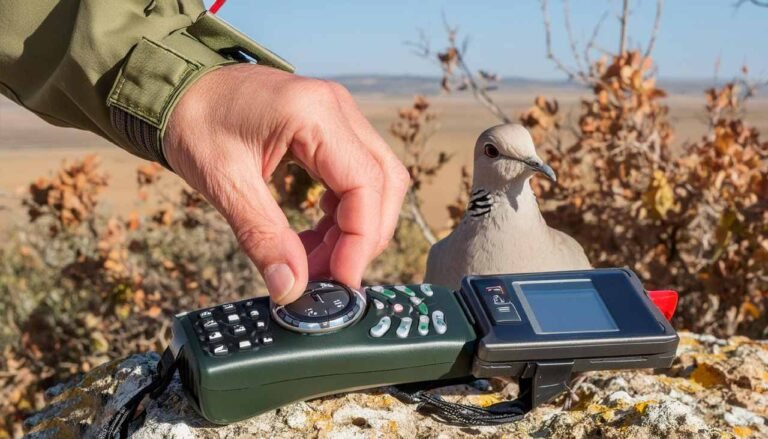
Motorized decoys are legal for doves in Minnesota. Remote controls may be used.
Baiting laws
This is a big one. Dove baiting rules are different from some waterfowl situations, but hunters still need to be careful.
Legal setups generally include crops that are:
- standing,
- properly harvested,
- properly planted, or
- lawfully manipulated for dove hunting by mowing, shredding, discing, rolling, chopping, trampling, flattening, or burning.
What you cannot do is scatter grain or seed after it has been removed from or stored off the field.
Motor vehicle restrictions
You may not take wild animals with a firearm from a motor vehicle. Road hunting around farmsteads, road rights-of-way, and buildings is also a fast way to invite safety and trespass problems.
📍 Best Places to Hunt Doves in Minnesota
Minnesota does not run the kind of famous statewide public dove-field program seen in some other states. Still, there is plenty of opportunity if you focus on habitat.
1. Western and southern Minnesota ag country
This is the heart of Minnesota dove hunting. DNR guidance specifically points hunters toward the agricultural areas of western and southern Minnesota.
2. Wildlife Management Areas (WMAs)
Minnesota has a huge WMA system, and many areas provide field edges, grasslands, wetlands, and nearby crop country that attract doves.
3. Walk-In Access parcels
WIA land can be a strong option where habitat lines up with grain, water, and roost cover.
4. Waterfowl Production Areas
Many WPAs are open to hunting and can hold birds, especially where open feeding areas are nearby. Remember the nontoxic shot rule on federal lands.
5. Minnesota Valley National Wildlife Refuge
Select refuge areas are open to hunting under both state and refuge-specific rules. Always check unit maps, access limits, and time restrictions before hunting.
6. State forests and national forests
State forests, the Chippewa National Forest, and the Superior National Forest are open to hunting in many places, but they are usually secondary dove options compared to open agricultural country.
7. Private farms with permission
In Minnesota, this is still one of the best plays. Sunflower, oat, wheat, and weedy grain fields can be excellent if you secure access legally.
🧠 Top Dove Hunting Tips
- Scout western and southern Minnesota first.
- Focus on oat, wheat, sunflower, and recently harvested grain fields.
- Watch morning and late-afternoon flight lines before opening day.
- Hunt the path between food, water, grit, and roost trees.
- Look for open muddy edges on cattle ponds and small water sources.
- Set decoys on fence wires, dead limbs, and field-edge trees.
- Don’t ignore ragweed and foxtail patches with bare ground.
- Use a dog if possible; downed birds vanish quickly in stubble.
- Mark every fall immediately before shooting again.
- Bring extra water for dogs because early season heat can be rough.
- Practice crossing shots; doves are faster than many new hunters expect.
- Stay away from houses, barns, livestock, and roadside shots.
- Get permission on agricultural land even if it is not posted.
- Carry steel or other nontoxic loads when hunting federal ground.
- Know your bird ID so you don’t confuse doves with nighthawks, kestrels, killdeer, or meadowlarks.
🔄 Recent Regulation Changes for 2026-2027
The biggest 2026 changes I found in the official Minnesota regulations are not major dove-specific changes.
Instead, the notable updates are:
- the hunting booklet now includes waterfowl regulations in the same publication,
- Minnesota’s electronic licensing system has been modernized,
- and several unrelated changes affect deer and other species.
For dove hunters, the key takeaway is simple: the current official mourning dove season structure remains substantially unchanged in substance. The statewide season, legal hours, and 15/45 limit remain the headline items.
🦺 Hunter Safety Tips
Dove season looks easy, but it can get sloppy fast if hunters stop paying attention.
- Keep your muzzle up and safe when birds swing low over partners.
- Wear eye and hearing protection every trip.
- Watch heat stress in both hunters and dogs during early September.
- Carry enough water, especially in open crop country.
- Confirm the target bird before mounting the gun.
- Never shoot at birds on power lines.
- Avoid low-angle shots toward roads, farmsteads, and hidden hunters.
- Retrieve every bird you hit and count it toward your limit.
- Respect landowners, gates, crops, and livestock.
🕊️ Common Dove Species Found in Minnesota
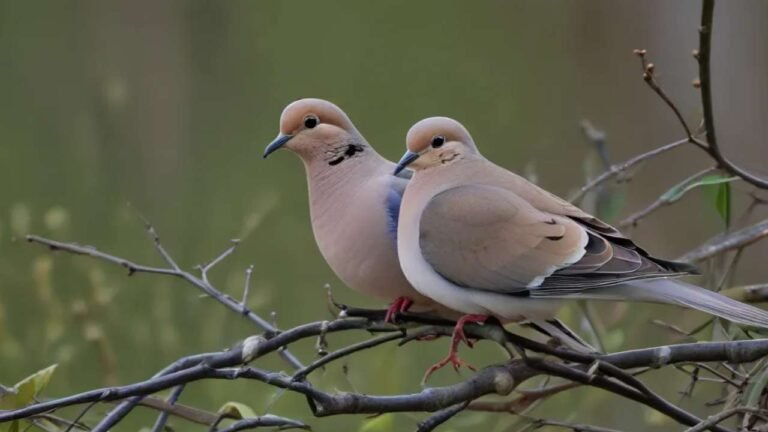
Mourning Dove
Identification: Slim, gray-brown, pointed tail, fast wingbeats.
Habitat: Grain fields, pasture edges, open country, farm country.
Migration: Strong early-fall mover in Minnesota.
Best hunting strategy: Pass-shoot near food-water-roost routes.
Eurasian Collared-Dove
Identification: Larger, paler bird with a black neck collar and squarer tail.
Habitat: Town edges, farmsteads, grain sites, human-modified areas.
Migration: Mostly local and less migratory.
Best hunting strategy: Focus on lawful setups around farm country and always confirm species before shooting.
White-winged Dove
Identification: Bulkier than a mourning dove, with obvious white in the wing in flight.
Habitat: Uncommon in Minnesota compared with southern states.
Migration: Not a routine Minnesota target bird.
Best hunting strategy: Treat this as an identification issue first. Minnesota does not publish a separate white-winged dove season in the current official table, so verify regulations before intentionally targeting one.
❓ Frequently Asked Questions
When does Minnesota dove season open in 2026?
Minnesota’s officially published mourning dove season opens Sept. 1, 2026.
When does Minnesota dove season close?
The current statewide mourning dove season closes Nov. 29, 2026.
What is the daily bag limit for mourning doves in Minnesota?
The daily bag limit is 15.
What is the possession limit for dove hunting in Minnesota?
The possession limit is 45, which is three times the daily limit.
Do I need HIP certification to hunt doves in Minnesota?
Yes. If you are a licensed dove hunter, you must be HIP certified.
Do I need a federal duck stamp for Minnesota dove hunting?
No. A federal duck stamp is not required for doves.
Are there dove hunting zones in Minnesota?
No. Minnesota currently publishes a statewide dove season with no separate dove zones.
Can I use lead shot for dove hunting in Minnesota?
Usually yes on non-federal ground, but nontoxic shot is required on federal refuges and Waterfowl Production Areas.
Are motorized decoys legal for Minnesota dove hunting?
Yes. Minnesota allows motorized dove decoys, including remote-controlled use.
Can I shoot Eurasian collared doves year-round in Minnesota?
Minnesota lists Eurasian collared doves as unprotected birds, so they may be taken at any time where otherwise lawful.
Final Thoughts
If you want the short version, here it is: Minnesota Dove Season 2026-2027 is straightforward. The official statewide mourning dove season runs Sept. 1-Nov. 29, 2026, with 15 birds daily, 45 in possession, and legal shooting hours of one-half hour before sunrise to sunset. There are no dove zones to juggle, but there are still plenty of details that matter, especially HIP certification, shotgun plug rules, federal-land nontoxic shot rules, and private-land permission.
For the best hunts, think like a Minnesota dove: grain, bare ground, water, and travel lanes. Western and southern ag country remain the top bet. Before opening day, always verify the final area rules for the exact land you plan to hunt, especially on refuges, WPAs, and other public ground.