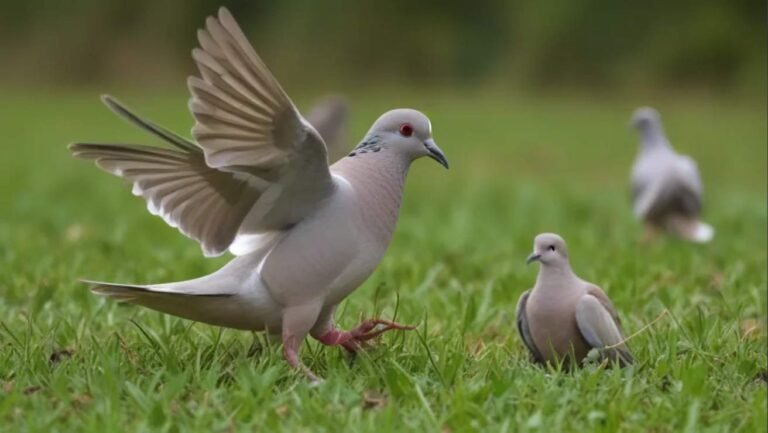
Mourning Doves Wyoming: Understanding 2026-2027 Season Schedule for Hunting
Wyoming dove hunters have it pretty simple in 2026-2027: the regular mourning dove season runs statewide from Sept. 1 through Nov. 29, 2026, with a daily bag limit of 15 and a possession limit of 45. Unlike some states, Wyoming does not split dove hunting into north, south, or coastal zones. You get one straightforward statewide season, plus an extended falconry season from Nov. 30 through Dec. 16. Hunters also need a valid Wyoming game bird license, a conservation stamp, and a free HIP permit before heading afield.
For planning purposes, the bigger variables in Wyoming are not zones—they are weather, water, harvestable crop edges, and early migration timing. Most resident birds start moving with the first cold snap, often from late August into mid-September, while migrants from farther north can keep action going into early fall. Federal migratory bird rules still set the outer boundaries for season structure, legal hours, baiting restrictions, and other baseline rules every state must follow.
Quick Answer
When does Wyoming dove season open in 2026?
Wyoming’s regular mourning dove season opens Sept. 1, 2026, and closes Nov. 29, 2026.
What is the bag limit?
The daily bag limit is 15 mourning doves and the possession limit is 45.
Are there dove zones in Wyoming?
No. Wyoming uses a statewide dove season, not multiple dove zones.
What do you need to hunt doves in Wyoming?
Most hunters need a Wyoming game bird license, a conservation stamp, and a free HIP permit. A Federal Duck Stamp is not required for dove hunting.
🗓️ Wyoming Dove Season 2026-2027 Overview
| Species | Season | Zone | Opening Date | Closing Date | Daily Bag Limit | Possession Limit | Status |
|---|---|---|---|---|---|---|---|
| Mourning Dove | Regular season | Statewide | Sept. 1, 2026 | Nov. 29, 2026 | 15 | 45 | Finalized |
| Mourning Dove | Extended falconry season | Statewide | Nov. 30, 2026 | Dec. 16, 2026 | Follows falconry rules | Follows falconry rules | Finalized |
| White-winged Dove | No separate season published | N/A | N/A | N/A | N/A | N/A | Not separately listed |
| Eurasian Collared-Dove | Check current WGFD guidance before targeting | N/A | N/A | N/A | N/A | N/A | Not separately listed in the 2026 brochure |
Wyoming’s regular dove opportunity is built around mourning doves, and that is the species clearly spelled out in the 2026 state regulations. If you are trying to target another dove species, especially one not specifically listed in the Wyoming brochure, verify the latest species guidance before you hunt.
📅 Official Dove Season Dates
Mourning dove
For the 2026-2027 hunting year, Wyoming’s mourning dove season is Sept. 1 through Nov. 29, 2026. That is the main season most hunters care about, and it applies statewide.
White-winged dove
Wyoming’s 2026 regulations do not publish a separate white-winged dove season line. If you see white-winged dove content elsewhere online, do not assume it applies to Wyoming.
Eurasian collared-dove
The 2026 Wyoming game bird brochure does not list a separate regulated Eurasian collared-dove season in the mourning dove table. If you plan to hunt them specifically, check current Wyoming guidance before your trip.
Split seasons
Wyoming does not use a split mourning dove season in 2026. It is one continuous statewide season.
Falconry add-on
There is an extended falconry season for mourning doves from Nov. 30 through Dec. 16, 2026.
🧭 Dove Hunting Zones in Wyoming
This section is short because Wyoming keeps it simple.
Wyoming does not divide mourning dove hunting into:
- north zone
- south zone
- central zone
- coastal zone
- separate dove management units
Instead, the state uses a single statewide season for mourning doves. That is useful for traveling hunters because you do not have to worry about crossing a dove-zone line the way you would in some southern states.
🎯 Daily Bag Limits
| Species | Daily Limit | Possession Limit | Special Rules |
|---|---|---|---|
| Mourning Dove | 15 | 45 | Statewide regular season |
| Mourning Dove (falconry) | Check falconry provisions | Check falconry provisions | Extended falconry season only |
| White-winged Dove | No separate Wyoming listing | No separate Wyoming listing | Verify current state guidance |
| Eurasian Collared-Dove | Verify current state guidance | Verify current state guidance | Not listed in the 2026 dove table |
A practical note: if the species is not clearly listed in the current Wyoming dove regulations, do not guess. That is how otherwise careful hunters end up with avoidable citations.
⏰ Legal Hunting Hours
Wyoming follows the standard migratory bird rule: one-half hour before sunrise until sunset for migratory game birds, including mourning doves.
That means:
- no all-day exception after sunset
- no special noon opener
- no unique Wyoming opening-day dove-hour change
If you are used to states that tweak opening-day dove hours, Wyoming is more straightforward. Check the sunrise time for your exact location and back up 30 minutes.
🪪 Licenses Needed
Here is the basic license picture for Wyoming dove hunting in 2026.
License price summary
| Item | Resident | Nonresident |
|---|---|---|
| Daily Game Bird/Small Game License | $9.00 | $22.00 |
| 12-Month Game Bird License | $16.00 | $74.00 |
| 12-Month Game Bird/Small Game License | $27.00 | $74.00 |
| Nonresident Youth Game Bird/Small Game (12-month) | — | $40.00 |
| Conservation Stamp | $21.50 | $21.50 |
| HIP Permit | Free | Free |
What most dove hunters need
Most hunters age 14 and older will need:
- a valid Wyoming game bird license
- a Wyoming conservation stamp
- a free Wyoming HIP permit
Federal requirements
A Federal Duck Stamp is not required for mourning dove hunting in Wyoming. That stamp is for hunters pursuing ducks, geese, and mergansers.
Youth exemptions
- Resident youth under 14 may hunt game birds without a Wyoming game bird license if accompanied by an adult.
- Nonresident youth under 14 may hunt without their own license if accompanied by a licensed adult, but their birds count toward the adult’s limit unless the youth has the proper license and stamp.
Senior and military exemptions
In the dove regulations reviewed, Wyoming does not call out a special dove-specific senior or military exemption. Standard licensing rules apply unless you qualify for a separate category through WGFD.
🔫 Legal Hunting Methods
Wyoming’s dove rules are hunter-friendly, but the details matter.
Shotguns
A shotgun used for migratory birds must be limited to no more than three shells total in the magazine and chamber combined. In plain English: keep the gun plugged.
Gauge restrictions
Wyoming’s 2026 dove regulations do not impose a separate gauge restriction for dove hunters. The critical equipment rule is the three-shell maximum.
Nontoxic shot
For most Wyoming mourning dove hunts, nontoxic shot is not required. The important exceptions are:
- Springer/Bump Sullivan WHMA
- Table Mountain WHMA
- National Wildlife Refuges
If you hunt those places with a shotgun, bring steel or another legal nontoxic option.
Retrievers
Well-trained retrievers are a big help in sunflower edges, cattail margins, and crop stubble. Keep dog work controlled, especially on refuges and public-access parcels with special rules.
Decoys
Traditional decoy spreads are a solid Wyoming tactic, especially around water and flyways between roost trees and feed fields. The regulations reviewed do not prohibit ordinary decoys.
Electronic calls
Electronic calls are not legal for migratory bird hunting. Wyoming prohibits records, tapes, and electronically amplified bird calls for doves.
Baiting
Do not hunt doves by the aid of baiting or over a baited area. This is one of the fastest ways to ruin a hunt and earn a ticket.
Motor vehicle restrictions
You cannot take migratory birds:
- from a motor-driven land, water, or air conveyance
- from a sailboat
- by chasing or rallying birds with a motor vehicle
On some public areas, vehicle use is also restricted to designated roads.
🌾 Best Places to Hunt Doves in Wyoming
Wyoming does not have the famous public dove field system you see in a few southern states. Instead, good hunting usually comes from a mix of WHMAs, refuges, Walk-In Areas, irrigated valleys, and water-rich edges.
Table Mountain WHMA
A proven southeastern Wyoming option near Torrington. It offers dove opportunity, vehicle rules are clearly posted, and nontoxic shot is required when hunting with a shotgun.
Springer/Bump Sullivan WHMA
Another Goshen County area worth real scouting time. It holds doves and other birds, and it also requires nontoxic shot for shotgun hunters.
Ocean Lake WHMA
Near Riverton, Ocean Lake mixes wetland habitat, cropland influence, and strong bird diversity. It is better known for waterfowl and pheasants, but it also offers legit dove opportunity.
Seedskadee National Wildlife Refuge
This refuge allows mourning dove hunting under Wyoming regulations for open areas and seasons. Good access planning matters here.
Cokeville Meadows National Wildlife Refuge
Mourning dove hunting is allowed in designated refuge areas under state and refuge rules. Read site-specific parking, access, and retrieval rules before the hunt.
Walk-In Hunting Areas
Wyoming’s Access Yes Walk-In Areas can be excellent for hunters who want less pressure and private-land-style habitat without needing a permission slip. These areas are especially useful when you find grain, water, and a dependable evening flight.
🧠 Top Dove Hunting Tips
Here are 15 Wyoming-specific tips that actually help:
- Scout water first, especially stock ponds, canal edges, and small wet pockets near feed.
- In dry years, water becomes even more important than feed.
- Be in position for the first 45 minutes after legal shooting time.
- Do not quit after the opener; mid-September migrant pushes can be excellent.
- Watch for the first cold snap because it changes local bird numbers fast.
- In irrigated country, glass cut grain, silage edges, and weedy margins in the evening.
- Wyoming wind matters—set up where birds can crosswind or quarter in, not directly behind you.
- Carry more shells than you think you need, but keep your gun plugged to three.
- If hunting Springer or Table Mountain, pack nontoxic shot only.
- Use a stool and hide in sparse cover instead of over-brushing your setup.
- Hunt the travel lane between roost trees and feed, not just the feed itself.
- Midday can still produce around isolated water when afternoons are hot.
- Bring a dog if you can; Wyoming stubble and grass can hide birds surprisingly well.
- Use Walk-In Areas when public hotspots get crowded.
- Stop shooting at birds that are too high. Clean kills and easy retrieves beat sky-busting every time.
🔄 Recent Regulation Changes for 2026-2027
For Wyoming dove hunters, the good news is that there does not appear to be a major dove-specific overhaul in the 2026 regulations. The core structure remains familiar:
- statewide mourning dove season
- 15-bird daily bag
- 45-bird possession limit
- HIP required
- no Federal Duck Stamp for doves
- one-half hour before sunrise to sunset legal hours
- three-shell shotgun rule
At the federal level, the U.S. Fish and Wildlife Service proposed a more streamlined process for future migratory bird rulemaking in 2026, but that does not change the need to follow Wyoming’s published season dates and methods this fall.
🦺 Hunter Safety Tips
Dove hunting feels simple, but accidents usually happen on “easy” hunts.
- Keep muzzles up and safe when birds swing low behind the line.
- Wear eye and hearing protection every trip.
- Mark downed birds immediately and send the dog fast.
- Know your backdrop before shooting at crossing birds.
- Carry water in early September; Wyoming heat can sneak up on you.
- Protect dogs from heat, cactus, barbed wire, and hot vehicle floors.
- Positively identify every bird before shooting.
- Respect property lines, refuge boundaries, and access signs.
- Pick up hulls and leave fields cleaner than you found them.
🕊️ Common Dove Species Found in Wyoming
Mourning Dove
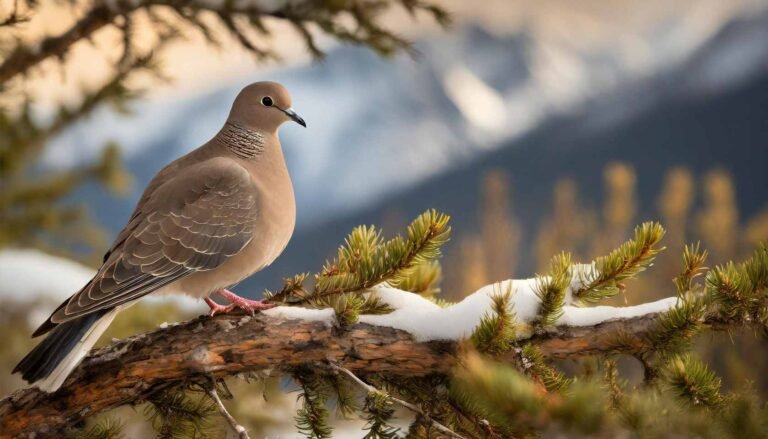
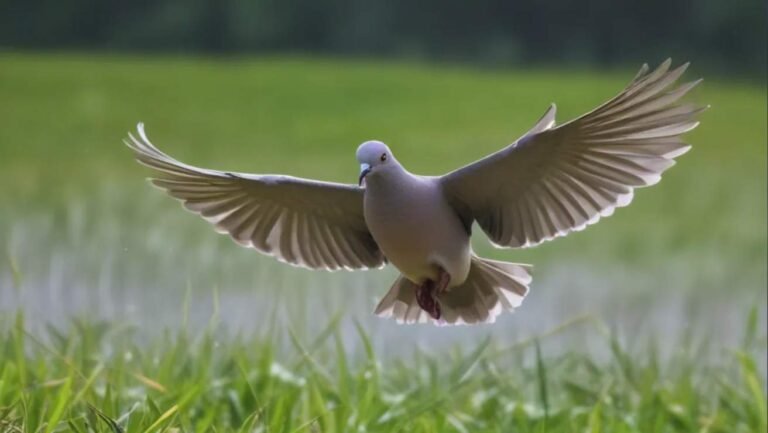
Identification: Slim body, pointed tail, fast wingbeats, soft gray-brown color.
Habitat: Grain edges, shelterbelts, riparian corridors, stock water, and irrigated ground.
Migration: Local birds often shift early, and fresh birds can arrive in September.
Best strategy: Hunt water in dry conditions and feed-to-roost flight lines in the evening.
Eurasian Collared-Dove
Identification: Larger than a mourning dove, pale overall, with a black neck collar and broader shape.
Habitat: Town edges, farmsteads, grain facilities, and shelterbelts near people.
Migration: Less migratory than mourning doves.
Best strategy: Because Wyoming’s 2026 dove brochure does not separately list this species in the mourning dove table, verify current take rules before targeting it.
White-winged Dove
Wyoming’s 2026 regulations do not provide a separate white-winged dove season listing. If one turns up in conversation or in online search results, do not assume that advice fits Wyoming.
❓ Frequently Asked Questions
When does Wyoming dove season start in 2026?
It opens Sept. 1, 2026.
When does Wyoming mourning dove season end?
The regular season closes Nov. 29, 2026.
Are there dove hunting zones in Wyoming?
No. Wyoming uses a statewide season for mourning doves.
What is the daily limit for doves in Wyoming?
The daily bag limit is 15 mourning doves.
What is the possession limit for doves in Wyoming?
The possession limit is 45 mourning doves.
Do I need a HIP permit to hunt doves in Wyoming?
Yes. Licensed hunters pursuing doves need a free Wyoming HIP permit.
Do I need a Federal Duck Stamp for dove hunting?
No. A Duck Stamp is not required for Wyoming dove hunting.
Do I have to use steel shot for dove hunting in Wyoming?
Usually no, but nontoxic shot is required on Springer/Bump Sullivan WHMA, Table Mountain WHMA, and National Wildlife Refuges.
Can kids hunt doves in Wyoming?
Yes. Youth under 14 have special rules, but the exact license requirement depends on residency and whether they want their own bag limit.
✅ Final Thoughts
Wyoming Dove Season 2026-2027 is refreshingly straightforward: statewide dates, clear limits, and no confusing dove zones. For most hunters, success will come down to scouting water, reading weather, and finding the right mix of grain, cover, and evening flight lines. The legal side is just as important—carry your license, conservation stamp, and HIP permit, keep the shotgun plugged, and pay attention to nontoxic-shot exceptions on certain public areas.
If you are publishing related content, a natural companion piece for regional readers is Colorado Dove Season.