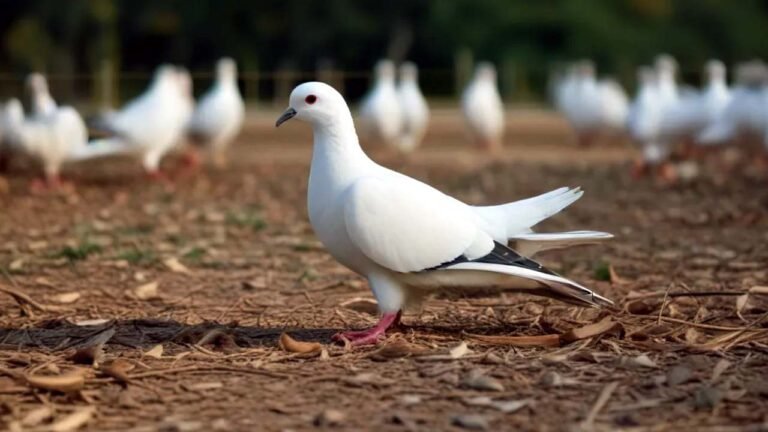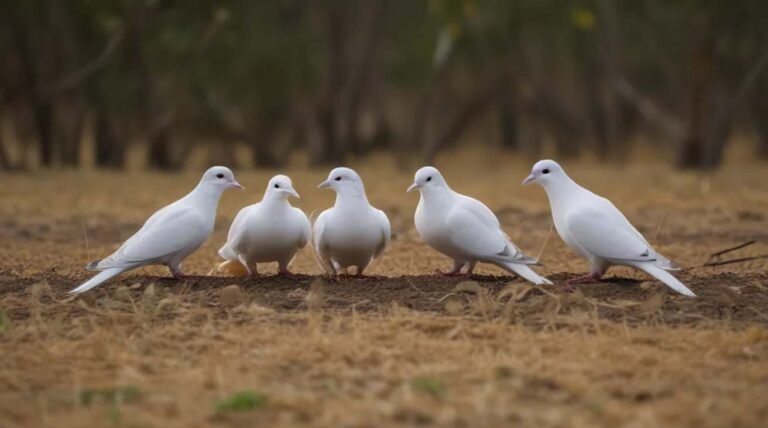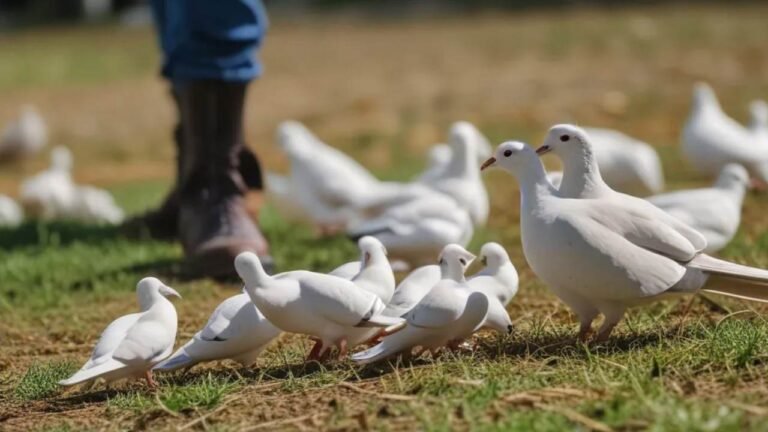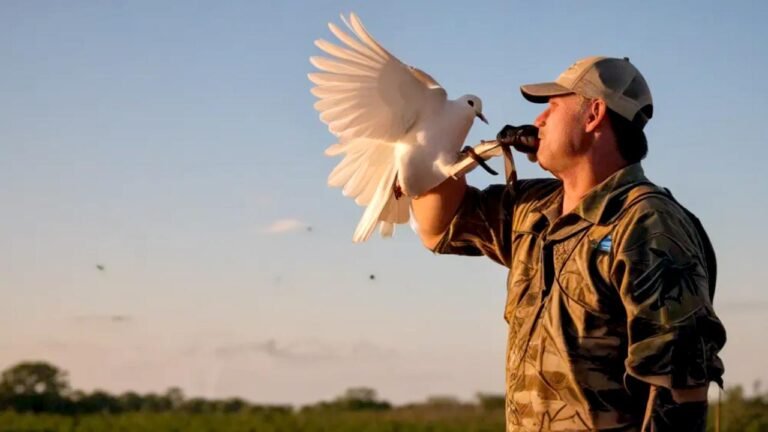
Maryland Opens Season for Dove Hunt 2026-2027
If you call September in Maryland “opening day for the whole year,” you’re not alone. The Maryland dove season 2026-2027 kicks off September 1, 2026, and gives hunters three distinct segments running all the way into early January 2027. It’s the state’s traditional curtain-raiser for fall hunting — and it’s one of the most accessible hunts Maryland offers, with managed public dove fields across nearly every county.
Before you plan a single hunt, understand the basics: the daily bag limit is 15 doves (45 in possession), the season runs statewide with no zone divisions, and every hunter — even license-exempt landowners — must carry the $15 Maryland Migratory Game Bird Stamp with free Harvest Information Program (HIP) certification. Shooting hours start at noon for the opening segment, another Maryland quirk worth knowing. All dates below come from official Maryland Department of Natural Resources (DNR) publications for 2026-2027, consistent with the current federal framework from the U.S. Fish and Wildlife Service.
📌 Quick Answer
Dove season in Maryland opens September 1, 2026, and runs in three statewide segments: Sept. 1–Oct. 17, Oct. 24–Nov. 27, and Dec. 19, 2026–Jan. 9, 2027. The daily bag limit is 15 mourning doves, with a possession limit of 45. Shooting hours are noon to sunset for the opening segment and one-half hour before sunrise to sunset for later segments. Migratory birds may not be hunted on Sundays in Maryland. A hunting license, the $15 Maryland Migratory Game Bird Stamp, and HIP certification are required — but no federal duck stamp is needed for doves.
📅 Maryland Dove Season 2026-2027 Overview
Here’s the complete official season picture at a glance. These dates were published by Maryland DNR for 2026-2027 and align with federal frameworks for the Atlantic Flyway:
| Species | Season | Zone | Opening Date | Closing Date | Daily Bag Limit | Possession Limit | Status |
|---|---|---|---|---|---|---|---|
| Mourning Dove | Segment 1 | Statewide | Sept. 1, 2026 | Oct. 17, 2026 | 15 | 45 | Official |
| Mourning Dove | Segment 2 | Statewide | Oct. 24, 2026 | Nov. 27, 2026 | 15 | 45 | Official |
| Mourning Dove | Segment 3 | Statewide | Dec. 19, 2026 | Jan. 9, 2027 | 15 | 45 | Official |
| White-winged Dove | Included in segments above | Statewide | Sept. 1, 2026 | Jan. 9, 2027 | Counts toward 15 | Counts toward 45 | Official (rare in MD) |
| Eurasian Collared Dove | No closed season | Statewide | — | — | No limit | No limit | Not MBTA-protected |
| Mourning Dove (Falconry) | Extended season | Statewide | Jan. 9, 2027 | Jan. 28, 2027 | 3 | 9 | Official |
🗓️ Official Dove Season Dates
Maryland runs a split, three-segment dove season — a structure that spreads opportunity across the fall and mirrors the federal maximum of 90 hunting days (Sundays excluded) within a Sept. 1–Jan. 31 framework window.
Segment 1: Sept. 1 – Oct. 17, 2026. The opener. Note the special rule: shooting hours are noon to sunset for this entire segment, not sunrise to sunset. This protects nesting and morning feeding, and it means your September hunts are strictly afternoon affairs.
Segment 2: Oct. 24 – Nov. 27, 2026. A one-week gap in mid-October lets birds redistribute. Shooting hours switch to the standard one-half hour before sunrise to sunset — hunt the morning flight for the first time this year.
Segment 3: Dec. 19, 2026 – Jan. 9, 2027. The late-season window catches doves moving south ahead of hard cold fronts. It’s the least-pressured segment at most public fields.
Other species worth knowing:
- White-winged dove: Federally, the 15-bird daily limit is an aggregate shared by mourning and white-winged doves. White-wings are only irregular visitors to Maryland, but if you identify one, it counts toward your 15.
- Eurasian collared dove: This nonnative species is not protected under the Migratory Bird Treaty Act — the 2026-2027 federal framework explicitly lists it as having no closed season and no bag limits. If Maryland law applies the federal treatment, they’re legal to take year-round; because state rules occasionally differ, confirm locally before banking on it.
- Falconry extension: Licensed falconers get an extended mourning dove season from Jan. 9–28, 2027, with a 3-bird daily limit (9 possession), Monday–Saturday only.
🗺️ Dove Hunting Zones in Maryland
Here’s a fact that surprises first-time hunters: Maryland has no dove hunting zones. Unlike waterfowl — which is divided into Eastern and Western zones along an I-83/I-695/I-95/I-495 line — the dove season is identical statewide, from the mountains of Garrett County to the marshes of Worcester County.
That’s great news for planning. One set of dates, limits, and shooting hours applies everywhere. The zone behavior you’ll actually encounter is more local: Wildlife Management Area (WMA) fields have their own schedules (see the public lands section below), so your “zone” in September is really whichever managed field’s posted hours you choose.
🎯 Daily Bag Limits
| Species | Daily Limit | Possession Limit | Special Rules |
|---|---|---|---|
| Mourning Dove | 15 | 45 | All three segment dates listed above |
| White-winged Dove | 15 (aggregate with mourning) | 45 (aggregate) | Rare in Maryland; counts toward the same daily bag |
| Eurasian Collared Dove | No limit | No limit | Unprotected species; no closed season |
A few possession rules to keep straight: the field possession limit is one day’s bag while in the field; the possession limit multiplies to 45 at your home or camp. Unlike most other migratory birds, doves may be completely field dressed before you leave the field — no wing-attachment rule applies to doves. If you transfer birds to another person, you must tag each bird with your name, address, license or DNRid number, species, count, and harvest dates.
🌅 Legal Hunting Hours
- Segment 1 (Sept. 1 – Oct. 17): Noon to sunset. This is the big one to remember — no early September mornings.
- Segments 2 and 3 (after Oct. 19): One-half hour before sunrise to sunset.
- Sundays: Migratory game birds may not be hunted on Sundays in Maryland. This is a Maryland-specific restriction that goes well beyond federal rules; check your calendar before booking a weekend hunt.
- Falconry: One-half hour before sunrise to sunset, Monday–Saturday.
- General federal rule: Migratory bird hunting is limited to the fall–winter window (Sept. 1–March 10) under treaty conventions; Maryland’s dove selections fall comfortably inside it.
🎫 Licenses Needed
You need three things for doves in Maryland — a hunting license, the $15 Maryland Migratory Game Bird Stamp, and free HIP certification. A federal duck stamp is not required for dove hunting (it applies to brant, coots, ducks, and geese only).
| License/Stamp | Resident | Nonresident | Notes |
|---|---|---|---|
| Regular Hunting License | $35 (ages 16–64) | $160 (ages 16–64) | Valid through July 31 |
| Junior License | $15 (under 16) | $80 (under 16) | Parental permission required |
| Senior License | $5 (65+) | $65 (65+) | Available in year you turn 65 |
| Apprentice License | $15 | $40 | One-time; must hunt with licensed adult 18+ |
| 3-Day Waterfowl & Small Game | — | $65 | Covers 3 consecutive days; good option for visiting dove hunters |
| Maryland Migratory Game Bird Stamp | $15 | $15 | Required for ALL migratory bird hunters, including license-exempt persons |
| HIP Certification | Free | Free | Issued with the stamp; used for harvest surveys |
Youth exemptions: Resident juniors under 16 get a one-time free annual license (plus archery and muzzleloader stamps) after completing hunter education; apprentice licenses are available annually through age 16.
Military exemptions: Maryland residents on official leave are license-exempt but must still buy the migratory game bird stamp. Active-duty members with a service-connected disability may hunt with a valid military ID; nonresidents stationed in Maryland purchase resident licenses.
Senior, veteran, and landowner notes: Holders of grandfathered Senior Lifetime Consolidated Licenses still need the migratory stamp. Residents who are 100% service-disabled veterans, former POWs, or deemed unemployable by the VA qualify for a complimentary lifetime license (migratory stamp not included), and Purple Heart recipients get a 50% discount. Landowners hunting their own property are license-exempt but still must purchase the migratory stamp and complete HIP — the stamp law applies to everyone, period.
🔫 Legal Hunting Methods
Dove hunting in Maryland is a shotgun-and-decoys game, with clear equipment rules:
- Shotguns: Only 10-gauge or smaller. Guns capable of holding more than three shells must be plugged with a one-piece filler so the magazine and chamber hold no more than three shells total.
- Shot: Lead shot is legal for doves and woodcock in Maryland (unlike waterfowl). Nontoxic shot is required at some WMAs (notably Grove Farm and Old Bohemia in Cecil County), so check each field.
- Archery: Vertical bows and crossbows may be used for doves. Air guns that shoot an arrow or bolt are also allowed for doves and woodcock.
- Decoys and retrievers: Fully legal and highly recommended. A few spinning-wing or silhouette dove decoys will pull birds into range, and a trained retriever earns its keep in cut sunflower fields.
- Electronic calls: Illegal. Federal and Maryland rules prohibit electronic calling devices for migratory birds (the light-goose seasons are the only exception).
- Baiting: Don’t do it. It’s unlawful to hunt migratory birds over bait such as corn, wheat, or other grain, and a baited area stays off-limits for 10 days after bait removal. The important exception: doves may be hunted over manipulated agricultural crops — mowed, burned, or knocked-down corn, sunflowers, wheat, and other seed plants — and the 10-day rule does not apply to that practice. That’s why managed dove fields are legal all season.
- Vehicles: Hunting from, with, or across a vehicle is prohibited for migratory birds, and loaded firearms in or on a vehicle are illegal at all times.
- Prohibited devices: No rifles, pistols, air guns firing bullets, nets, snares, traps, or explosives. No hunting on, from, or across public roads.
📍 Best Places to Hunt Doves in Maryland
Maryland DNR maintains a statewide network of managed dove fields — nearly 400 acres of planted fields you can hunt for free, most on a first-come basis in September (some require a free annual permit and daily reservation). Highlights from the official 2026-2027 Dove Field List:
- McKee-Beshers WMA (Montgomery County) — The state’s most popular spot, with four planted sites (26 acres total) off Hunting Quarter Road near Poolesville. September hours are Monday–Saturday, noon–5 p.m. Arrive early; this one fills fast.
- Idylwild WMA (Caroline County) — 20 acres near Federalsburg; opening day plus Wednesdays and Saturdays, noon–5 p.m.
- Grove Farm & Old Bohemia WMAs (Cecil County) — Permit and daily reservation required; nontoxic shot only; noon–5 p.m. on designated days.
- Myrtle Grove, Cedar Point & Chicamuxen WMAs (Charles County) — Small but productive fields near the Potomac; several open Monday–Saturday.
- LeCompte WMA (Dorchester County) — 7 acres on the Eastern Shore near Vienna.
- Cheltenham WMA & Merkle NRMA (Prince George’s County) — Close to the D.C. metro; Cheltenham requires a permit and reservation on opening day.
- Deal Island, Wellington & Maryland Marine Properties WMAs (Somerset County) — Multiple Lower Shore fields, ideal for pairing a dove hunt with a waterfowl scouting trip.
- Indian Springs WMA (Washington County) — 8 acres near Clear Spring; the Western Maryland option, open Monday–Saturday noon–sunset in September.
- Pocomoke River & E. A. Vaughn WMAs (Worcester County) — Great late-season options near the coast.
- Belle Grove & Warrior Mountain WMAs (Allegany County) — Mountainside fields for western Marylanders.
Private farmland remains the backbone of Maryland dove hunting. The hottest dove shooting is on cut corn and sunflower ground — but written landowner permission is legally required, so ask early and respect posted property. For more spots near the state line, check how our neighbors run things — for example, the Virginia dove season follows a similar three-segment, 15-bird model across the Potomac.
💡 Top Dove Hunting Tips
- Respect the noon start — the opening segment is an afternoon-only season; use mornings to scout fields and watch where birds are staging.
- Arrive early at WMAs — September fields are first-come, first-served, and the good spots at McKee-Beshers fill by early afternoon.
- Hydrate for heat — Maryland September afternoons often push into the 80s; bring more water than you think you need.
- Hunt the edges, not the middle — birds swing along tree lines and fence rows before dropping into cut fields; edge setups convert more shots.
- Use natural cover — a spot of shade along a field edge keeps you comfortable and breaks up your silhouette.
- Block with a partner — one hunter jump-shoots the field while the other waits at the far tree line; coordinated doubles are deadly on doves.
- Check WMA signs — field hours differ by property, and Cecil County fields require nontoxic shot. Read the posted maps.
- Skip Sundays in your plans — Sunday dove hunting is banned statewide; build your hunts around weekdays and Saturdays.
- Carry your printed stamp validation — electronic proof isn’t enough; DNR requires the printed receipt plus photo ID.
- Try the late season — the Dec. 19–Jan. 9 segment offers cold-front flights and far less competition once most hunters switch to deer.
- Watch the wind — doves fly lower and slower into a strong headwind; set up on the downwind edge of feeding fields.
- Match your shot — #7.5 or #8 lead in an improved-cylinder or modified choke covers most shots; leave the tight turkey chokes at home.
- Lead the fast ones — doves decelerate at the field edge; swinging through and pulling the trigger as the muzzle passes the beak works.
- Report banded doves at reportband.gov — you’ll get a certificate with the bird’s full life history.
- Pair it with woodcock — segment 2 (late Oct.–Nov.) overlaps Maryland’s woodcock season, so a dove hunt can turn into a two-bird day.
- Get landowner permission in writing — private land requires written permission in Maryland; a handshake won’t satisfy the law.
📋 Recent Regulation Changes for 2026-2027
Good news for Maryland dove hunters: regulations remain substantially unchanged for 2026-2027. The three-segment structure, 15-bird daily limit, and 45-bird possession limit all continue as-is, and the selected dates track last season’s pattern almost exactly (segment dates shifted by only a day or two to match the calendar).
Two things worth tracking:
- Federal process modernization. In June 2026, the U.S. Fish and Wildlife Service finalized a streamlined approach to migratory game bird seasons that replaces much of the repetitive annual rulemaking — meaning states get earlier certainty on frameworks and hunters get final dates sooner. Maryland’s published 2026-2027 dove dates are the first to reflect this faster timeline.
- Maryland public input period. DNR accepted comments on proposed 2026-2028 hunting and trapping seasons through February 2026; no dove-specific changes with major impact were proposed. Hunters who want a voice in future seasons should watch the DNR’s annual public-comment window each winter.
One legislative note: bills to allow Sunday migratory bird hunting have been introduced in Annapolis in recent sessions, but as of the 2026-2027 season, the Sunday prohibition remains in full effect.
🦺 Hunter Safety Tips
- Firearm safety: Always keep the muzzle pointed downrange and treat every gun as loaded. Watch for movement on all sides before swinging — dove fields hold multiple hunters, often with minimal separation.
- Heat safety: September afternoons are the hottest hunting hours of the year. Wear light colors, use sunscreen, and bring shade and water. Know the signs of heat exhaustion — dizziness, nausea, heavy sweating — and call it a day if they appear.
- Dog safety: Check paw pads for cut stalks and seed heads after every retrieve, keep water handy for your dog too, and watch for foxtails in tall grass.
- Eye protection: Yellow or amber lenses cut glare against bright September skies and shield your eyes from spent shot raining down.
- Hearing protection: Electronic muffs that amplify conversation while muffling shots are ideal for a sport where you talk between flights.
- Bird identification: Mourning doves, white-winged doves, and the occasional Eurasian collared dove can be hard to distinguish in a fast swing — study silhouettes before opening day.
- Ethical hunting: Make a reasonable effort to retrieve every bird you down, count it against your bag, and never shoot at birds beyond your effective range.
🐦 Common Dove Species Found in Maryland
Mourning Dove 🕊️
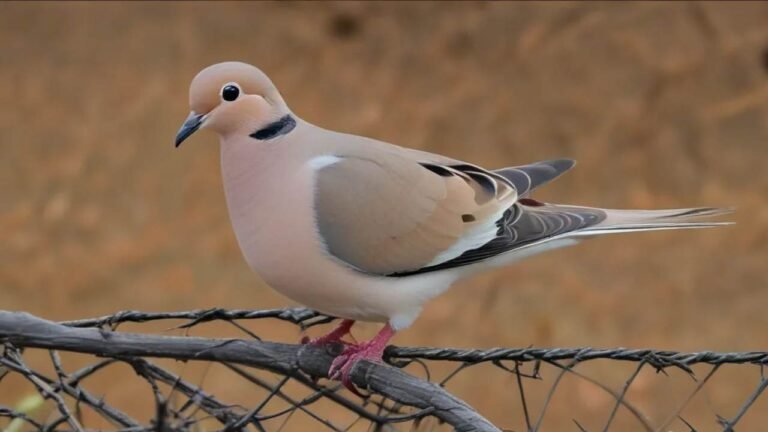
- Identification: Slender, 9–13 inches, buffy brown-gray with black wing spots, a long pointed tail edged in white, and a gentle, whistling wingbeat. The classic “speed demon” of the dove family.
- Habitat: Open agricultural land, sunflower and corn fields, orchards, and suburban parklands — anywhere with bare ground, seeds, and nearby perches.
- Migration: Maryland sits on the Atlantic Flyway, so September holds more resident birds while November and December segments intercept migrants moving south ahead of cold fronts.
- Best strategy: Hunt managed sunflower fields in September with decoys and a hide on the field edge; switch to morning hunts over cut corn in the late segments when migrants are passing through.
White-winged Dove 🕊️
- Identification: Slightly larger and chunkier than a mourning dove, with a square tail, white wing patches flashing in flight, and a bluish eye ring.
- Habitat: Typically a southwestern species; in Maryland, only a rare wanderer usually spotted along the coast.
- Migration: Occasional late-summer strays drift east; if one appears, it counts toward the 15-bird aggregate daily limit.
- Best strategy: Same setups as mourning doves — you’re just hoping for a rare bonus in the bag.
Eurasian Collared Dove 🕊️
- Identification: Larger and paler than a mourning dove, with a squared tail and a distinct black half-collar on the nape. Usually seen around farms and feeders.
- Habitat: Expanding nonnative populations now appear across Maryland, especially near agricultural operations and suburban bird feeders.
- Migration: Not a true migrant; populations are spreading northward.
- Best strategy: No season, no bag limit — but because its status in Maryland isn’t spelled out in the state digest, verify current guidance before targeting them, and simply don’t confuse one with a mourning dove in the field.
❓ Frequently Asked Questions
When does dove season open in Maryland in 2026?
Dove season opens September 1, 2026, with shooting hours from noon to sunset through Oct. 17. This is the traditional statewide opener for Maryland’s fall hunting seasons.
Is there dove hunting on Sundays in Maryland?
No. Migratory game birds, including doves, may not be hunted on Sundays in Maryland — a state rule that’s stricter than federal law.
What is the daily bag limit for doves in Maryland?
15 doves per day, with a possession limit of 45. Mourning and white-winged doves count together toward the 15-bird aggregate.
Do I need a federal duck stamp to hunt doves?
No. The Federal Migratory Bird Hunting and Conservation Stamp is only required for waterfowl (brant, coots, ducks, geese). Dove hunters need the Maryland Migratory Game Bird Stamp ($15) and HIP certification instead.
Can I hunt doves over a planted or cut sunflower field?
Yes — doves may be hunted over manipulated agricultural crops (mowed, burned, or knocked-down plants), and the 10-day baiting rule does not apply to that practice. Do not hunt over scattered loose grain.
What size shotgun can I use for doves in Maryland?
Any shotgun 10-gauge or smaller, and it must be plugged to hold no more than three shells total. Lead shot is legal for doves, though some WMAs require nontoxic shot.
Are there different four zones for dove hunting in Maryland?
No. Dove season is statewide and identical everywhere in Maryland. Zone differences (Eastern/Western) apply only to waterfowl seasons.
Where can I find public dove hunting land in Maryland?
Maryland DNR maintains managed dove fields at roughly 20 WMAs, including McKee-Beshers, Idylwild, Myrtle Grove, Deal Island, and Indian Springs. Most open first-come in September; a few require free permits and daily reservations.
🏁 Final Thoughts
Maryland’s 2026-2027 dove season delivers exactly what upland hunters want: an early-September opener, three well-spaced segments, a generous 15-bird daily limit, and free access to managed fields in every corner of the state. Pack water for those hot September afternoons, carry your Maryland Migratory Game Bird Stamp and HIP validation, and remember noon-to-sunset hours rule the opening segment.
Dove hunting is also the perfect gateway hunt — bring a new hunter along, lean on those WMA fields, and let the fastest bird in North America teach them the fundamentals of lead, swing, and follow-through.
Before you step into any field, verify the current rules for yourself. Regulations can shift with little notice, so consult the official Maryland Guide to Hunting and Trapping published by DNR, and review the federal framework documents from the U.S. Fish and Wildlife Service before each season. Hunt safe, hunt legal, and enjoy the best September Maryland has to offer. 🕊️
You may also review the nearest states Pennsylvania to the north, Delaware to the east for more dove hunting options.