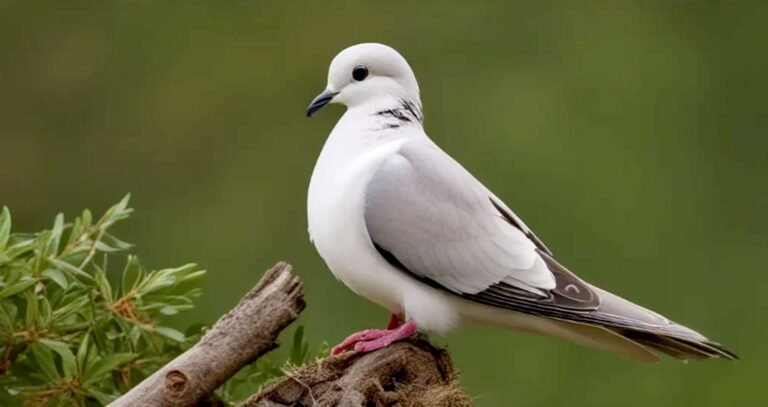
Montana Doves & Landscapes 2026-2027: Participating In The Early Fall Season for Hunting
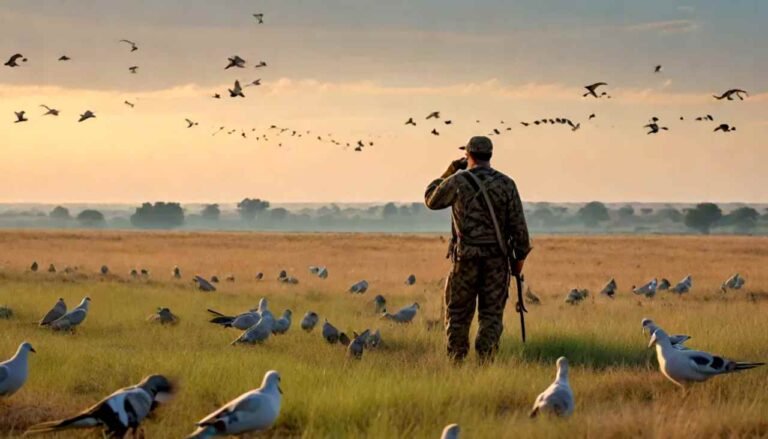
Montana’s mourning dove season opens on September 1 and runs through October 30, giving hunters across Big Sky Country a tight but productive window to chase one of North America’s most plentiful game birds. The 2026 framework has been officially adopted by the Montana Fish & Wildlife Commission, confirming the same traditional dates hunters have come to expect — though final 2027 dates remain pending. Below is your complete guide to dove hunting regulations, limits, licenses, and field-tested tactics for the 2026-2027 license year.
🪶 Quick Answer
When does dove season open in Montana? The 2026 mourning dove season opens September 1 and closes October 30, statewide. The daily bag limit is 15 mourning doves with a possession limit of 45. All dove hunters must hold a valid Conservation License, a Base Hunting License, a Montana Migratory Bird License ($10 resident / $150 nonresident), and complete HIP certification. Hunting hours run from one-half hour before sunrise to sunset.
📋 Montana Dove Season 2026-2027 Overview
The 2026-2027 mourning dove framework reflects the same conservative, statewide structure Montana has used for years. Mourning doves are managed under the Migratory Bird Treaty Act, and the U.S. Fish & Wildlife Service sets the federal outer dates within which Montana selects its season.
| Species | Season Year | Zone | Opening Date | Closing Date | Daily Bag Limit | Possession Limit | Status |
|---|---|---|---|---|---|---|---|
| Mourning Dove | 2026 | Statewide | September 1, 2026 | October 30, 2026 | 15 | 45 | Confirmed |
| Mourning Dove | 2027 | Statewide | Pending | Pending | 15 | 45 | Pending Official Announcement |
| Eurasian Collared-Dove | 2026–2027 | Statewide | Year-round (no closed season) | Year-round | No federal limit | No federal limit | Confirmed |
At the time of writing, the 2027 mourning dove season dates are not yet officially released. Montana FWP typically finalizes migratory bird frameworks in mid-June of the license year. The information here is based on the official 2026 schedule and historical precedent.
📅 Official Dove Season Dates
Mourning Dove: The 2026 mourning dove season is September 1 through October 30, statewide. This 60-day window mirrors the federal early-September framework adopted by the U.S. Fish & Wildlife Service and aligns with the post-breeding migration peak in Montana.
White-Winged Dove: White-winged doves are extraordinarily rare in Montana. The species’ breeding range barely touches the southern Plains, and they are not a managed dove hunting target in Montana. Most hunters will not encounter them in the field.
Eurasian Collared-Dove: Unlike native species, the invasive Eurasian collared-dove has no closed hunting season in the United States and carries no daily bag or possession limit under federal regulation. Hunters may take them year-round as an unlicensed-by-federal-permit exotic, but Montana’s HIP and migratory bird license requirements still apply when these birds are taken alongside native doves.
Split Seasons: Montana has not adopted split seasons for mourning doves. The 60-day continuous framework is intentional — it tracks peak fall migration and reduces confusion around reopening dates.
🗺️ Dove Hunting Zones in Montana
Unlike many southern dove states, Montana does not break the mourning dove season into north, south, central, or coastal zones. The mourning dove framework is statewide, meaning the same September 1 – October 30 dates apply everywhere from the Yellowstone Valley to the Flathead.
Dove zones (Pacific Flyway vs. Central Flyway) only apply in Montana to waterfowl, not to doves. Hunters chasing ducks, geese, coots, or mergansers should review the separate Pacific Flyway and Central Flyway (Zone 1 / Zone 2) split dates on the FWP migratory bird page.
If you’re planning a state-by-state dove season comparison, the Idaho Dove Season page covers FWP’s neighboring Pacific Northwest counterpart with similar regulations.
🎯 Daily Bag Limits
| Species | Daily Limit | Possession Limit | Special Rules |
|---|---|---|---|
| Mourning Dove | 15 | 45 | Aggregate limit; includes any fully-dressed Eurasian collared-doves when applicable |
| Eurasian Collared-Dove | No federal limit | No federal limit | Year-round; Montana HIP and migratory bird license still required when hunting native doves concurrently |
| White-Winged Dove | 15 (aggregate with mourning) | 45 (aggregate) | Rare in Montana; included in the 15-bird mourning dove aggregate |
The possession limit is triple the daily bag (45 mourning doves). The “possession limit” applies to birds held at your home, in cold storage, or in a taxidermist’s shop — not to birds in transit at the end of a hunting day.
⏰ Legal Hunting Hours
Federal migratory bird rules drive hunting hours for doves in every state. In Montana, mourning dove hunting is permitted from one-half hour before sunrise to sunset on every day of the open season. There are no Montana-specific opening-day exceptions for doves — the standard sunrise-to-sunset window applies from September 1 through October 30.
Hunters should consult a current sunrise/sunset table for their specific hunting location. Because Montana spans roughly 500 miles of longitude, sunrise at Missoula can run 10–15 minutes later than at Sidney along the North Dakota border.
📜 Licenses Needed
To hunt mourning doves in Montana, you must hold the following:
- Conservation License — required for all hunters and anglers statewide.
- Base Hunting License — resident ($10) or nonresident ($150 for the 2026 license year).
- Montana Migratory Bird License — $10 for residents and $150 for nonresidents. Hunters age 17 and under may purchase this license at half cost ($5 resident / $75 nonresident).
- Federal Migratory Bird Hunting and Conservation Stamp (“Duck Stamp”) — required for all hunters aged 16 and older. Available at any U.S. Post Office, FWP office, or licensed vendor.
- HIP Certification (Harvest Information Program) — required of every migratory bird hunter before purchasing the Migratory Bird License. The survey confirms your name, address, and date of birth and is free.
Youth Exemptions: Hunters under age 16 do not need the federal duck stamp but still need HIP and the Migratory Bird License (at the half-cost rate).
Senior Exemptions: Montana does not provide additional senior license exemptions for migratory birds beyond the standard half-cost provision for those 17 and under.
Military Exemptions: Active-duty military members stationed in Montana may purchase resident licenses. All other license tiers (Migratory Bird, HIP, federal stamp) still apply.
Nonresident Licenses: Total cost for a nonresident dove hunter is roughly $150 (base) + $150 (Migratory Bird) + $30 (federal duck stamp in 2026), plus HIP completion. Plan accordingly — nonresident dove hunting in Montana is a meaningful expense.
Always confirm licensing through the official FWP migratory bird regulations page before heading afield.
🔫 Legal Hunting Methods
Shotguns: A shotgun no larger than 10 gauge is legal for mourning dove hunting. Most hunters use 12-, 16-, or 20-gauge. Shotguns must be plugged so the magazine cannot hold more than three shells total (two in the magazine plus one in the chamber).
Shot Type: Lead shot is legal for mourning doves under both federal rule and Montana regulation, as doves are classified as “webless migratory birds.” However, nontoxic shot is required on National Wildlife Refuges and on some Wildlife Management Areas with posted regulations. When in doubt, switch to steel, bismuth, or tungsten-based loads.
Decoys and Calls: Electronic calls are prohibited for most migratory birds, including doves. Manual / mouth calls are allowed, as are decoys. Dove decoys — especially spinning-wing mojoves — are highly effective.
Baiting: Baiting doves is illegal under federal migratory bird regulations. You may not bait a field with grain, salt, or any other attractant to bring doves within shooting range, though normal agricultural operations and standing crops are acceptable.
Motor Vehicles: Doves may not be shot from a motorized vehicle, and you cannot use a vehicle to herd or chase birds. ATVs are allowed to access hunting locations but not to actively pursue birds.
Retrievers: Dogs are encouraged (and legal) for dove hunting. They’re a great way to find downed birds in heavy cover.
🏞️ Best Places to Hunt Doves in Montana
Dove hunting success in Montana depends heavily on grain and water — birds concentrate around harvested hayfields, sunflower and millet patches, stock tanks, and weedy fence lines. Top locations include:
- Yellowstone River Valley (Eastern Montana): Miles of irrigated cropland, stock ponds, and dryland wheat fields around Glendive, Miles City, and Sidney draw heavy dove concentrations.
- Missouri River Breaks: Farmed benches near the Upper Missouri River Breaks National Monument hold good dove numbers in early September.
- Flathead Valley (Northwestern Montana): Irrigated hay meadows and grain fields around Kalispell and Creston attract doves each fall.
- Gallatin and Madison Valleys: South-central Montana cropland provides consistent dove hunting near Bozeman, Belgrade, and Ennis.
- Bowdoin National Wildlife Refuge: A top upland bird destination near Malta (check refuge-specific regulations before hunting doves).
- Freezeout Lake WMA: Excellent for doves and waterfowl in the same afternoon.
- Block Management Areas (BMAs): Private land enrolled in FWP’s access program is open for free public upland bird hunting. Check the FWP Hunt Planner for current BMA coverage.
- National Forests: The Lolo, Beaverhead-Deerlodge, and Custer-Gallatin forests offer public dove hunting along agricultural fringes.
💡 Top Dove Hunting Tips for Montana
- Scout the day before opener. Doves concentrate predictably near water and grain — drive country roads at dusk to find loafing areas.
- Hunt the morning flight. Montana doves typically feed in the first two hours after sunrise.
- Set up near stock tanks. Doves drink heavily in late summer and will return to the same water source daily.
- Use spinning-wing decoys. A single mojo dove can dramatically increase early-season pulls.
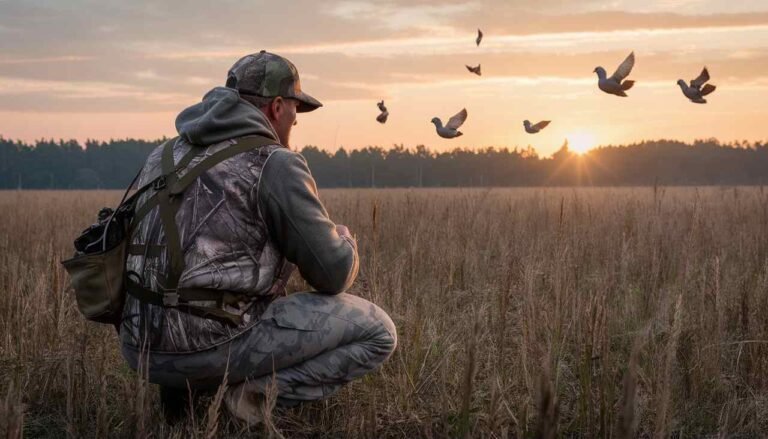
- Wear drab camouflage and earth tones. Mourning doves have excellent eyesight.
- Carry enough shells. A 15-bird limit can evaporate fast in good conditions — bring at least 75 rounds of 7½ or 8 shot.
- Pattern your gun at 30 yards. Most dove shots are inside 35 yards.
- Pair up. A hunting partner can take birds that pass over your setup.
- Work field edges and hedgerows. Doves rarely sit in the center of open fields.
- Bring a good retriever. Brittanys, Labs, and English setters excel at finding downed birds in Montana’s heavy CRP grass.
- Use choke tubes. A modified or improved-cylinder choke covers most dove ranges.
- Watch the weather. A cold front in late September can push a major migration wave into central Montana.
- Don’t overlook the Eurasian collared-dove. Larger than mourning doves, they’re easy targets in eastern Montana ranch country.
- Hunt weedy fence lines. Doves use fence wires as roost sites along field margins.
- Plan for landowner access. Most dove habitat in Montana is on private ranchland; respect “No Trespassing” signs and BLM boundaries.
📋 Recent Regulation Changes for 2026-2027
The Montana Fish & Wildlife Commission adopted the 2026-2027 hunting regulations on December 4, 2025. According to the official summary from the Bozeman Daily Chronicle, the most significant revisions addressed nonresident deer license caps, mule deer B-license restrictions, mountain lion season structure, and black bear archery sub-quotas.
Mourning dove-specific regulations remain substantially unchanged for 2026-2027. Bag limits, season dates, license fees, and legal methods mirror the established framework. Hunters should review the printed 2026 Migratory Bird Regulations PDF for any minor species-specific clarifications. The U.S. Fish & Wildlife Service also finalized its 2025-26 migratory game bird frameworks in August 2025, with no substantive changes to dove management.
⚠️ Hunter Safety Tips
- Firearm Safety: Treat every shotgun as loaded; keep the action open when crossing fences.
- Eye and Hearing Protection: Mandatory, especially during high-volume dove shoots.
- Heat Safety: September opener temps in eastern Montana can exceed 90°F; bring water and electrolytes.
- Dog Safety: Watch your retriever for heat exhaustion during long retrieves.
- Bird Identification: Know your mourning dove from a protected native bird. Eurasian collared-doves have a distinctive black collar and white undertail.
- Ethical Hunting: Pass on marginal shots, recover every downed bird, and respect other hunters’ space.
🕊️ Common Dove Species Found in Montana
Mourning Dove (Zenaida macroura): Soft brown-grey body, black spots on wings, long tapered tail, distinctive soft “coo-OO-oo-oo” call. Found statewide; favors grain fields and shelterbelts. Best hunting strategy: set up between roosting and feeding areas with decoys.
Eurasian Collared-Dove (Streptopelia decaocto): Pale grey-buff, white undertail, black “collar” around the neck. Slightly larger than a mourning dove. Non-native, expanding rapidly across Montana since the late 1990s. Best strategy: locate around ranch yards, grain elevators, and small-town parks.
White-Winged Dove (Zenaida asiatica): Broader body with prominent white wing patches and a white stripe along the wing edge. Extremely rare vagrant in Montana. Not a practical target for hunters.
❓ Frequently Asked Questions
When does the mourning dove season open in Montana?
The 2026 season opens September 1, 2026 and runs through October 30, 2026, statewide.
What is the daily bag limit for doves in Montana?
The aggregate daily bag limit is 15 mourning doves with a possession limit of 45.
Do I need a federal duck stamp to hunt doves?
Yes. The federal Migratory Bird Hunting and Conservation Stamp is required for all hunters aged 16 and older, regardless of whether they hunt ducks or doves.
Are white-winged doves managed separately in Montana?
No. White-winged doves are not a regulated dove-hunting target in Montana, as the species is exceedingly rare here.
Is lead shot legal for dove hunting in Montana?
Lead shot is legal under federal rule for mourning doves. However, nontoxic shot is required on National Wildlife Refuges and on any WMA that posts a nontoxic shot requirement. Learn more from the U.S. Fish & Wildlife Service dove information page.
Can I hunt Eurasian collared-doves year-round?
Yes, under federal rule Eurasian collared-doves have no closed season or bag limit. However, Montana migratory bird license and HIP certification still apply when hunting them with native doves.
Are there dove hunting zones in Montana?
No. Montana’s mourning dove season is statewide. Dove zones don’t apply in the state — only waterfowl has Pacific Flyway and Central Flyway splits.
What’s the cost of a nonresident Montana dove hunting license?
A nonresident dove hunter will pay approximately $150 (base hunting license) + $150 (Migratory Bird License) + $30 (federal duck stamp) plus HIP certification.
Can I use a .22 rifle for doves?
No. Shotguns are the only legal firearm for mourning dove hunting. Rifles and handguns are prohibited.
Where can I scout for public dove hunting in Montana?
Start with the FWP Hunt Planner online tool, Block Management Areas, public WMAs, and the agricultural fringes of Custer-Gallatin, Beaverhead-Deerlodge, and Kootenai National Forests.
🎯 Final Thoughts
Montana’s mourning dove season is short — just 60 days from September 1 through October 30 — but it consistently delivers some of the best upland shooting opportunities in the Northern Rockies. The bag limit is generous, the framework is statewide, and the bird numbers are strong thanks to the state’s grain-rich valleys and stock-watered ranch country. Eurasian collared-doves add an extra species hunters can target year-round on top of the mourning dove agenda.
Before you head out, always verify the current rules with the official Montana FWP migratory bird regulations page, complete your HIP certification, and respect private property boundaries. Final 2027 mourning dove dates will be posted by FWP in mid-2027, and the U.S. Fish & Wildlife Service will release its 2026-27 migratory game bird frameworks separately. Plan, scout, shoot straight — and enjoy the 2026 dove opener across Montana.