Doves in West Virginia: 2026-2027 Hunting Regulations for Legal Season
West Virginia’s 2026-2027 mourning dove season is scheduled as a three-part split season. The first segment opens September 1, 2026, and runs through October 11. The second segment runs November 2-15, followed by the final segment from December 7, 2026, through January 10, 2027.
The statewide daily bag limit is 15 mourning doves, with a 45-bird possession limit. On opening day, shooting hours begin at noon and end at sunset. For the remainder of the season, legal shooting hours are generally one-half hour before sunrise through sunset.
Every licensed migratory bird hunter—including senior citizens and lifetime license holders—must complete West Virginia’s free Harvest Information Program, or HIP, registration before hunting. Hunters should also review the latest state digest, public-land restrictions, controlled-hunt permits, and federal migratory bird rules before going afield.
The 2026-2027 dates were announced by the West Virginia Division of Natural Resources and are set within annual federal migratory bird frameworks. The detailed migratory bird regulation publication should still be checked for any site-specific restrictions or administrative updates.
⚡ Quick Answer
West Virginia’s 2026-2027 mourning dove season is divided into three segments:
- September 1-October 11, 2026
- November 2-15, 2026
- December 7, 2026-January 10, 2027
- Daily bag limit: 15 mourning doves
- Possession limit: 45 mourning doves
- September 1 shooting hours: Noon to sunset
- Other open days: One-half hour before sunrise to sunset
- Required: Valid hunting license and free HIP registration
- Special warning: Stonewall Jackson WMA has a controlled hunt on designated fields September 1-2
West Virginia Dove Season 2026-2027 Overview
| Species | Season | Zone | Opening Date | Closing Date | Daily Bag Limit | Possession Limit | Status |
|---|---|---|---|---|---|---|---|
| Mourning dove | Three-way split | Statewide | Sept. 1, 2026 | Jan. 10, 2027 | 15 | 45 | Officially announced |
| White-winged dove | No separate season listed | None listed | — | — | — | — | Verify current digest |
| Eurasian collared dove | No separate season listed | None listed | — | — | — | — | Verify current digest |
The published 2026-2027 announcement specifically establishes a season for mourning doves. It does not list a separate West Virginia season for white-winged doves or Eurasian collared doves. Hunters should not automatically apply another state’s dove rules to West Virginia.
Official Dove Hunting Dates
Mourning Dove Season
The 2026-2027 West Virginia Dove Hunting Season is divided into three segments:
- First segment: September 1-October 11, 2026
- Second segment: November 2-15, 2026
- Third segment: December 7, 2026-January 10, 2027
The three-way split gives hunters an early-season opportunity when local birds are concentrated around grain fields and water, a midseason opportunity during fall movement, and a late-season opportunity as wintering birds use food sources and sheltered valleys.
West Virginia’s daily limit is 15 mourning doves. The possession limit is 45, which equals three daily bag limits. Possession includes birds at home, in camp, in a vehicle, or otherwise under the hunter’s control.
Dove Hunting Zones in West Virginia
Unlike several southeastern states, West Virginia does not publish separate north, south, central, or coastal dove zones for the 2026-2027 season.
The mourning dove season is announced as statewide, subject to:
- Property-owner permission
- Wildlife management area restrictions
- Controlled-hunt requirements
- Refuge-specific rules
- Local firearm-discharge ordinances
- Any special restrictions in the final migratory bird digest
There is no coastal zone because West Virginia is inland. Hunters should also remember that statewide dates do not mean every field, WMA, national forest parcel, or refuge is open to dove hunting.
Daily Bag and Possession Limits
| Species | Daily Limit | Possession Limit | Special Rules |
|---|---|---|---|
| Mourning dove | 15 | 45 | Three seasonal segments; HIP required |
| White-winged dove | Not separately listed | Not separately listed | Do not assume it may be included |
| Eurasian collared dove | Not separately listed | Not separately listed | Verify current state rules before harvest |
The 15-bird limit applies per hunter, per legal day. A party cannot combine unused limits, and one hunter may not exceed the possession limit even if birds were taken on different days.
Legal Hunting Hours
On September 1, 2026, shooting hours for mourning doves begin at noon and end at sunset.
For the rest of the open season, shooting hours are generally:
One-half hour before sunrise through sunset.
This opening-day noon start is an important West Virginia exception. Arriving early to set decoys, arrange seats, or scout a field is allowed where the property manager permits it, but guns should remain unloaded until legal shooting time.
The federal migratory bird framework also limits dove hunting to approved seasons, legal shooting hours, authorized methods, and established bag limits. Review the U.S. Fish and Wildlife Service migratory bird program for the federal conservation framework behind these seasons.
Licenses and Registration Requirements
Resident License
A West Virginia resident generally needs a valid base hunting license to hunt mourning doves. The Class X resident hunting, fishing, and trapping license is listed at $33 under West Virginia law and includes the conservation stamp component.
Nonresident License
A nonresident generally needs:
- A valid Class E nonresident hunting license, listed by WVDNR at $119
- The required Conservation/Law Enforcement stamp, listed at $13
- Any additional license or permit required by the hunting location
Nonresident junior hunters may qualify for the XXJ junior sportsman license, listed at $16, plus the required $13 CS/LE stamp. Confirm eligibility and current pricing in the license system before purchase.
HIP Registration
HIP registration is:
- Free
- Required for licensed migratory bird hunters
- Required for senior and lifetime license holders
- Available online or through West Virginia license agents
- Proof that should be carried while hunting
A HIP registration is not a substitute for a hunting license.
Federal Duck Stamp
A federal Migratory Bird Hunting and Conservation Stamp is generally associated with waterfowl hunting and is not ordinarily required solely to hunt mourning doves. Hunters planning to pursue ducks or geese during the same trip should verify the separate waterfowl stamp and validation requirements.
Youth, Senior, Military, and Lifetime Hunters
- Youth hunters: Licensing requirements depend on age, residency, and where the hunt occurs. WVDNR states that licensing requirements remain in effect for ages 15-17.
- Nonresident youth: Nonresidents generally must possess a nonresident license regardless of age.
- Senior hunters: Seniors and lifetime license holders still need HIP registration.
- Military personnel: A West Virginia resident serving in the military may use qualifying active-duty leave or furlough documentation in lieu of the resident license, but required stamps and registrations still apply.
- Nonresident military personnel: Nonresident military hunters generally must purchase the licenses required of other nonresidents.
Legal Hunting Methods
Shotguns
Dove hunters typically use a shotgun. Federal migratory bird rules generally allow a shotgun no larger than 10 gauge. A shotgun capable of holding more than three shells must be fitted with a proper plug so it cannot hold more than three shells in total.
Ammunition and Nontoxic Shot
West Virginia dove rules should be checked for the field being hunted. Nontoxic shot is a smart choice around wetlands and public areas, and a WMA or refuge may impose additional ammunition restrictions even when statewide dove rules do not.
Decoys and Retrievers
Portable decoys, manual calls, blinds, bucket seats, and retrievers are useful and generally lawful when used safely. Keep dogs under control, especially near roads, neighboring hunters, livestock, and posted property.
Electronic Calls
Recorded or electrically amplified bird calls should not be used for mourning doves. Use only legal manual calling methods.
Baiting
Hunting over bait is illegal. Never place grain, seed, salt, feed, or other attractants in a dove field before hunting. Be especially careful around recently spread livestock feed, bait piles, and artificially manipulated fields. If you cannot determine whether a field is legal, choose another location or contact WVDNR.
Motor Vehicles and Roads
Do not shoot from, across, or along a public road. Do not shoot from a motor vehicle, and be certain that every shot has a safe background. West Virginia firearm-discharge restrictions near homes, schools, churches, and occupied areas may also apply.
Best Places to Hunt Doves in West Virginia
South Branch Wildlife Management Area
South Branch WMA in Hardy County is one of West Virginia’s best-known managed dove opportunities. For 2026, WVDNR announced that limited permits were no longer required there for September 1-2. Field conditions and access rules can change, so verify the current notice before arriving.
Stonewall Jackson Wildlife Management Area
Stonewall Jackson WMA will have a controlled mourning dove hunt on two designated fields during September 1-2. Hunters must use assigned state-controlled posts and remain within five yards of their post. The application deadline was August 1, 2026, so late-season hunters should confirm whether permits or standby opportunities remain.
Bluestone Lake WMA
Bluestone Lake WMA offers managed openings and agricultural habitat, including the Harman Fields area. Look for fields bordering water, crop residue, and natural travel corridors.
Other WMAs and Public Lands
West Virginia has numerous WMAs with hunting access. The most productive dove habitat is usually found in:
- Old fields
- Recently harvested grain fields
- Hay fields near water
- Powerline openings
- River bottoms
- Warm south-facing clearings
Monongahela National Forest, George Washington National Forest lands, state forests, and other public properties may provide legal hunting access, but most forest acreage is not ideal dove habitat. Always check maps, posted signs, road closures, and property-specific rules.
National wildlife refuges are not automatically open to dove hunting. A refuge must specifically authorize the activity in its current hunt plan or visitor regulations.
Top West Virginia Dove Hunting Tips
- Scout harvested fields two or three days before opening day.
- Focus on grain fields beside ponds, creeks, or livestock water.
- Check river bottoms after heavy summer storms; doves often use open banks and gravel areas.
- Hunt old fields bordered by mature trees rather than dense forest interiors.
- Use West Virginia’s hills to your advantage by setting up below a ridge crest where birds cross safely.
- Watch abandoned farm lanes and powerline corridors for regular flight routes.
- Place a few decoys near bare ground, not only in the middle of standing crops.
- Set up with the sun behind you whenever possible.
- Use a modified or improved-cylinder choke for most close-to-medium dove shooting.
- Mark every downed bird immediately, especially in thick weeds or briars.
- Carry a shooting stool; long waits are common between flight bursts.
- Avoid overcalling when birds are already moving naturally.
- On public land, arrive early enough to learn parking and walking routes without rushing.
- Confirm whether the WMA requires a controlled-hunt permit before traveling.
- Watch for sudden mountain weather changes and have a rain layer available.
- Hunt the first segment for resident and early-migrating birds, then adjust tactics in November and December.
- Keep spent shells picked up, particularly in managed fields and public parking areas.
- Use a dog only if the terrain and temperature are safe for that breed.
- Leave a field when livestock, farm equipment, or unauthorized people enter the line of fire.
- Record successful fields and wind conditions so you can compare them during the second and third segments.
Recent Regulation Changes for 2026-2027
The major dove-related update is not a change to the bag limit but a change in public-land management:
- South Branch WMA no longer requires a limited permit for September 1-2.
- Stonewall Jackson WMA now has a controlled dove hunt on two designated fields during September 1-2.
- Stonewall participants must hunt from assigned posts and remain within five yards of those posts.
- The statewide season remains a three-way split.
- The daily bag limit remains 15, with a 45-bird possession limit.
WVDNR’s broader 2026-2027 regulations include changes to certain deer, bear, and turkey seasons, but those changes do not create a separate white-winged or Eurasian collared dove season.
Hunter Safety Tips
- Keep the muzzle pointed in a safe direction.
- Treat every shotgun as loaded.
- Keep your finger outside the trigger guard until ready to fire.
- Wear eye protection to guard against shot, twigs, and falling debris.
- Use hearing protection, especially in crowded public fields.
- Identify the bird beyond doubt before shooting.
- Maintain a safe zone of fire between hunters.
- Carry water and protect yourself from heat and sun.
- Check dogs frequently for overheating, cuts, and dehydration.
- Wear blaze orange when required by a concurrent season or property rule.
- Do not shoot at low-flying birds when people, roads, homes, or livestock are behind them.
- Retrieve birds ethically and make every reasonable effort to recover wounded game.
Common Dove Species Found in West Virginia
Mourning Dove
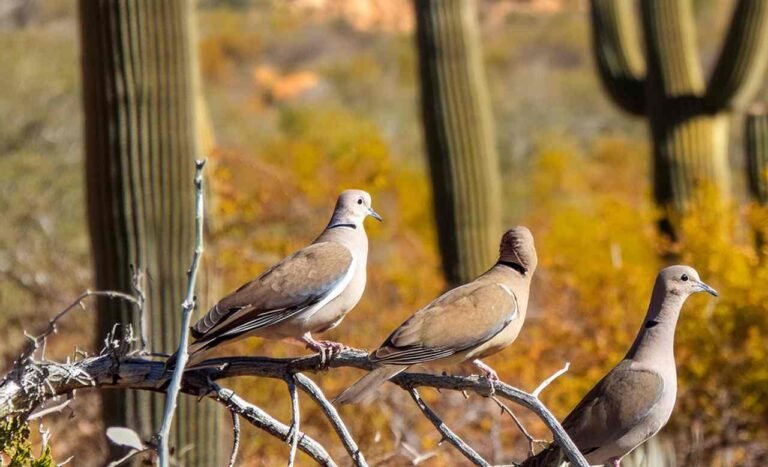
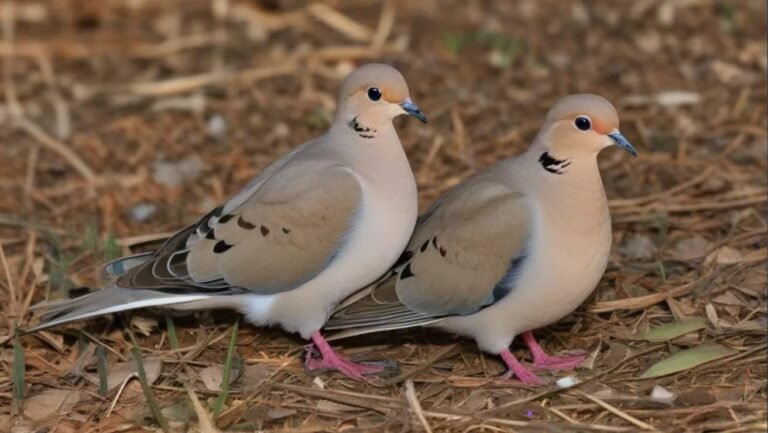
Identification: Slim gray-brown body, pointed wings, long tapered tail, and a soft cooing call.
Habitat: Farm fields, orchards, gravel roads, river bottoms, open woodland edges, and old fields.
Migration: Some birds remain year-round, while others move south during fall. Weather fronts can create noticeable movement.
Best strategy: Hunt field edges, water sources, and predictable flight lines during the first and last hours of legal shooting time.
White-Winged Dove
Identification: Larger-bodied dove with a distinct white wing patch visible in flight.
Habitat: More common in the Southwest and southern Great Plains than in West Virginia.
Migration: White-winged doves are not a regular target species for most West Virginia hunters.
Regulatory note: The 2026-2027 WVDNR announcement does not establish a separate white-winged dove season or limit. Do not count one toward a West Virginia bag unless the current digest specifically authorizes it.
Eurasian Collared Dove
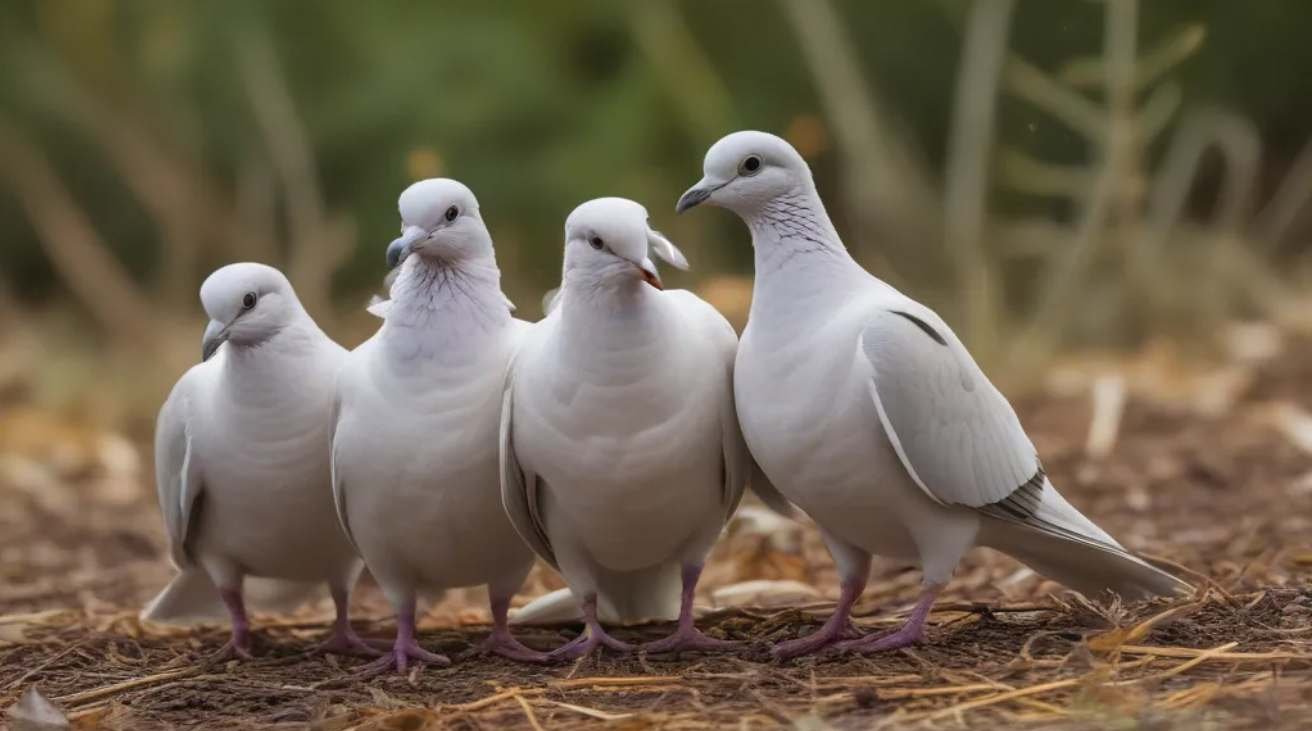
Identification: Large pale-gray dove with a black collar across the back of the neck and a square-ended tail.
Habitat: Towns, farms, grain elevators, barns, and areas with human development.
Migration: Often more sedentary than mourning doves.
Best strategy: Do not assume that rules from another state apply. The current West Virginia announcement does not list a separate season or bag limit for Eurasian collared doves.
Frequently Asked Questions
When does West Virginia dove season open in 2026?
The first segment opens September 1, 2026. Shooting hours on that date begin at noon and continue until sunset.
What are the West Virginia dove hunting dates for 2026-2027?
The dates are September 1-October 11, November 2-15, and December 7-January 10.
What is the daily dove limit in West Virginia?
The daily limit is 15 mourning doves. The possession limit is 45 birds.
Does West Virginia have dove hunting zones?
No separate north, south, central, or coastal dove zones are listed for the 2026-2027 season. The announced mourning dove season is statewide, subject to local restrictions.
Do I need HIP registration to hunt doves in West Virginia?
Yes. Every licensed migratory bird hunter must complete HIP registration, including senior citizens and lifetime license holders.
Is the Stonewall Jackson WMA dove hunt open to everyone?
The two designated Stonewall Jackson fields are controlled during September 1-2. Hunters must have the required permit and remain within five yards of their assigned post.
Can I hunt doves over a recently planted field?
Only if the field is legal under state and federal baiting rules. A normal agricultural planting is not automatically bait, but artificially placed grain, feed, or attractants can make a field unlawful.
Can I use an electronic dove call?
No. Use a manual call instead of a recorded or electronically amplified call.
Is a federal duck stamp required for dove hunting?
A federal duck stamp is generally required for qualifying waterfowl hunting, not solely for mourning dove hunting. Confirm the current requirements if you plan to hunt ducks or geese during the same trip.
Where can I find related West Virginia hunting information?
A complete content hub should also include West Virginia Hunting Seasons 2026-2027, West Virginia Waterfowl Season, West Virginia Deer Season, West Virginia Hunting License Guide, and Dove Hunting Tips. Hunters comparing nearby opportunities can also review this Virginia dove season guide.
Final Thoughts
West Virginia’s 2026-2027 mourning dove season offers three opportunities: an early September opener, a November segment, and a late-season December-January hunt. The key numbers are simple—15 birds per day, 45 in possession, HIP registration required, and noon-to-sunset shooting on September 1.
The most important preparation step is checking the final migratory bird regulation publication and confirming special rules for the WMA, refuge, or private field you plan to hunt. Regulations can differ by property even when statewide dates remain unchanged.
Scout food and water, use a safe setup, recover every bird, and verify licenses before leaving home. A few minutes spent checking the latest official rules can prevent an expensive citation and make the entire West Virginia Dove Hunting Season more enjoyable.