Wisconsin Doves: 2026-2027 Season For Migratory Gamebirds Hunting
Wisconsin dove hunters have a clear starting point for the 2026-2027 season. The statewide mourning dove season is scheduled to run from September 1 through November 29, 2026. The daily bag limit is 15 mourning doves, and the possession limit is generally three times the daily limit, or 45 birds.
Dove hunting in Wisconsin is simpler than waterfowl hunting in several important ways. You need a Wisconsin small game license and annual HIP registration, but mourning dove hunters do not need the Wisconsin waterfowl stamp or federal duck stamp. The state does not divide the mourning dove season into north, south, central, or coastal zones.
The best opportunities usually occur around grain fields, weedy edges, gravel areas, pasture, and reliable water. Public-land hunters should pay special attention to ammunition rules because nontoxic shot is required for mourning dove hunting on Wisconsin DNR-managed lands.
The information below is based on Wisconsin’s Fall 2026-Spring 2027 Hunting Regulations, current Wisconsin DNR license information, and the U.S. Fish and Wildlife Service framework system. Regulations can change, so review the official digest before traveling or hunting. Wisconsin’s official 2026-2027 migratory bird regulations should be your final reference.
Quick answer: Wisconsin’s 2026 mourning dove season is scheduled for September 1-November 29, 2026. The daily limit is 15 mourning doves, with a possession limit of 45. The season is statewide. Hunters need a small game license and free HIP certification. Wisconsin and federal waterfowl stamps are not required for mourning dove hunting.
Wisconsin Dove Season 2026-2027 Overview
| Species | Season | Zone | Opening Date | Closing Date | Daily Bag Limit | Possession Limit | Status |
|---|---|---|---|---|---|---|---|
| Mourning dove | Statewide | Statewide | September 1, 2026 | November 29, 2026 | 15 | 45 | Officially listed |
| White-winged dove | No separate Wisconsin season listed | Not applicable | — | — | — | — | Not a Wisconsin season species |
| Eurasian collared-dove | No separate migratory season listed | Not applicable | — | — | — | — | Do not treat as a mourning dove |
| Rock pigeon and feral pigeon | Not part of the mourning dove season | Not applicable | — | — | — | — | Different legal status |
Wisconsin’s published 2026-2027 regulations list a mourning dove season from September 1 through November 29 and a daily limit of 15. The state does not list separate dove zones or split seasons.
The 45-bird possession limit follows the standard three-times-daily-limit rule for doves. Possession includes birds at home, in a vehicle, in camp, or otherwise under a hunter’s control.
Official Dove Season Dates
Mourning dove
The Mourning Dove Season in Wisconsin opens statewide on September 1, 2026, and closes at the end of the day on November 29, 2026.
This is a continuous season rather than a published split season. Weather can affect migration and local bird numbers, but it does not change the legal season dates.
White-winged dove
White-winged doves are not a normal Wisconsin hunting-season species. They are primarily associated with warmer portions of the United States and Mexico. A hunter should never assume that a white-winged dove may be taken under Wisconsin’s mourning dove regulations.
Eurasian collared-doves
Eurasian collared-doves are distinct from mourning doves. Their legal treatment is not the same as the regulated mourning dove season. If you encounter one, identify it carefully and consult the current Wisconsin regulations before taking it.
Additional species
Wisconsin’s migratory bird table separately lists species such as woodcock, snipe, rails, gallinules, teal, ducks, and geese. Those seasons, licenses, bag limits, and shooting hours are different. A mixed-bag hunt requires compliance with the rules for every species harvested.
Dove Hunting Zones in Wisconsin
Wisconsin does not publish north, south, central, or coastal dove zones for the 2026 season.
The mourning dove season is statewide. This means a hunter near Madison, Milwaukee, Green Bay, La Crosse, Eau Claire, or northern Wisconsin follows the same published dove dates and daily limit.
Do not confuse dove regulations with Wisconsin’s duck and goose zones. Waterfowl hunters must follow separate northern, southern, open-water, and goose-zone boundaries. Those zones do not create separate dove seasons.
Daily Bag Limits
| Species | Daily Limit | Possession Limit | Special Rules |
|---|---|---|---|
| Mourning dove | 15 | 45 | Statewide season; HIP required |
| White-winged dove | No Wisconsin season listed | — | Do not count automatically as mourning doves |
| Eurasian collared-dove | No separate dove-season limit listed | — | Verify legal status before harvest |
| Mixed migratory birds | Species-specific | Species-specific | Follow each species’ rules |
A daily bag limit applies to the total number taken by one hunter during one day, regardless of how many fields or properties are hunted.
Tag or otherwise identify harvested birds according to Wisconsin requirements when transporting or storing them. Keep birds in a condition that allows lawful identification until processing rules no longer require it.
Legal Hunting Hours
Federal migratory bird rules traditionally use shooting hours from one-half hour before sunrise through sunset. Wisconsin hunters should confirm the current shooting-hour language in the regulation digest before opening morning, particularly if hunting multiple migratory species.
There is no separate Wisconsin dove opening-day shooting-hours exception identified in the published 2026-2027 dove table. Do not assume that a special waterfowl opening-day rule applies to doves.
A practical approach is to:
- Check the official sunrise time for the hunting location.
- Do not load or fire before the legal opening time.
- Stop shooting at sunset.
- Use a current regulation digest if local property rules are stricter.
The U.S. Fish and Wildlife Service establishes the federal framework, while Wisconsin selects its season dates and limits within that framework. USFWS migratory bird hunting regulations and framework process
Licenses Needed
Wisconsin license requirements
Most dove hunters need:
- Wisconsin small game hunting license
- Annual HIP certification
- Any applicable hunter education or proof-of-training documentation
- Permission to hunt the property
HIP registration is free and must be completed annually before hunting mourning doves. Keep proof of HIP certification with your license documents.
License price summary
The current Wisconsin DNR fee pages list these prices:
| License or certification | Resident price | Nonresident price |
|---|---|---|
| Regular small game | $18 | $90 |
| Small game, 5-day nonresident | — | $60 |
| Junior small game, ages 12-17 | $9 | Not listed on the cited fee table |
| Small game, under age 12 | $7 | $7 |
| Senior small game, age 65 or older | $9 | Not listed |
| HIP certification | Free | Free |
| Wisconsin waterfowl stamp | $12 | $12 |
| Federal duck stamp | $30.50 total listed fee | $30.50 total listed fee |
The Wisconsin and federal waterfowl stamps are not required for mourning dove hunting. They apply to waterfowl hunting, not ordinary dove hunting.
Children under 16 are exempt from the state and federal waterfowl stamps listed in the regulations. That exemption does not eliminate the need to follow the small game license and HIP rules that apply to the hunter.
The fee pages list youth and senior categories, but hunters with military status should verify eligibility for any special license directly through GoWild or a Wisconsin DNR service center. Do not assume a military discount applies unless the license category appears in your account or official fee schedule.
Legal Hunting Methods
Shotguns
Shotguns are the standard firearm for Wisconsin dove hunting. Choose a lightweight, reliable shotgun that fits properly and allows quick movement without excessive swinging.
The current digest should be checked for firearm restrictions, plug requirements, and possession rules before hunting. A plugged shotgun may be required under applicable migratory bird regulations, so do not remove a magazine plug for dove hunting unless the law clearly allows it.
Gauge and ammunition
Use ammunition appropriate for the shotgun and legal for the property. Shot size should balance effective range with safe, ethical performance.
Nontoxic shot is required for mourning dove hunting on Wisconsin DNR-managed lands. Steel is the common choice, although other approved nontoxic alternatives may be available. Private-land rules may differ, but local property restrictions can be stricter.
Retrievers and decoys
Dogs and decoys are useful and generally practical tools when used safely. A retriever helps recover birds in tall grass, cattails, brush, and shallow water.
Electronic calls should not be used unless specifically allowed under current Wisconsin regulations. Natural calls and stationary decoys are the safer approach.
Baiting
Do not hunt over illegally placed grain, seed, or other bait. A field that has been planted, harvested, or naturally contains food is not automatically baited, but deliberate placement or manipulation can create a violation.
When hunting a private farm, ask the landowner what was planted, when it was harvested, and whether grain was intentionally placed to attract birds.
Vehicles and roads
Do not shoot from, across, or along a public road in a way that violates Wisconsin firearm or hunting restrictions. A vehicle should be parked safely and legally, away from shooting lanes and field access points.
Best Places to Hunt Doves in Wisconsin
Managed dove fields
Wisconsin DNR-managed dove fields are among the most dependable public opportunities. Use the DNR’s Fields & Forest Lands Interactive Gamebird Hunting Tool, commonly called FFLIGHT, to locate managed fields and evaluate access.
Wildlife areas
State wildlife areas can provide a combination of crop fields, weed edges, gravel, wetland margins, and water. Before hunting, check the property map, parking areas, boundary signs, and any special shooting or ammunition restrictions.
Public-access farmland
Public-access lands under state programs can produce birds where corn, small grains, sunflower, or weedy annual vegetation meets open ground. Permission and access rules vary, so verify that the specific parcel is open.
National forests
Wisconsin’s national forests contain extensive public land, but dove numbers are usually concentrated around openings, agricultural edges, gravel roads, and water rather than deep timber. Check federal and local restrictions before hunting.
National wildlife refuges
Some refuges permit dove hunting only in designated hunt areas and under refuge-specific rules. Necedah National Wildlife Refuge, for example, identifies dove hunting as allowed in a designated hunt area under applicable state and federal regulations. A refuge map, permit, and seasonal closure can be just as important as a state license.
Top Dove Hunting Tips
- Scout Wisconsin fields during the last two weeks of August.
- Focus on grain edges, weed patches, gravel, and water within the same area.
- Watch power lines and dead trees for regular flight paths.
- Arrive early enough to identify safe shooting lanes.
- Use the FFLIGHT tool before choosing public land.
- Carry nontoxic ammunition whenever public-land hunting is possible.
- Pattern your shotgun with the exact load you plan to use.
- Choose a concealed position near, but not directly on, a feeding route.
- Avoid sitting in the center of a field where birds can see movement.
- Set up near water during hot, dry September weather.
- Check harvested grain fields after combines have moved on.
- Hunt weed patches after a light rain when doves may seek grit.
- Keep shooting lanes away from roads, buildings, livestock, and other hunters.
- Mark down the time of each flight to identify the best morning or evening period.
- Use a mesh game bag to keep birds cool and dry.
- Pick up every spent shell, especially on public wildlife areas.
- Bring more steel shot than you expect to use.
- Use a dog only if it can handle heat, sharp stubble, and long waits.
- Confirm property boundaries before placing decoys.
- Stop shooting once you reach 15 birds, even if another hunter offers to give you one.
- Report a banded dove through the Bird Banding Laboratory.
- Recheck regulations if hunting a refuge, recreation area, or managed public field.
Recent Regulation Changes for 2026-2027
The major published update is the availability of the Fall 2026-Spring 2027 Wisconsin Hunting Regulations. For mourning doves, the published structure remains straightforward:
- Statewide season
- September 1-November 29, 2026
- Daily limit of 15
- Annual HIP registration
- Small game license requirement
- No state or federal waterfowl stamp for mourning dove hunting
No separate north, south, central, or coastal dove zone is listed. Hunters should still check for amendments, emergency restrictions, property-specific rules, or changes issued after publication.
Hunter Safety Tips
- Treat every shotgun as loaded until personally verified otherwise.
- Keep the muzzle pointed in a safe direction.
- Identify the bird and background before firing.
- Wear eye and hearing protection.
- Maintain generous spacing between hunters.
- Keep shots away from roads, homes, livestock, and occupied buildings.
- Carry water and take breaks during warm September hunts.
- Never leave a dog in a hot vehicle.
- Use a visible vest or hat when hunting in groups.
- Retrieve downed birds only after confirming the area is safe.
- Know the difference between mourning doves and protected or non-season species.
- Recover all birds whenever reasonably possible.
- Respect landowners, neighboring hunters, and other public-land users.
Common Dove Species Found in Wisconsin
Mourning dove
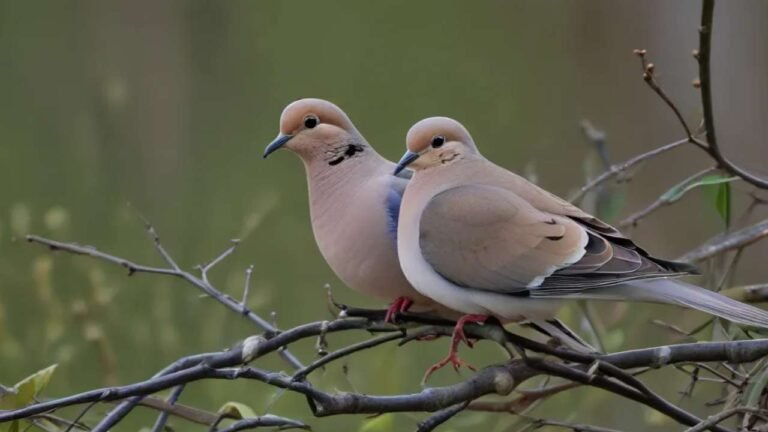
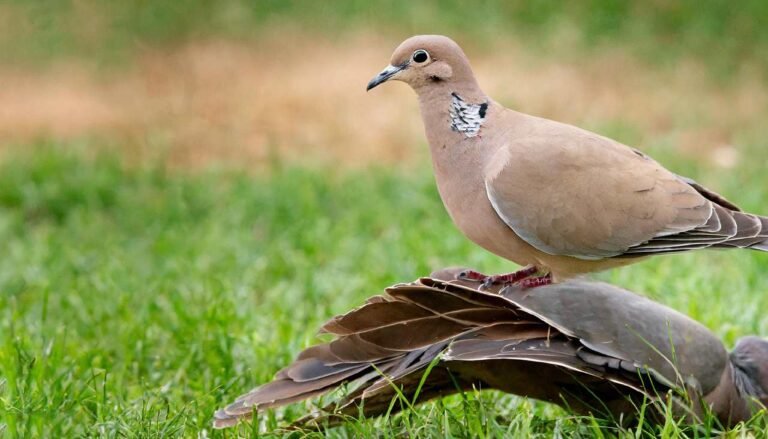
Mourning doves are slender, gray-brown birds with pointed wings, a long tapered tail, and a fast, direct flight. They use agricultural fields, gravel, open woodland edges, and water sources.
Most Wisconsin birds are present during the warmer months, with migration increasing as autumn progresses. Hunt near feeding, watering, and grit sites, especially during the first weeks of September.
White-winged dove
White-winged doves have a noticeable white wing patch and are not a routine Wisconsin hunting-season species. Treat any unusual dove carefully and do not count it toward a mourning dove limit without positive identification.
Eurasian collared-dove
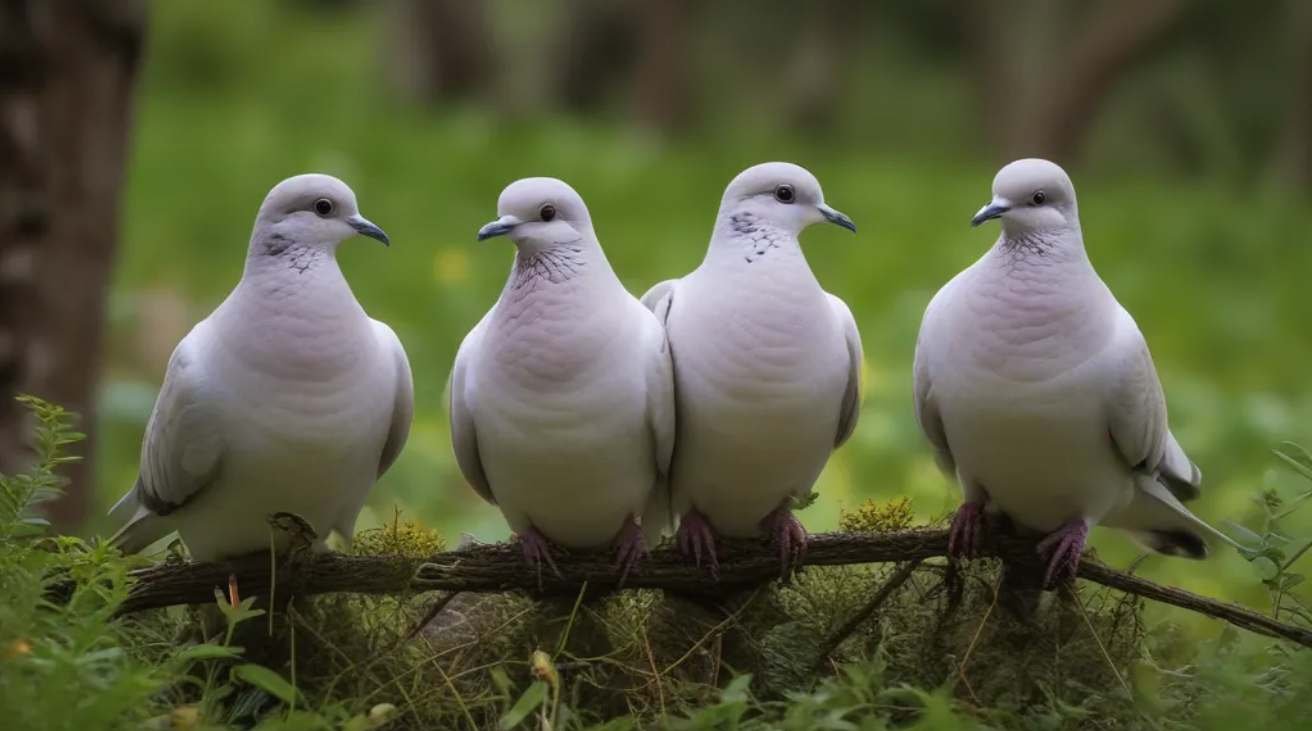
Eurasian collared-doves are larger and pale gray, with a distinctive dark collar across the back of the neck. They are different from mourning doves and are not listed as a separate Wisconsin migratory dove season in the 2026-2027 table.
Rock pigeon
Rock pigeons are stockier birds commonly associated with barns, urban structures, bridges, and farm buildings. They are not mourning doves and should not be included in a dove-season bag without confirming their legal status.
Frequently Asked Questions
When does Wisconsin dove season open in 2026?
The Wisconsin mourning dove season is scheduled to open on September 1, 2026.
When does Wisconsin dove season close?
The published closing date is November 29, 2026.
What is the Wisconsin dove limit?
The daily limit is 15 mourning doves. The possession limit is generally 45 birds.
Is Wisconsin dove hunting statewide?
Yes. The 2026-2027 regulations list one statewide mourning dove season rather than separate regional dove zones.
Do I need a federal duck stamp to hunt doves in Wisconsin?
No. The federal duck stamp is required for qualifying waterfowl hunters, not ordinary mourning dove hunters.
Do I need HIP certification for dove hunting?
Yes. Wisconsin requires annual HIP registration before hunting mourning doves. The certification is free.
Can I use lead shot for Wisconsin doves?
Lead may be legal on some private properties, but nontoxic shot is required on Wisconsin DNR-managed lands. Carry approved nontoxic ammunition when hunting public land.
Can I hunt white-winged doves in Wisconsin?
Wisconsin does not list a separate white-winged dove season. Do not assume a white-winged dove is legal to harvest under the mourning dove season.
Are there public dove fields in Wisconsin?
Yes. Wisconsin DNR-managed dove fields and other suitable properties can be located using the FFLIGHT mapping tool. Always check the current property rules.
Can I hunt doves at a national wildlife refuge?
Possibly, but only where the specific refuge allows it. Designated hunt areas, refuge maps, permits, ammunition restrictions, and federal rules may apply.
Final Thoughts
Wisconsin’s 2026-2027 dove season is scheduled for September 1-November 29, 2026, statewide, with a daily limit of 15 mourning doves. The essential checklist is short: obtain a small game license, complete free HIP registration, use legal equipment, carry nontoxic shot on DNR-managed land, and confirm the property is open to dove hunting.
The best Wisconsin dove hunts usually come from careful scouting rather than complicated tactics. Find food, water, grit, and safe flight paths, then arrive early and hunt ethically.
Before opening day, review the current Wisconsin regulation digest, property-specific rules, and any later DNR updates. If you are comparing nearby opportunities, you can also review a neighboring-state guide such as Minnesota Dove Season, but never substitute another state’s rules for Wisconsin’s regulations.