Early Fall Dove in Kansas 2026-2027: A Migratory Game Bird Season
Kansas dove season is one of the cleanest, simplest early-fall hunts in the Central Flyway. For most hunters, the big headline is this: Kansas typically opens mourning and white-winged dove season on September 1, and the state uses a statewide structure rather than splitting dove hunters into north and south zones. That makes planning easier, but you still need to pay attention to bag limits, legal shooting hours, HIP certification, and area-specific public land rules.
This guide is built for hunters who want the facts fast and the details in plain English. It is based on the latest available guidance from Kansas Department of Wildlife and Parks and federal migratory bird rules explained by the U.S. Fish & Wildlife Service.
As of this writing, Kansas’ official season pages list mourning and white-winged dove season as running September 1 through November 29 each year, with exotic doves open year-round. Kansas does not currently use dove hunting zones. Hunters should still verify the final 2026-2027 digest before opening day, especially for public land restrictions, check-in rules, and any posted nontoxic-shot requirements.
Quick Answer
For the latest available Kansas regulations, mourning dove and white-winged dove season is statewide from September 1 through November 29, 2026. The daily bag limit is 15, and the possession limit is 45. Eurasian collared-dove and ringed turtle-dove are open year-round, with no daily bag or possession limit, but hunters must retain a fully feathered wing for identification. Legal shooting hours for migratory birds in Kansas are one-half hour before sunrise to sunset.
🗓️ Kansas Dove Season 2026-2027 Overview
| Species | Season | Zone | Opening Date | Closing Date | Daily Bag Limit | Possession Limit | Status |
|---|---|---|---|---|---|---|---|
| Mourning Dove | Fall | Statewide | Sept. 1, 2026 | Nov. 29, 2026 | 15 | 45 | Latest official Kansas listing |
| White-winged Dove | Fall | Statewide | Sept. 1, 2026 | Nov. 29, 2026 | Combined in 15 | Combined in 45 | Latest official Kansas listing |
| Eurasian Collared-Dove | Year-round | Statewide | Jan. 1, 2026 | Dec. 31, 2026 | No limit | No limit | Latest official Kansas listing |
| Ringed Turtle-Dove | Year-round | Statewide | Jan. 1, 2026 | Dec. 31, 2026 | No limit | No limit | Latest official Kansas listing |
Important: Kansas’ latest official season pages show fixed annual statewide dates for doves. Even so, always re-check the final 2026-2027 regulations summary before hunting.
📅 Official Dove Season Dates
Kansas keeps dove rules refreshingly straightforward.
For mourning dove season Kansas and white-winged dove season Kansas, the latest official listing shows a statewide season from September 1 through November 29. There are no split segments listed for Kansas doves, and there are no separate dove zones like you see in Texas or some southeastern states.
For Eurasian collared-dove and ringed turtle-dove, Kansas treats them as exotic doves. The latest official listing shows them open year-round.
Rock pigeons are not regulated the same way as game doves in Kansas and are generally treated as a pest species, which is why many hunters focus their preseason scouting on grain edges, stock ponds, shelterbelts, and cut fields where multiple species may show up.
📍 Dove Hunting Zones in Kansas
Kansas does not currently divide dove hunting into north, south, central, coastal, or special dove zones.
That means:
- One statewide season applies to mourning and white-winged doves
- No zone map is needed for standard Kansas dove hunting
- The bigger difference is property-specific regulation, not geographic zone boundaries
What can change from place to place is public-land management. Some wildlife areas require:
- check-in/check-out
- posted access periods
- special-use restrictions
- nontoxic-shot-only rules on certain dove fields
So while there is no zone confusion, there is still a reason to read the area rules before the trip.
🎯 Daily Bag Limits
| Species | Daily Limit | Possession Limit | Special Rules |
|---|---|---|---|
| Mourning Dove | 15 | 45 | Combined migratory dove limit |
| White-winged Dove | Included in 15 | Included in 45 | Counts toward total dove bag |
| Eurasian Collared-Dove | No limit | No limit | Must retain fully feathered wing |
| Ringed Turtle-Dove | No limit | No limit | Must retain fully feathered wing |
For practical purposes, most Kansas hunters will be managing the classic 15 birds daily / 45 in possession on mourning and white-winged doves.
⏰ Legal Hunting Hours
Kansas lists legal shooting hours for migratory bird seasons as:
- One-half hour before sunrise
- Until sunset
That applies to dove hunting as well.
A few useful takeaways:
- Kansas does not currently list a special noon opener for doves.
- If you hunt public land, area-specific rules can still affect access or check-in timing.
- Federal migratory bird law still applies, so hunting outside open hours is not a minor technical mistake.
For early-season dove hunts, the first hour after sunrise and the last hour before sunset are usually the most productive anyway.
🪪 Licenses Needed
Kansas keeps the paperwork manageable, but you still need to get it right.
Required for most hunters
- Kansas hunting license
- Kansas HIP certification
Not required for dove hunting
- Kansas State Waterfowl Stamp
- Federal Duck Stamp
Current price summary
- Resident annual hunting license: $27.50
- Senior resident annual hunting license (65-74): $15.00
- Nonresident annual hunting license: $127.50
- Nonresident youth hunting license: $42.50
- Kansas HIP permit: $2.50
Common exemptions and special cases
- Kansas residents under 16: no hunting license required
- Residents 75 and older: generally exempt from the Kansas hunting license requirement
- People hunting their own land: may be exempt from the Kansas hunting license requirement under Kansas law
- Lifetime license holders: still need HIP if they hunt migratory birds
- Active Kansas National Guard members: free licenses may be available based on funding
- Disabled veterans: free licenses may be available based on funding and eligibility rules
If you are hunting doves in Kansas, the safest habit is simple: carry proof of your hunting license if required, plus HIP certification, every time you enter the field.
🔫 Legal Hunting Methods
Kansas dove hunting is mostly about staying inside standard migratory bird rules and paying attention to public-land notices.
Shotguns
A migratory-bird legal shotgun is the standard tool for Kansas dove hunting season. Under federal rules, your shotgun cannot hold more than three shells total unless it is properly plugged with a one-piece filler that requires disassembly to remove.
Gauge restrictions
Kansas’ current dove pages do not highlight a special statewide gauge restriction for doves. In practice, 12, 20, and 28 gauge are common choices, but compliance matters more than bore size.
Nontoxic shot
Kansas does not post a blanket statewide nontoxic-shot rule for all dove hunting. However, some wildlife areas may designate dove fields as nontoxic-shot-only by posted notice. Oak Mills Wildlife Area is one example where nontoxic shot has been required.
Retrievers and dogs
A good retriever is a real advantage in Kansas sunflower, millet, and cut-corn setups. Keep dogs steady, hydrated, and under control around other hunters and property lines.
Decoys
Traditional dove decoys are commonly used and especially helpful around field edges, water, and flyway corners. Set them where birds can see them from a distance without forcing incoming birds across another hunter’s lane.
Electronic calls
Kansas’ currently reviewed dove materials do not clearly advertise dove-specific electronic-calling rules. If you plan to use any amplified calling device, verify the current digest first instead of assuming it is legal.
Baiting laws
This is where hunters get into trouble. You cannot hunt doves over a baited area if you know or reasonably should know the field is baited. Grain from normal agricultural planting or harvest can be legal; scattered feed placed to attract birds is not.
Motor vehicle restrictions
Federal rules prohibit hunting migratory birds from or by means of a motor vehicle or other motor-driven conveyance, except for narrow disability-related exceptions. On Kansas public lands, stay on open roads and follow local access rules.
🌾 Best Places to Hunt Doves in Kansas
Kansas shines when you focus on habitat, not just county lines.
Top public options
- KDWP managed dove fields: Kansas has an interactive field locator for managed dove fields. This should be your first stop each August.
- WIHA and iWIHA properties: Walk-In Hunting Access can open excellent private ground to public use. Always verify access dates and check-in rules.
- Oak Mills Wildlife Area: A known managed dove field site with check-in/check-out and area-specific shot rules.
- Jamestown Wildlife Area: Kansas has managed dove fields here in past seasons, especially around agricultural plantings.
- Southcentral and southeastern wildlife areas: KDWP specifically notes these regions as strong for managed dove crop fields.
- Quivira National Wildlife Refuge: Dove hunting is permitted in designated public hunting areas, but refuge-specific rules must be checked before the trip.
The smartest move is to scout fields with sunflowers, millet, cut corn, wheat stubble, nearby water, and utility lines.
If you also hunt neighboring states, a border-trip comparison with Oklahoma dove season can help with scheduling.
🧠 Top Dove Hunting Tips
- Scout water first during hot early-season weather.
- Don’t sit in the middle of a giant field unless birds are crossing there.
- Hunt corners, gaps, and pinches in shelterbelts.
- Watch power lines at first light for flight direction.
- Kansas birds love harvested sunflower and millet fields.
- If birds flare, back off the decoys and hide better.
- Pack more shells than you think you need.
- Bring a stool and shade if you’re on an afternoon sit.
- Wear light gloves if sunflowers are thick.
- Pick up birds immediately in heavy cover.
- Mark downed birds against a landmark before walking out.
- After a windy front, focus leeward field edges.
- In dry country, stock ponds can outproduce crop fields.
- Arrive early on public fields; the best lanes disappear fast.
- Don’t crowd another hunter just because birds are flying there.
- If the morning shoot slows, switch to water or loafing lines.
- Practice crossing shots before opening day.
- Learn white-wing vs. mourning dove silhouettes before you hunt exotic-heavy areas.
🔄 Recent Regulation Changes for 2026-2027
The biggest 2026 development is on the federal side. The U.S. Fish & Wildlife Service announced a modernized framework process intended to give states and hunters earlier certainty on migratory game bird seasons.
For Kansas specifically, the core dove structure appears substantially unchanged in the latest available materials reviewed for this article:
- statewide mourning and white-winged season
- year-round exotic dove opportunity
- HIP still required
- standard migratory bird shooting hours still apply
If KDWP posts a late update in the final 2026-2027 digest, that final state publication should control.
🦺 Hunter Safety Tips
- Keep your muzzle up and your swing lane clear.
- Wear both eye and hearing protection.
- Carry more water than you think you need in September heat.
- Check dogs often for overheating and cactus or grass awns.
- Identify birds before the shot, especially in mixed flights.
- Respect fences, homes, roads, and power lines.
- Make every effort to retrieve downed birds.
- Stop shooting when birds drop low into unsafe angles.
🕊️ Common Dove Species Found in Kansas
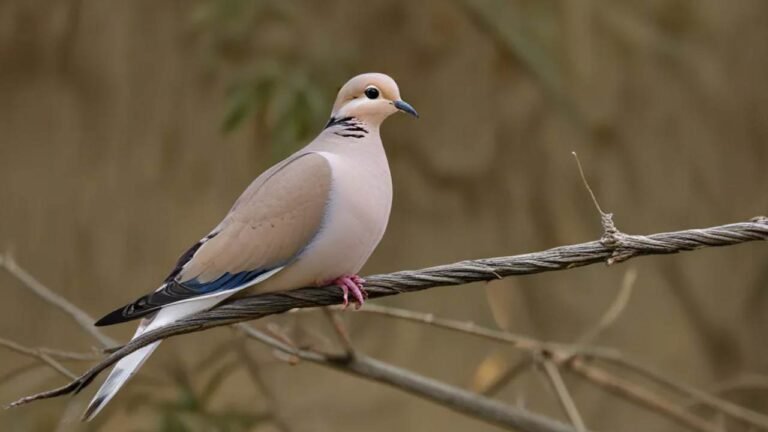
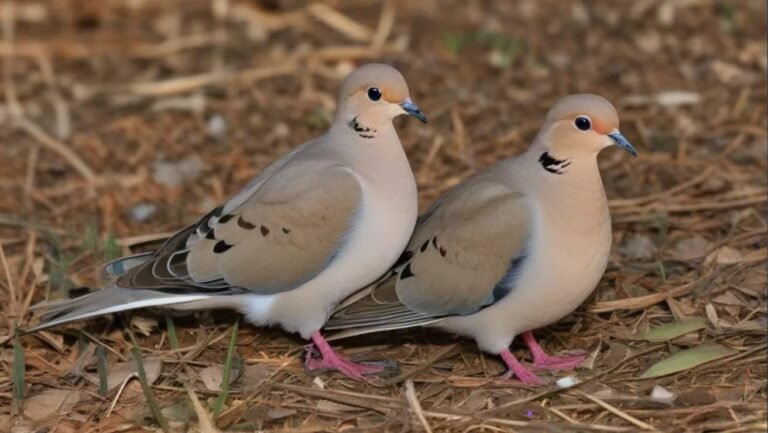
Mourning Dove
- Identification: slim body, long pointed tail
- Habitat: grain fields, pasture edges, shelterbelts
- Migration: many leave by October, though some linger
- Best strategy: hunt feed-to-water travel lanes
White-winged Dove
- Identification: larger body, bold white wing patch
- Habitat: more scattered and less common than mourning doves
- Migration: increasing sightings in Kansas, mostly warm-season presence
- Best strategy: watch mixed flights near food sources
Eurasian Collared-Dove
- Identification: pale body, squared tail, black neck crescent
- Habitat: barns, towns, grain facilities, farmsteads
- Migration: largely nonmigratory
- Best strategy: target rural edges near grain and roost structures
Ringed Turtle-Dove
- Identification: similar to collared-dove, lighter domestic-looking bird
- Habitat: usually close to human habitation
- Migration: nonmigratory
- Best strategy: know your ID and keep a wing attached for proof
❓ Frequently Asked Questions
Is Kansas dove season split into multiple zones?
No. Kansas currently runs a statewide dove season, not north/south or special dove zones.
What is the opening day for Kansas dove season 2026?
Based on the latest official Kansas season listing, the opener is September 1, 2026 for mourning and white-winged doves.
What is the daily bag limit for dove in Kansas?
The daily bag limit is 15 doves, with a 45-bird possession limit for mourning and white-winged doves.
Do I need HIP to hunt dove in Kansas?
Yes. If you are required to have a Kansas hunting license and you hunt migratory birds, you need Kansas HIP certification.
Do I need a federal duck stamp for dove hunting?
No. A federal duck stamp is for waterfowl, not dove hunting.
Can I hunt Eurasian collared-doves year-round in Kansas?
Yes. Kansas lists Eurasian collared-dove and ringed turtle-dove as open year-round.
Is lead shot legal for dove hunting in Kansas?
Usually yes, but not everywhere. Some public dove fields may be posted as nontoxic-shot-only, so always read area signs.
What time can you start dove hunting in Kansas?
Legal shooting hours are one-half hour before sunrise.
Can I hunt doves over a harvested field?
Often yes, if the grain is there because of a normal agricultural operation. If the field has been baited, it is illegal.
✅ Final Thoughts
Kansas remains one of the more hunter-friendly places in the country for an early-season dove trip. The rules are straightforward, the season is statewide, and the opportunity can be excellent around managed fields, harvested grain, and reliable water.
Still, smart hunters verify everything one last time before they load the truck: season dates, HIP, access rules, and any posted public-land restrictions. If you do that homework and scout well, Kansas Dove Season 2026-2027 can be one of the best low-stress, high-action hunts of the fall.