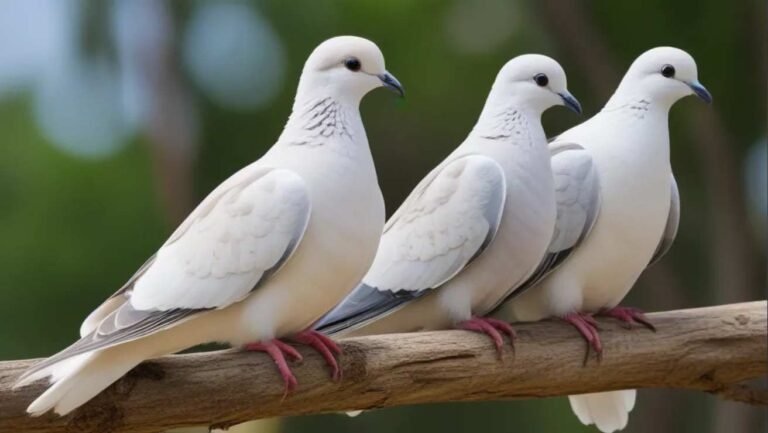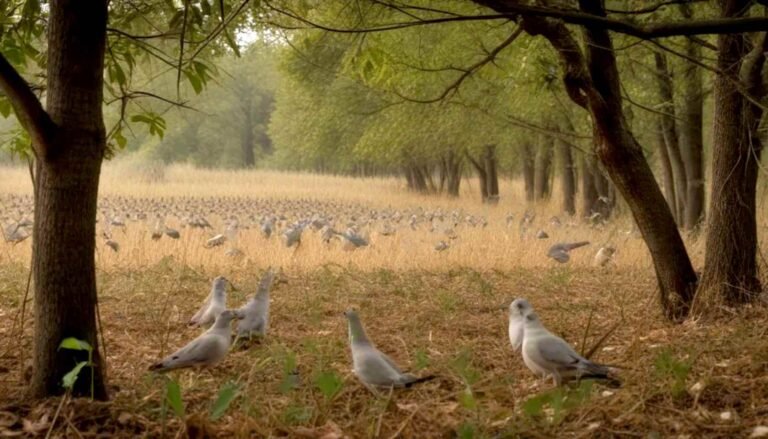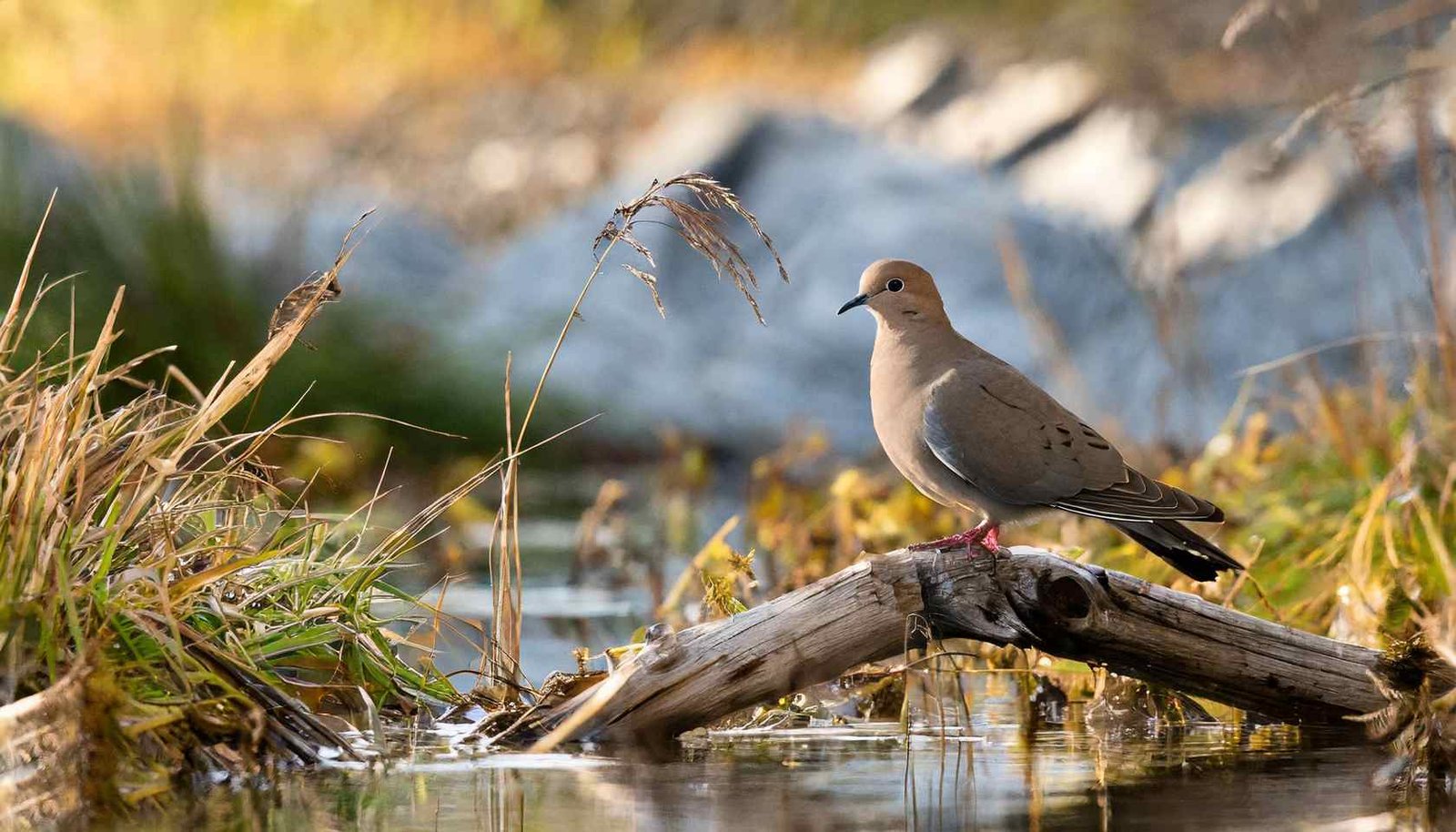
🕊️ Arizona’s 2026-2027 Wingshooter Welcome: Your Desert Dove Primer
Arizona dove season for 2026-2027 opens statewide on Sept. 1, 2026 and runs through Sept. 15, 2026 for the early season. The late statewide season for mourning and white-winged doves runs Nov. 20, 2026, through Jan. 3, 2027. The daily bag limit is 15 mourning and white-winged doves combined, and the possession limit is 45 combined. Eurasian collared-doves are open statewide from Sept. 1, 2026, through Aug. 31, 2027, with no bag or possession limit. Legal shooting hours are one-half hour before sunrise to sunset.
Arizona Dove Season 2026-2027 Overview
Arizona dove season is one of the West’s classic openers, and in 2026 the action again starts on Sept. 1 with a short early split followed by a longer late season that carries into early January. For most hunters, the big takeaways are simple: Arizona runs statewide dove seasons rather than north/south dove zones, the daily bag limit for mourning and white-winged doves is 15 in the aggregate, and adults 18 and older need both a valid Arizona hunting license and an Arizona migratory bird stamp. Expect the best shooting around agricultural corridors, watered desert edges, and managed public access areas near places like Buckeye and Yuma. All of the season details below are based on the current official Arizona dove regulations and the federal migratory bird rulemaking framework used to set state seasons. Arizona Game and Fish dove regulations U.S. Fish & Wildlife Service migratory bird regulations
Here’s the season-at-a-glance table Arizona hunters actually need before opening day.
| Species | Season | Zone | Opening Date | Closing Date | Daily Bag Limit | Possession Limit | Status |
|---|---|---|---|---|---|---|---|
| Mourning dove & white-winged dove | Early season | Statewide | Sept. 1, 2026 | Sept. 15, 2026 | 15 aggregate | 45 aggregate | Official |
| Mourning dove & white-winged dove | Late season | Statewide | Nov. 20, 2026 | Jan. 3, 2027 | 15 aggregate | 45 aggregate | Official |
| Eurasian collared-dove | General season | Statewide | Sept. 1, 2026 | Aug. 31, 2027 | Unlimited | Unlimited | Official |
| Mourning, white-winged & Eurasian collared-dove | Falconry-only | Statewide | Sept. 16, 2026 | Nov. 1, 2026 | 3 aggregate | 9 aggregate | Official |
| Band-tailed pigeon* | Separate season | Statewide | Sept. 25, 2026 | Oct. 8, 2026 | 2 | 6 | Official |
*Band-tailed pigeon is included because Arizona publishes it in the same migratory upland pamphlet and some hunters plan both seasons together.
Official Dove Season Dates
Arizona keeps dove season straightforward.
The early Arizona dove hunting season for mourning doves and white-winged doves runs from Sept. 1 through Sept. 15, 2026. That is the traditional desert opener many hunters plan around, especially where grain fields, cut silage, canal edges, and watering areas pull birds in tight at daybreak.
The late Arizona dove season runs from Nov. 20, 2026, through Jan. 3, 2027. This second split is longer and often underhunted compared with the Sept. 1 opener. It can be especially productive in agricultural country where birds stay concentrated around feed and water.
For hunters targeting Eurasian collared-doves, Arizona offers a much more liberal opportunity. That season is statewide from Sept. 1, 2026, through Aug. 31, 2027, with no daily bag limit and no possession limit.
Arizona also lists a statewide falconry-only dove season from Sept. 16 through Nov. 1, 2026, covering mourning dove, white-winged dove, and Eurasian collared-dove.
Dove Hunting Zones in Arizona
This is where many hunters overcomplicate Arizona.
Unlike some states that split dove hunting into north, south, central, coastal, or special white-wing zones, Arizona does not run standard dove zones for the 2026-2027 season. The primary mourning and white-winged dove seasons are statewide.
That does not mean every acre is open.
Arizona’s dove regulations still rely on a mix of:
- specific Game Management Unit closures
- refuge-specific rules
- municipal and county land restrictions
- special access rules on some wildlife areas
- property-specific closures around developed areas
So, if you are searching for “Arizona dove hunting zones,” the practical answer is this: there are no regular statewide dove zones, but there are many local closures and access conditions that matter just as much as a zone line.
Daily Bag Limits
Arizona simplified the rule that used to trip up a lot of hunters.
| Species | Daily Limit | Possession Limit | Special Rules |
|---|---|---|---|
| Mourning dove + white-winged dove | 15 aggregate | 45 aggregate | Any mix is allowed as long as total does not exceed 15 |
| Eurasian collared-dove | Unlimited | Unlimited | Arizona migratory bird stamp not required for this species |
| Falconry-only dove season | 3 aggregate | 9 aggregate | Applies during falconry-only dates |
| Band-tailed pigeon | 2 | 6 | Separate season and separate rules |
The biggest point for 2026-2027 is that Arizona hunters may take any combination of mourning and white-winged doves within the 15-bird daily limit. That is much cleaner than the older white-wing sublimit structure.
Legal Hunting Hours
Legal shooting hours for Arizona dove season are one-half hour before sunrise until sunset.
That matters for two reasons.
First, Arizona’s Sept. 1 opener is often a fast first-hour hunt, so being in position before legal shooting time matters more than sleeping in and hoping birds will still be moving later.
Second, Arizona’s 2026-2027 dove regulations do not list a special noon opener. Some states do that for early-season doves. Arizona does not here. Opening day begins under the same standard hours used for the rest of the season.
Federal migratory bird frameworks allow states to operate only within federal season structures, and traditional shooting hours for migratory birds have long been built around the half-hour-before-sunrise to sunset rule.
Licenses Needed
If you are hunting mourning or white-winged doves in Arizona, keep the paperwork simple and correct.
Adults 18 and older
You need:
- a valid Arizona hunting license or combination hunt/fish license
- an Arizona migratory bird stamp
Youth ages 10-17
You need:
- a valid youth combination hunt and fish license only
That youth license already includes the state migratory bird stamp privileges.
Youth under 10
A child under 10 may hunt doves without a license if accompanied by a properly licensed adult age 18 or older. No more than two unlicensed children may accompany one licensed adult.
Nonresidents
Nonresidents can hunt doves in Arizona, but they still need a valid Arizona license. Common options include:
- Nonresident combo hunt and fish license
- Short-term combo hunt and fish license
- Arizona migratory bird stamp, if required by age and hunt type
Military, senior, and special cases
Arizona treats active-duty military stationed in Arizona as residents for license purposes. The state also offers complimentary or reduced-cost options in certain cases, including:
- Pioneer License for qualifying longtime Arizona residents age 70+
- Disabled Veteran complimentary lifetime license for qualifying residents
HIP and federal requirements
Arizona handles migratory-bird registration through its own stamp/authorization process tied to migratory bird hunting compliance. For a normal dove-only hunt, the key state requirement is the Arizona migratory bird stamp.
A Federal Duck Stamp is generally tied to waterfowl hunting, not a standard dove-only hunt. If you are combining species on other dates, check the separate waterfowl rules before you go.
Legal Hunting Methods
Arizona’s dove rules are generous, but they are not loose.
Legal methods and restrictions include:
- Shotguns must be 10-gauge or smaller
- The shotgun may hold no more than three shells total unless plugged with a one-piece filler that cannot be removed without disassembling the gun
- Bow and arrow, crossbow, and falconry are legal methods
- Pneumatic weapons are legal only for Eurasian collared-doves
- Electronically amplified bird calls are prohibited
- Hunting over bait is prohibited
- A baited area stays legally baited for 10 days after bait removal
- You must leave one fully feathered wing attached to each bird for identification until you reach your permanent residence or the place where the bird will be consumed
- In Bill Williams River, Cibola, Havasu, and Imperial National Wildlife Refuges, hunters may not use or possess anything other than nontoxic shot
Traditional decoy spreads remain a standard dove tactic, but Arizona’s written prohibition is aimed at baiting and electronically amplified calls, not ordinary stationary decoys.
Arizona also expects basic field conduct:
- do not shoot within 1/4 mile of an occupied structure without permission
- do not shoot from, across, or into roads or railways
- do not leave hulls or trash behind
- make a reasonable effort to retrieve downed birds
Best Places to Hunt Doves in Arizona
Arizona is full of huntable ground, but dove hunting is rarely random here. Productive hunts usually happen where food, water, and flight lines come together.
1. Buckeye area wildlife lands
The Buckeye corridor remains one of Arizona’s headline dove destinations. Robbins Butte, Powers Butte, and Arlington Wildlife Area are well-known for managed habitat, nearby agriculture, and reliable early-season traffic. Robbins Butte is actively farmed to provide food crops for doves and other wildlife, which is exactly the kind of setup dove hunters look for.
2. Arlington Wildlife Area
Arlington sits along the Gila River and offers classic riparian habitat with ponds, river channel, salt cedar, and agricultural influence nearby. AZGFD specifically notes it has great dove nesting habitat, which tells you why it continues to produce.
3. Yuma agricultural country
If you want volume, start thinking about small-grain country. Arizona has repeatedly highlighted Yuma as a premier destination, and for good reason. Wheat, barley, oats, sorghum, and irrigated desert agriculture can stack birds when conditions line up.
4. Other strong ag corridors
Beyond Yuma and Buckeye, keep Eloy, Florence, Gila Bend, and Toltec on your scouting list. These areas consistently show up in Arizona’s own dove-hunting updates because they combine farming, water, and open shooting country.
5. National Wildlife Refuges open to dove hunting
Arizona regulations open hunting on posted-legal portions of:
- Bill Williams River NWR
- Cibola NWR
- Imperial NWR
- Buenos Aires NWR
- Havasu NWR
- Leslie Canyon NWR
- San Bernardino NWR
Cabeza Prieta NWR is a special case: it is open to mourning dove hunting during the late season only.
6. Public lands, parks, and broader access
Arizona also opens several national monuments and selected regional parks to hunting, along with specific ranch and water properties in Pima County. The trick is not finding public land. The trick is finding public land with feed, water, and a safe flight corridor.
If you hunt neighboring states too, compare strategies with this New Mexico dove season guide.
Top Dove Hunting Tips
- Scout grain fields at daylight and again in the last hour before sunset.
- Watch water, not just food. In hot weather, water can be the whole game.
- Set up under the line, not where you wish birds would fly.
- Use shade whenever possible; Arizona heat will beat you before the birds do.
- Keep your decoy spread simple and visible.
- Hunt field edges, corners, and gaps between feed and water.
- If birds flare, back off skylines and shiny gear.
- Bring more shells than you think you need for opening morning.
- Wear eye and ear protection from the first shot to the last.
- Mark downed birds immediately; doves disappear fast in stubble and weeds.
- A dog is a major advantage in thick cover and canal edges.
- Don’t overcall or overmove when birds are already committed.
- Midday can still produce around water even when field action slows.
- Separate your birds from your hunting partners’ birds to avoid limit confusion.
- Study collared-dove identification before you rely on the unlimited rule.
- On public land, arrive early enough to park legally and safely.
- Late season can be better than opener if you hunt weather, food, and pressure.
Recent Regulation Changes for 2026-2027
The most meaningful recent Arizona change for dove hunters is the continuation of the simplified aggregate bag rule for mourning and white-winged doves. Arizona previously limited hunters to no more than 10 white-winged doves within the 15-bird daily limit. That restriction was removed, and the 2026-2027 regulations continue the easier-to-follow rule: any combination of mourning and white-winged doves up to 15 total per day and 45 in possession.
Outside of that, Arizona’s 2026-2027 dove structure remains substantially unchanged. Hunters still have:
- a statewide early split
- a statewide late split
- year-round Eurasian collared-dove opportunity
- standard migratory bird shooting hours
- local closures and refuge-specific shot restrictions
Hunter Safety Tips
Arizona dove hunting is fun, social, and fast-paced. That can lead to sloppy decisions if you let it.
Firearm safety
Keep muzzles up and away from partners, especially in crowded opener setups. Know your swing lanes before birds start cutting low.
Heat safety
Even early September mornings can get hot fast. Pack more water than you think you need, and don’t ignore dizziness, cramping, or headache.
Dog safety
Hot sand, barbed wire, and long retrieves can beat up a dog in Arizona. Carry water for the dog, check paws often, and don’t run them into heat stress.
Eye and hearing protection
Dove fields are loud. Good shooting glasses and plugs or muffs should be standard gear, not optional gear.
Bird identification
Be certain what you are shooting. Collared-doves, mourning doves, and white-wings can all appear in the same general areas.
Ethical hunting
Retrieve birds quickly, respect private land, pick up hulls, and don’t crowd another party just because they found the line first.
Common Dove Species Found in Arizona
Mourning Dove
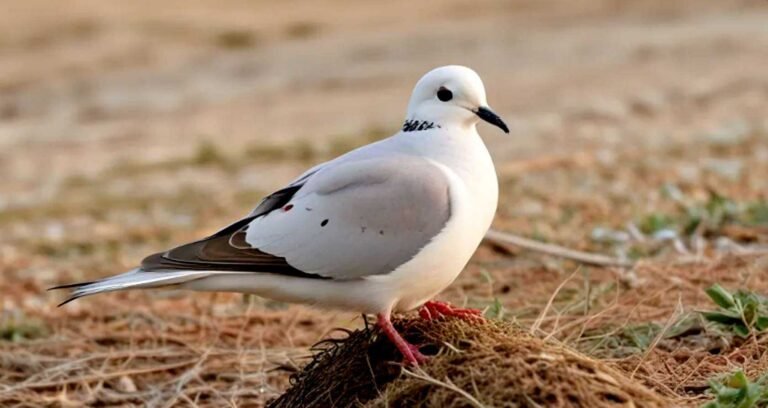
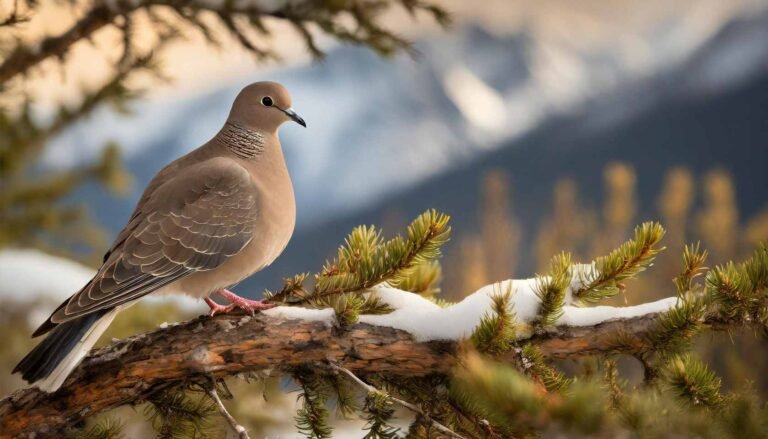
Identification: Slim body, pointed tail, muted brown-gray look.
Habitat: Agricultural fields, desert edges, canals, mesquite flats.
Migration: Strong fall movements mix with resident birds.
Best strategy: Hunt travel routes between grain and water, especially the first and last hour of the day.
White-winged Dove
Identification: Larger and heavier than a mourning dove, with bold white wing flashes in flight.
Habitat: Desert agriculture, urban edges, saguaro country, grain fields.
Migration: Arizona holds both local and migratory birds depending on region and season.
Best strategy: Focus on fields near roost cover and water. They often fly with more purpose than mourning doves.
Eurasian Collared-Dove
Identification: Pale gray-buff bird with a black neck collar and broader profile.
Habitat: Farms, feedlots, small towns, silos, and rural structures.
Migration: Largely resident rather than strongly migratory.
Best strategy: Hunt near grain handling, livestock feed, and rural infrastructure. Make absolutely sure of species ID before using the unlimited-limit rule.
Frequently Asked Questions
When does Arizona dove season open in 2026?
Arizona’s early dove season opens statewide on Sept. 1, 2026.
What are the Arizona dove hunting dates for 2026-2027?
For mourning and white-winged doves, the early season runs Sept. 1-15, 2026, and the late season runs Nov. 20, 2026-Jan. 3, 2027.
What is the daily bag limit for dove season in Arizona?
The daily bag limit is 15 mourning and white-winged doves combined. The possession limit is 45 combined.
Is there still a white-winged dove sublimit in Arizona?
No. For 2026-2027, hunters can take any combination of mourning and white-winged doves within the 15-bird daily limit.
Do I need an Arizona migratory bird stamp for dove hunting?
Yes, if you are 18 or older and hunting mourning or white-winged doves. Youth ages 10-17 meet that requirement through the youth combo license.
Can kids hunt doves in Arizona?
Yes. Youth ages 10-17 need a youth combo license. Children under 10 may hunt doves without a license if accompanied by a licensed adult, subject to Arizona’s youth accompaniment limits.
Are Eurasian collared-doves included in Arizona’s regular dove bag limit?
No. Eurasian collared-doves have unlimited daily bag and possession limits during their statewide season.
Do I need nontoxic shot for Arizona dove hunting?
Only in certain places. Arizona specifically requires nontoxic shot in Bill Williams River, Cibola, Havasu, and Imperial National Wildlife Refuges.
Are there dove hunting zones in Arizona?
Not in the usual sense. Arizona’s dove seasons are statewide, but local closures, refuge rules, and unit-specific restrictions still apply.
Final Thoughts
Arizona Dove Season 2026-2027 gives hunters a clean, hunter-friendly structure: a classic Sept. 1 opener, a long late split, a 15-bird aggregate bag for mourning and white-winged doves, and year-round opportunity on Eurasian collared-doves. The real key to success is less about memorizing dates and more about matching those dates to water, grain, and safe access.
Before you load the truck, verify your exact hunt location, check for local closures, and confirm whether refuge-specific shot rules apply. In Arizona, that extra five minutes of homework can save a hunt.