🕊️ Arkansas’ 2026-2027 Wingshooting Welcome: Your Ultimate Migratory Bird Guide
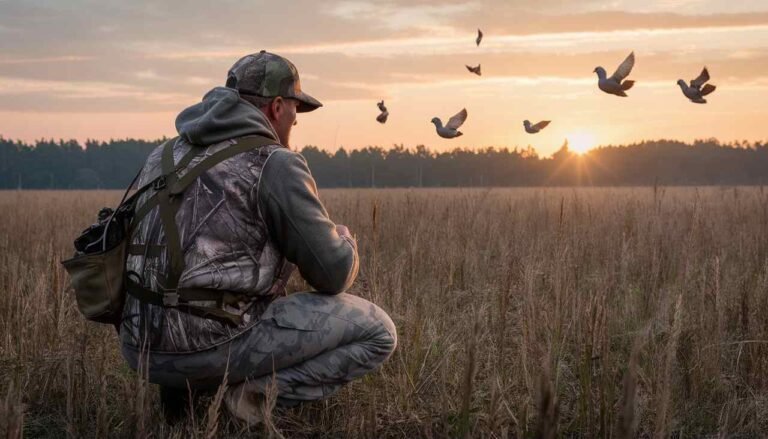
Every September, Arkansas fields and food plots fill with tailgating hunters waiting for doves to flash across the sky. Wingshooting in The Natural State is a rite of passage, and 2026-27 is shaping up to be another strong opener. Below is everything you need to plan hunts, stay legal, and put more birds in the bag.
⚠️ Quick Note: As of writing, the 2026-27 Arkansas Dove Season was officially announced by the Arkansas Game and Fish Commission (AGFC). Final, locked-in dates, bag limits, and license details below are drawn directly from AGFC and the U.S. Fish & Wildlife Service (USFWS) framework. Always recheck the AGFC digest the week before you hunt — late amendments do happen.
When is the 2026-27 Arkansas dove season?
September 5 – October 25, 2026, then a second split: December 8, 2026 – January 15, 2027. The daily bag limit is 15 mourning or white-winged doves; Eurasian collared-doves have no bag limit but must stay fully feathered in the field. Arkansas dove hunting is statewide—there are no north/south zones.
Arkansas Dove Season 2026-2027 Overview
| Species | Season | Zone | Opening Date | Closing Date | Daily Bag Limit | Possession Limit | Status |
|---|---|---|---|---|---|---|---|
| Mourning Dove | Statewide | All | Sept. 5, 2026 | Oct. 25, 2026 | 15 | 45 | Active |
| Mourning Dove | Statewide | All | Dec. 8, 2026 | Jan. 15, 2027 | 15 | 45 | Active |
| White-winged Dove | Statewide | All | Sept. 5, 2026 | Oct. 25, 2026 | 15 | 45 | Active |
| White-winged Dove | Statewide | All | Dec. 8, 2026 | Jan. 15, 2027 | 15 | 45 | Active |
| Eurasian Collared-Dove | Statewide | All | Sept. 5, 2026 | Oct. 25, 2026 | No limit | No limit | Active |
| Eurasian Collared-Dove | Statewide | All | Dec. 8, 2026 | Jan. 15, 2027 | No limit | No limit | Active |
Official Dove Season Dates
The Arkansas dove season runs as a two-segment split. The early segment lines up with the fall migration of mourning doves in the Mississippi and Central flyways; the late-December segment keeps birds in hunters’ sights through midwinter.
Mourning Dove
- Early: Sept. 5–Oct. 25, 2026
- Late: Dec. 8, 2026–Jan. 15, 2027
White-winged Dove
- Same split dates as mourning dove.
Eurasian Collared-Dove
- Open statewide during both segments. AGFC requires these invasives to be kept fully feathered in the field and while being transported, so the species remains identifiable.
There are no separate special early teal-style “early dove” seasons in Arkansas. Everything runs on the schedule above, set inside the USFWS outside dates for 2026-27.
Dove Hunting Zones in Arkansas
Unlike most southeastern states, Arkansas manages its mourning dove season under a single statewide zone. There is no north/south/central/coastal dove split.
What does change by location is WMA access rules. Several AGFC Wildlife Management Areas restrict dove hunting to Tuesdays only, and a few flagship fields (Rick Evans Grandview Prairie, Hope Upland WMA) require a permit drawn between August 1 and August 15. Make sure to read your specific WMA’s page on AGFC before opening morning.
Daily Bag Limits
| Species | Daily Limit | Possession Limit | Special Rules |
|---|---|---|---|
| Mourning Dove | 15 | 45 | Must be taken with a plugged shotgun; nontoxic shot on certain WMAs. |
| White-winged Dove | 15 | 45 | Counts toward the 15-bird daily aggregate with mourning doves. |
| Eurasian Collared-Dove | No limit | No limit | Must remain fully feathered in the field and during transport. |
Possession limit is three times the daily bag — so you can store up to 45 mourning/white-winged doves at home, properly tagged.
Legal Hunting Hours
Legal shooting hours for doves in Arkansas are 30 minutes before sunrise to sunset. That mirrors the federal framework in CFR 50.
- Opening day: sunrise is the key trigger — don’t set up in pitch black.
- No evening extension: unlike waterfowl, doves close hard at sunset.
- Bag timing: your daily limit resets at the official sunrise of the next legal hunting day.
Confirm local sunrise/sunset times via AGFC’s annual hunting digest or your favorite smartphone app — the difference between Arkansas’s eastern and western counties can be 10–15 minutes.
Licenses Needed
| Who You Are | What You Need |
|---|---|
| Arkansas resident, 16+ | Arkansas hunting license + free HIP registration + migratory bird permit (added at no extra charge) |
| Nonresident adult | Nonresident Annual Hunting License (or short-term 1-/3-/5-day license) + HIP |
| Youth under 16 | Exempt from license, but must still be HIP-registered if hunting alone. Adult must hold license if supervising |
| Seniors 65+ (resident) | Reduced-fee “Resident 65-Plus” license, $11.50 lifetime in many cases |
| Military / Veterans | Resident Military Retiree entitlement or 100% disabled veteran license — see AGFC |
| Disabled mobility-impaired | Free or reduced licenses through AGFC’s Mobility-Impaired Program |
Harvest Information Program (HIP) registration is mandatory and free. Anyone hunting doves, ducks, geese, snipe, rails, or coots in Arkansas must register. You can do it through the AGFC license system when buying your permit or by calling 1-877-306-7091.
Legal Hunting Methods
Shotguns only
- A shotgun capable of holding no more than three shells (magazine + chamber combined). Plug-ups are mandatory.
Gauge and shot
- Standard upland loads from 20 gauge through 12 gauge are legal.
- Lead shot is allowed statewide on private land.
- Nontoxic shot is required on many AGFC WMAs and on all National Wildlife Refuges open to hunting. Check the WMA-specific leaflet before you go.
Other gear
- Decoys — legal and highly effective.
- Electronic calls — allowed for doves in Arkansas (confirm by zone each year).
- Baiting — baiting with scattered grain is allowed on private land, but fields must be baited at least 10 days before opening day and cannot be replenished during season. On WMAs, baiting is generally prohibited.
- Retrievers — encouraged, but no chase-style use after dark.
- ATVs/vehicles — state highway laws apply; gun must be unloaded while on or in any motor vehicle.
Best Places to Hunt Doves in Arkansas
Top AGFC Wildlife Management Areas
- Rick Evans Grandview Prairie WMA (Columbia County) — one of the state’s flagship dove fields. Permit required, drawn Aug. 1–15. ~80 acres of top-sown wheat.
- Shirey Bay Rainey Brake WMA — eastern Arkansas bottomland, superb for early-season birds.
- Frog Bayou WMA — Ozark-region mix of cropland and edge.
- Dave Donaldson Black River WMA — northeast Mississippi flyway funnel.
- Camp Robinson Special Use Area WMA — central Arkansas, easy access from Little Rock.
- Poison Springs WMA — south-central, large agricultural buffer.
- Crawford WMA — 24-acre managed dove field, first-come first-served.
National Forests & Public Lands
- Ouachita National Forest and Ozark-St. Francis National Forest both hold mourning doves around clearcuts, food plots, and rural openings. Check current forest-plan maps for dove-specific use areas.
Wildlife Refuges
Several Arkansas National Wildlife Refuges (Bald Knob, Big Lake, Holla Bend) open limited dove hunting. Visit each refuge’s website for refuge-specific permits, ammunition rules, and blind draw procedures.
For a full season overview across the southern U.S., see our guide to the Mississippi Dove Season.
Top Dove Hunting Tips
- Scout five to seven days before opening. Birds find the seed first — you find the birds second.
- Set up with the sun at your back so the sky is between you and incoming doves.
- Use Mojo-style spinning-wing decoys as the centerpiece — they pull distant birds in.
- Plant or top-sow a small dove field in late July. Sunflower, millet, and wheat work.
- Bring a comfortable stool, plenty of water, and shade — September in Arkansas is hot.
- Shoot early-season birds on water; they typically arrive from the roost at first light.
- Decoy the barest stubble strip you can find; the contrast helps decoys pop visually.
- Hunt a midday lull strategy at standing water once the morning flight ends.
- Mix full-body and silhouette decoys — silhouettes fill the pattern for distant shots.
- Mark your shot distance with hat or decoy stake — most missed birds are too far out.
- Pattern your shotgun with the exact shell-and-choke combination you’ll hunt with.
- Use light 7½ or 8 shot for close birds; reach for heavier loads only beyond 35 yards.
- Train your retriever to mark multiple falling birds before opener — cripple recovery matters.
- Always carry a small cooler with ice in the truck. Doves spoil fast in heat.
- After opening week, roost-to-roost hunts outperform field hunts.
- Stay legal: keep HIP confirmation, license, and plug verification ready to show an officer.
Recent Regulation Changes for 2026-2027
AGFC’s announcement for 2026-27 keeps dove bag limits and season structure largely unchanged from 2025-26. The biggest practical items to note:
- Dates shifted slightly later to align with USFWS flyway coordination.
- Permit-draw dove fields (including Rick Evans Grandview Prairie and Hope Upland WMA) continue under the Aug. 1–15 application window.
- Statewide HIP registration continues to be free and integrated with the AGFC licensing portal.
- Nontarget clarification: Eurasian collared-doves still have no daily limit but must remain fully feathered in transit.
No major federal framework changes impact Arkansas hunters for 2026-27. See the AGFC news desk at www.agfc.com for the most current permit and field update.
Hunter Safety Tips
- Firearm safety: Muzzle discipline is everything. Keep the action open until you sit down to shoot.
- Heat safety: September temps may run into the 90s. Hydrate before you’re thirsty.
- Dog safety: Carry a canine first-aid kit. Watch paws on hot gravel roads.
- Eye protection: Polycarbonate shooting glasses protect against wads and shot splash.
- Hearing protection: Foam or electronic muffs — low-cost, high-value.
- Bird identification: Confirm mourning/white-winged/Eurasian before pulling the trigger. Bail out and call AGFC if unsure on a rare species.
- Ethical hunting: Pass on out-of-range birds. Take clean shots. Recover every downed dove.
Common Dove Species in Arkansas
Mourning Dove — the workhorse
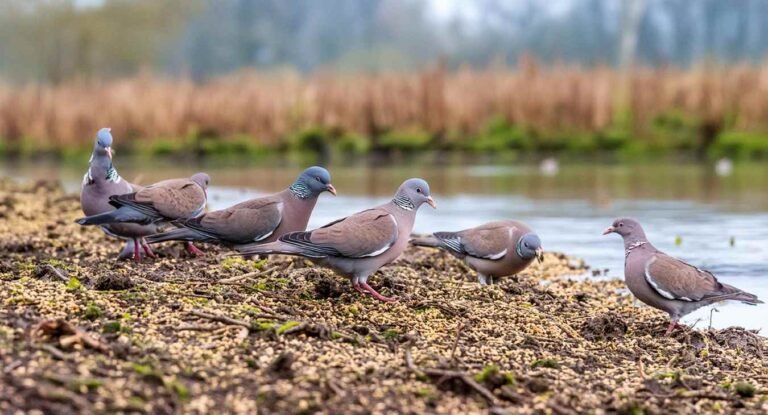
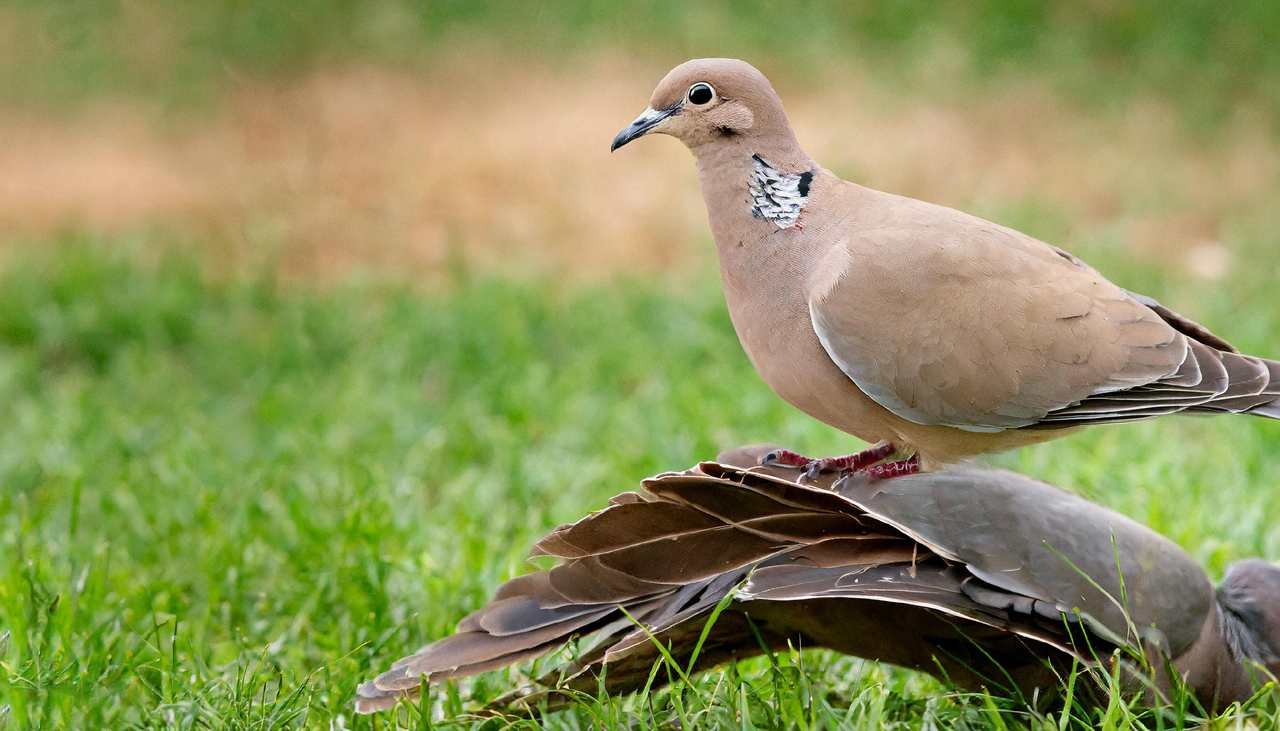
Slender body, soft tan feathers, black spots on wings, and that signature whistling wingbeat. Found statewide near weedy field edges, grain farms, sunflowers, and gravel pits. Migration peaks mid-September. Best hunted over cut wheat or millet bordered by a single tree line for afternoon flight patterns.
Eurasian Collared-Dove — invasive, unlimited
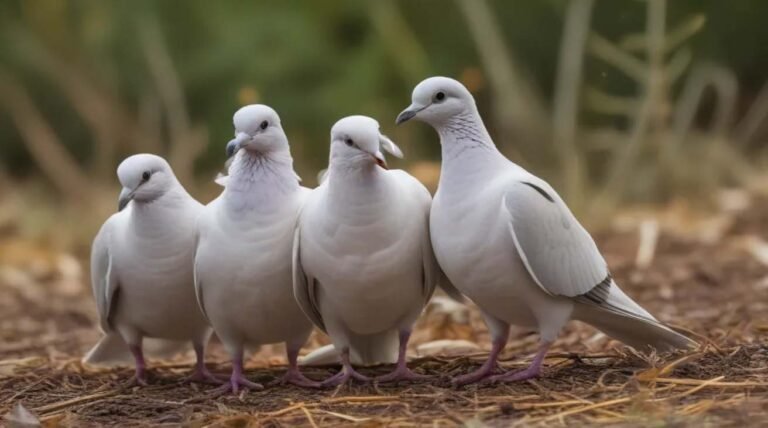
Larger than mourning doves, with a black collar and reddish wash. Roost in barns and small-town shade trees. Hold no bag limit, must stay feathered — but they extend Arkansas’s wingshooting calendar when you need a quick limit.
White-winged Dove — western visitor
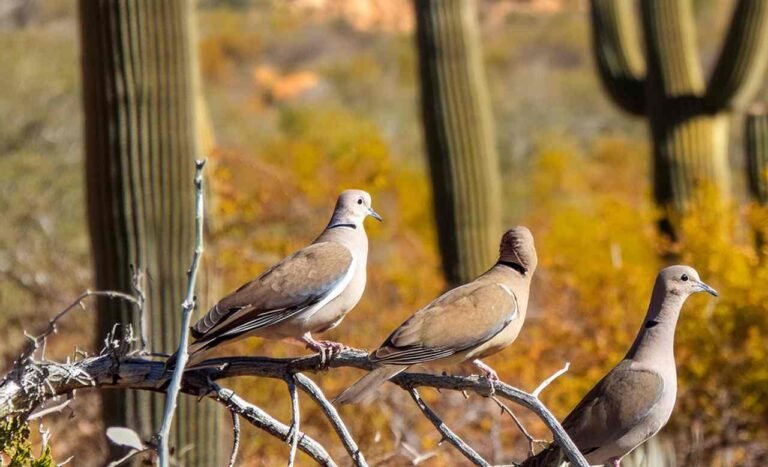
Creamier than mourning doves, with a bold white wing patch. Most common in southern counties near pecan groves. Counts into your daily 15-bird aggregate.
Inca Dove and Common Ground-Dove — uncommon treats
Small, scaled plumage. Generally rare in Arkansas; reportable as incidental sightings to AGFC and consider skipping the trigger.
Frequently Asked Questions
When does dove season open in Arkansas for 2026-27?
The early segment opens September 5, 2026, running through October 25, 2026. A late December segment runs December 8, 2026 – January 15, 2027.
Are there separate zones for dove hunting in Arkansas?
No — Arkansas dove hunting is statewide with a single zone. Access varies by WMA, but bag limits and dates are the same across the state.
What is the daily bag limit for mourning dove in Arkansas?
15 mourning or white-winged doves combined, with a possession limit of 45.
Do I need a HIP registration to hunt doves?
Yes — federal law requires HIP registration for every migratory bird hunter, including doves. It’s free, and Arkansas-integrated through AGFC.
Are Eurasian collared-doves unlimited in Arkansas?
Yes. There is no daily or possession limit, but they must remain fully feathered in the field and during transport for species confirmation.
What shotguns and ammo are legal for Arkansas dove hunting?
Any shotgun incapable of holding more than three shells, 20–12 gauge. Steel or other nontoxic shot required on many WMAs and all NWRs; lead is legal on most private land.
When can I start shooting on opening day?
30 minutes before official sunrise. Use the AGFC sunrise/sunset table for your county.
Where are the best public dove fields in Arkansas?
Rick Evans Grandview Prairie WMA, Shirey Bay Rainey Brake WMA, Frog Bayou WMA, Dave Donaldson Black River WMA, Poison Springs WMA, and Camp Robinson Special Use Area WMA headline the lineup.
Are electronic calls allowed for doves in Arkansas?
Yes, AGFC allows electronic calls for migratory game birds including doves.
Do youth hunters need a license for dove season?
Under 16 — no hunting license required, but HIP registration still applies. Mentors must hold a valid Arkansas license.
Final Thoughts
The 2026-27 Arkansas Dove Season offers one of the most accessible wingshooting opportunities in the country. Two split seasons, a generous 15-bird daily bag, unlimited Eurasian collared-doves, and statewide access mean hunters can plan opening-week family hunts, scout midseason WMA fields, and chase late-season migrants all the way through mid-January.
Confirm every detail before you load the truck. Re-read the AGFC digest, double-check WMA-specific leaflets, and keep HIP confirmation, proof of license, and a plugged shotgun on your person. Hunt safe, shoot fair, and enjoy one of the great traditions in The Natural State.
Happy hunting.