Alabama Dove Hunting Adventure 2026-2027: Regulations, Licenses & Season Dates
Alabama Dove Season 2026-2027 opens September 5, 2026 in the North Zone and September 12, 2026 in the South Zone. Both zones have split seasons, opening-day shooting begins at 12:00 noon, regular shooting hours run from one-half hour before sunrise to sunset, and the daily bag limit for mourning and white-winged doves is 15 birds total. Most hunters need an Alabama hunting license plus HIP certification, and WMA hunters also need the proper public-land access documents.
This guide breaks down the official Alabama season dates, zone rules, bag limits, public-land opportunities, and the hunting methods that matter most in the field. It is built from the latest state and federal rule sources so you can plan with confidence before opening day. Outdoor Alabama dove regulations USFWS migratory bird hunting regulations
Alabama Dove Season 2026-2027 Overview
Alabama dove season is one of the state’s true fall kickoffs. For many hunters, it is the first real excuse to dust off the shotgun, meet up with friends, and spend an afternoon on a cut field waiting for birds to slip across the treeline. For 2026-2027, Alabama continues to run a split dove season with separate North and South Zone openers, a 15-bird daily bag limit, and the usual license and HIP requirements for most hunters.
The big thing to know is this: Alabama’s dove dates are not identical statewide. The North Zone opens first, while the South Zone starts a week later. Opening day hours are also different from the rest of the season, with afternoon-only shooting on the opener before the schedule returns to the standard half-hour-before-sunrise-to-sunset window.
Here is the clearest snapshot of the season structure for hunters planning ahead.
| Species | Season | Zone | Opening Date | Closing Date | Daily Bag Limit | Possession Limit | Status |
|---|---|---|---|---|---|---|---|
| Mourning Dove | Split Season Segment 1 | North Zone | Sept. 5, 2026 | Oct. 18, 2026 | 15 | 45 | Officially posted |
| Mourning Dove | Split Season Segment 2 | North Zone | Nov. 21, 2026 | Nov. 29, 2026 | 15 | 45 | Officially posted |
| Mourning Dove | Split Season Segment 3 | North Zone | Dec. 12, 2026 | Jan. 17, 2027 | 15 | 45 | Officially posted |
| White-winged Dove | Same as mourning dove | North Zone | Sept. 5, 2026 | Jan. 17, 2027 | Combined in 15-bird limit | 45 | Officially posted |
| Mourning Dove | Split Season Segment 1 | South Zone | Sept. 12, 2026 | Oct. 25, 2026 | 15 | 45 | Officially posted |
| Mourning Dove | Split Season Segment 2 | South Zone | Nov. 21, 2026 | Nov. 29, 2026 | 15 | 45 | Officially posted |
| Mourning Dove | Split Season Segment 3 | South Zone | Dec. 12, 2026 | Jan. 17, 2027 | 15 | 45 | Officially posted |
| White-winged Dove | Same as mourning dove | South Zone | Sept. 12, 2026 | Jan. 17, 2027 | Combined in 15-bird limit | 45 | Officially posted |
| Eurasian Collared-Dove | No set season | Statewide | N/A | N/A | No set bag limit | No set possession limit | Open, but not counted toward dove bag if taken during a set season |
Official Dove Season Dates
Alabama regulates mourning dove and white-winged dove together. That means the same season dates and the same combined daily limit apply to both birds.
North Zone
- Opening day: September 5, 2026, noon to sunset
- Segment 1: September 6 through October 18, 2026
- Segment 2: November 21 through November 29, 2026
- Segment 3: December 12, 2026 through January 17, 2027
South Zone
- Opening day: September 12, 2026, noon to sunset
- Segment 1: September 13 through October 25, 2026
- Segment 2: November 21 through November 29, 2026
- Segment 3: December 12, 2026 through January 17, 2027
Other dove-like species hunters may encounter
- Eurasian collared-dove: No set season and no set bag limit in Alabama.
- Rock dove (pigeon): No set season and no set bag limit.
- Common ground-dove: Protected. Do not shoot it.
That last point matters more than many hunters realize. Early-season shoots can be fast, and Alabama specifically provides a dove identification page because misidentification is one of the easiest ways to turn a fun opener into a bad day.
Dove Hunting Zones in Alabama
Alabama does not use a North/Central/South/Coastal split for dove hunting. The statewide dove framework is simpler:
North Zone
The North Zone includes the northernmost 58 counties of Alabama. If your county is not one of the listed South Zone counties, you are hunting the North Zone.
South Zone
The South Zone includes these 9 counties:
- Baldwin
- Coffee
- Covington
- Dale
- Escambia
- Geneva
- Henry
- Houston
- Mobile
Special management units
There are special opportunity areas and managed dove fields, but these are not separate statewide dove-season zones. They are access-managed places inside the broader state framework. In other words, statewide season dates still matter, but local field rules may add hunt-day limits, drawings, check-in procedures, or assigned shooting positions.
Daily Bag Limits
The state’s daily limit is straightforward, but hunters should still understand how mixed bags are counted.
| Species | Daily Limit | Possession Limit | Special Rules |
|---|---|---|---|
| Mourning Dove | 15 | 45 | Combined with white-winged dove |
| White-winged Dove | Included in 15 | Included in 45 | Combined with mourning dove |
| Eurasian Collared-Dove | No set limit | No set limit | If taken during a set season, it does not count against your dove bag |
| Rock Dove | No set limit | No set limit | Not counted toward mourning/white-winged dove bag |
| Common Ground-Dove | 0 | 0 | Protected species |
For most hunters, the practical rule is simple: if it is a mourning dove or white-winged dove, count it toward the 15-bird daily limit.
Legal Hunting Hours
Legal hours are one of the easiest details to overlook, especially on opening day.
- Opening day in each zone: 12:00 noon until sunset
- All other open days: One-half hour before sunrise until sunset
That noon opener is important. Alabama uses it to reduce pressure on birds at daybreak and to better manage the social nature of opening-day shoots.
At the federal level, migratory bird regulations traditionally run on the half-hour-before-sunrise to sunset standard, and Alabama’s dove schedule fits inside that federal framework. So even if you know the field, know the birds, and know the landowner, you still need to watch the clock.
Licenses Needed
Before hunting doves in Alabama, make sure you have the right paperwork.
Most resident hunters need
- All Game Hunting License or Small Game Hunting License
- HIP certification at no charge
- Free WMA map permit if hunting a WMA or managed public area
Nonresident hunters generally need
- Nonresident All Game or Nonresident Small Game license
- HIP certification
- WMA license if hunting on a WMA
- Any area-specific permit required for quota or managed hunts
Exemptions and special cases
- Youth under 16: generally exempt from license purchase; also exempt from HIP
- Residents age 65 and older: generally exempt from purchasing standard recreational hunting licenses; Alabama also states HIP is not required for hunters 65 and older
- Resident military on leave: Alabama license materials note that residents home on military leave are exempt from hunting and fishing license requirements
- License-exempt hunters: may still need to obtain free HIP certification if applicable by age and activity
Federal requirements
For regular dove hunting, a Federal Duck Stamp is not required. That is a waterfowl requirement, not a dove requirement. The big federal pieces for dove hunters are lawful season dates, lawful hunting methods, and compliance with migratory bird rules.
Legal Hunting Methods
Alabama dove hunters should focus on a few rules that matter every single hunt.
Shotguns
A 10-gauge or smaller shotgun is legal for migratory birds in Alabama.
Plug requirement
Your shotgun must be plugged so it cannot hold more than three shells total.
Nontoxic shot
Alabama’s general dove pages do not state a blanket statewide nontoxic-shot requirement for dove hunting. However, some federal refuges, WMAs, or area-specific permits may require it. Check the exact rules for the property you hunt.
Retrievers
Using a dog to recover downed birds is standard practice and smart hunting. A good retriever cuts waste and helps you stay within the law by making every reasonable effort to recover birds.
Decoys
Traditional decoy spreads are a proven dove tactic and are commonly used. Spinning-wing decoy rules can vary by property, so confirm local public-land restrictions before the hunt.
Electronic calls
Do not assume electronic calls are legal just because they are common for predators or private-land varmint setups. Federal migratory bird rules are more restrictive. For doves, stick to legal calling practices and avoid recorded or amplified bird-call devices.
Baiting laws
This is the biggest legal trap in dove hunting.
It is illegal to hunt doves by the aid of baiting or over a baited area when a person knows, or reasonably should know, that the area has been baited. Alabama specifically notes that hunting is legal over:
- normal agricultural operations
- normal post-harvest manipulations
- standing crops
- properly planted wildlife food plots
- standing or manipulated natural vegetation
If somebody simply scatters grain to attract birds, stay away from that field.
Motor vehicle restrictions
Federal rules prohibit hunting migratory birds from a motor vehicle or aircraft, with limited disability-related exceptions for hunting from a stationary vehicle.
Best Places to Hunt Doves in Alabama
Public-land dove hunting in Alabama is better than many hunters think, especially if you are willing to hunt managed fields.
Prairie Glades SOA
A popular special-opportunity field in Montgomery County with limited-quota dove hunts and assigned shooting locations. Good option for hunters who prefer organized access.
Portland Landing SOA
A smaller draw-style public hunt area in Dallas County. Worth watching if you want lower-pressure managed access.
Little River State Forest SOA
One of the better examples of an Alabama forest-based dove opportunity. Good fit for hunters in the southwest part of the state.
Blackwater River SOA
Baldwin County option that gives South Zone hunters another managed public-field choice.
WFF public dove fields
Outdoor Alabama maintains an interactive map of managed dove fields. That is one of the best official tools for finding local public shoots without guessing.
Key Cave National Wildlife Refuge
If you want a federal public-land option, Key Cave is one refuge hunters should know. Refuge-specific rules always apply, so read the current hunt information before you go.
Pro tip: In Alabama, managed dove fields usually produce more reliable action than simply wandering large blocks of public timber. If your goal is birds in range, start with prepared fields, crop edges, and places with known food and flight lines.
Top Dove Hunting Tips
- Scout water, power lines, and cut grain before opening day.
- Hunt travel corridors, not just the middle of the field.
- Sit where birds want to cross, not where shade is best.
- Wear light camouflage that blends with dry field edges.
- Bring more shells than you think you need.
- Keep your shotgun mounted smoothly and avoid rushing shots.
- Pick one bird, not the flock.
- Hunt the first two hours seriously, then adjust.
- Watch where successful shooters are getting crossings.
- Use a stool so you stay still and comfortable.
- Mark every downed bird immediately.
- Carry water, especially during Alabama’s early heat.
- If birds flare, check your movement and sun angle.
- Clean birds quickly in warm weather.
- Rotate shooters safely on crowded fields.
- Leave low, straight-away birds for safer shots.
- If the field is slow, move to a flight line near roost trees.
Recent Regulation Changes for 2026-2027
Based on the latest Alabama materials reviewed, there does not appear to be a major overhaul of core dove regulations for 2026-2027. The foundation remains familiar:
- North and South Zone split seasons
- 15-bird daily limit for mourning and white-winged doves
- Noon opening-day start
- HIP requirement for most hunters
- Strong baiting enforcement emphasis
That said, public-land access details, quota hunts, and managed-field schedules can change faster than statewide framework rules. Hunters should always recheck area sheets before they drive.
Hunter Safety Tips
Dove hunting looks simple, but crowded fields create real risk.
- Keep the muzzle up and never swing through another hunter.
- Establish safe shooting lanes before the first bird flies.
- Wear both eye protection and hearing protection.
- Hydrate early; Alabama’s September heat can be rough on hunters and dogs.
- Give retrievers rest, shade, and water between flights.
- Positively identify every bird before shooting.
- Do not sky-bust birds out of range.
- Retrieve what you shoot and respect neighboring hunters.
Common Dove Species Found in Alabama
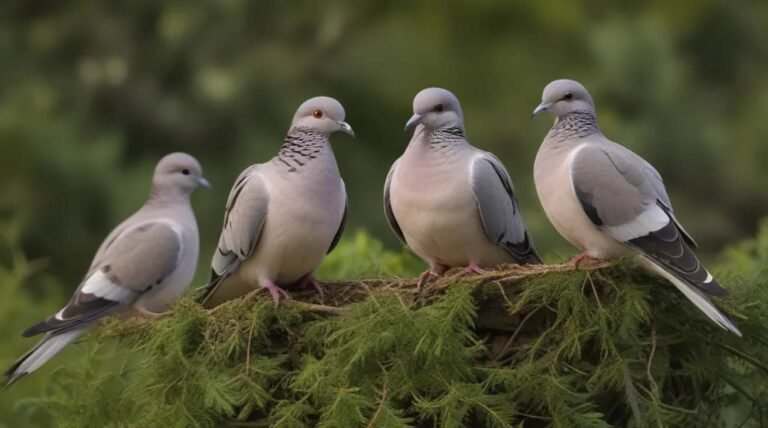
Mourning Dove
Identification: Brown body, dark wing spots, long pointed tail.
Habitat: Cut grain, pasture edges, utility lines, open farmland.
Migration: Abundant in Alabama and heavily hunted early in the fall.
Best strategy: Set up on crossing lines between feeding and loafing cover.
White-winged Dove
Identification: Bright white wing stripe and white-tipped tail.
Habitat: Similar to mourning doves, though less common statewide.
Migration: Seen in Alabama, but not nearly as consistently as mourning doves.
Best strategy: Watch mixed flocks carefully and count them in your daily bag.
Eurasian Collared-Dove
Identification: Pale gray body, black neck collar, squared tail.
Habitat: Farms, barns, grain sites, rural developments.
Migration: Increasingly common in parts of Alabama.
Best strategy: Be certain of the squared tail and collar before treating it as an unregulated bird.
Frequently Asked Questions
When does Alabama dove season open in 2026?
The North Zone opens on September 5, 2026, and the South Zone opens on September 12, 2026.
What is the daily bag limit for doves in Alabama?
The daily bag limit is 15 birds total for mourning doves and white-winged doves combined.
What is the possession limit for Alabama dove season?
The possession limit is 45 birds, or three daily limits.
Do I need HIP to hunt doves in Alabama?
Yes, most dove hunters need HIP certification. Alabama states that hunters under 16 and hunters 65 or older are exempt from HIP.
Do I need a Federal Duck Stamp for dove hunting?
No. A Federal Duck Stamp is for waterfowl, not dove hunting.
Can I hunt Eurasian collared-doves in Alabama?
Yes. Alabama lists no set season and no set bag limit for Eurasian collared-doves.
Are opening-day shooting hours different?
Yes. On the opener in each zone, hunting starts at 12:00 noon and ends at sunset.
Can I hunt doves over a planted field?
Yes, but only if the field was planted and manipulated under legal agricultural practices. Randomly scattered grain can make a field illegal.
Do nonresidents need a WMA license?
If hunting a WMA, yes. Nonresidents generally need the proper hunting license, HIP, and WMA access documents.
Final Thoughts
Alabama Dove Season 2026-2027 gives hunters a long, familiar split season with solid early action, holiday hunting opportunities, and good public-field potential if you plan ahead. The formula has not changed much: know your zone, know your hours, stay legal on baiting, and carry the right license and HIP paperwork.
If you hunt public land, spend extra time checking local field sheets and quota details. That extra ten minutes can save a long drive and a wasted opener. And if you hunt near the state line, it is smart to compare nearby regulations too, especially with neighboring guides like Georgia Dove Hunting Season.