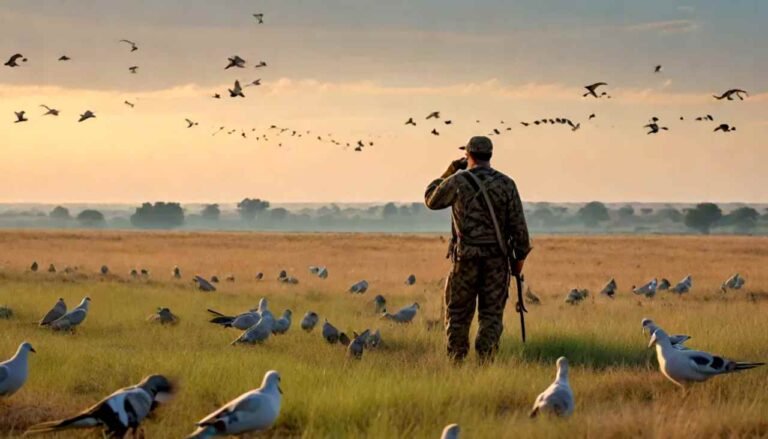
Doves Over North Dakota: 2026-2027 Season and Top Locations for Hunting
North Dakota dove season is one of the earliest and most accessible bird hunts of the fall. For 2026-2027, the official North Dakota Game and Fish schedule shows a statewide dove season running from September 1, 2026, through November 29, 2026, giving hunters a long window to target mourning doves and, where encountered, Eurasian collared doves under the state’s current bag structure. For most hunters, that means scouting grain edges, shelterbelts, water sources, and flyways before the opener rather than worrying about complicated zone maps.
Just as important, North Dakota keeps dove regulations relatively straightforward. There is one statewide unit, no split season on the official 2026 page reviewed, and standard hunting hours of one-half hour before sunrise to sunset. Hunters still need to pay close attention to licenses, HIP registration, public-land rules, and federal baiting law. If you plan to hunt federal lands such as Waterfowl Production Areas, shot rules can also change.
This guide is built from the latest official North Dakota regulations and current federal migratory bird guidance, then rewritten in plain English for hunters who want the facts fast.
Quick Answer
North Dakota Dove Season 2026-2027 opens September 1, 2026, and closes November 29, 2026. The season is statewide, the daily bag limit is 15 doves, and the possession limit is 45. North Dakota’s 2026-2027 proclamation states that Eurasian collared doves are included in the bag limit. Legal shooting hours are one-half hour before sunrise to sunset. Hunters need the proper state licenses plus HIP registration before hunting doves.
🗓️ North Dakota Dove Season 2026-2027 Overview
| Species | Season | Zone | Opening Date | Closing Date | Daily Bag Limit | Possession Limit | Status |
|---|---|---|---|---|---|---|---|
| Mourning dove | Regular | Statewide | Sept. 1, 2026 | Nov. 29, 2026 | 15 | 45 | Finalized |
| Eurasian collared dove | Included in North Dakota dove bag structure | Statewide | Sept. 1, 2026 | Nov. 29, 2026 | Included in 15-dove daily limit | Included in 45-dove possession limit | Finalized |
| White-winged dove | No separate season listing published on the reviewed North Dakota 2026 page | Statewide framework only | — | — | Verify current digest before hunting | Verify current digest before hunting | Not separately listed |
📘 Official Dove Season Dates
For the 2026-2027 season, North Dakota lists one regular statewide dove season from September 1 through November 29, 2026.
Here is what that means in practical terms:
- Mourning dove: This is the main North Dakota dove hunt and the species most hunters will encounter.
- Eurasian collared dove: North Dakota’s proclamation specifically says these birds are included in the dove bag limit.
- White-winged dove: The official North Dakota season page reviewed does not publish a separate white-winged dove opener, split, or special bag category.
Unlike some states, North Dakota does not use a complicated split-season structure for doves on the current official listing. That is good news for hunters because it keeps planning simple: scout late August, hunt the opener, and return whenever weather, crops, and bird movement line up through late November.
If you want to verify the latest wording yourself, check North Dakota Game and Fish dove regulations before opening day.
🧭 Dove Hunting Zones in North Dakota
North Dakota keeps dove hunting simple.
What zones exist?
For the 2026 official season listing, North Dakota uses a single statewide unit for doves.
That means:
- No north zone
- No south zone
- No central zone
- No coastal zone
- No special dove management unit listed on the official 2026 dove page
For hunters, that matters because the opener and closer are the same across the state. Your real “zone strategy” in North Dakota is not regulatory—it is habitat-based. Western shelterbelts, central grain country, and southern prairie edges can all produce birds when food, roosting cover, and water line up.
🎯 Daily Bag Limits
| Species | Daily Limit | Possession Limit | Special Rules |
|---|---|---|---|
| Mourning dove | 15 | 45 | Main regulated dove species in North Dakota |
| Eurasian collared dove | Counts toward 15 | Counts toward 45 | North Dakota includes collared doves in the dove bag limit |
| White-winged dove | Verify current digest | Verify current digest | No separate North Dakota listing found on reviewed 2026 pages |
North Dakota’s bag structure is easy to remember: 15 daily, 45 in possession.
⏰ Legal Hunting Hours
North Dakota’s 2026-2027 proclamation sets dove hunting hours at:
- One-half hour before sunrise
- Until sunset
There is no special opening-day afternoon start listed for North Dakota doves on the official 2026 page reviewed.
That makes opening morning a true sunrise-style hunt. If you want the hottest action, the first two productive windows are usually:
- Early morning flight from roost to feed
- Late afternoon movement back toward food and water
Federal migratory bird rules still matter here too, especially on baiting and lawful harvest practices. For a clean summary of federal baiting law, see U.S. Fish and Wildlife Service dove hunting guidance.
🪪 Licenses Needed
To hunt doves legally in North Dakota, most hunters need a mix of state licenses plus HIP registration.
Resident license summary
| License / Requirement | Resident Cost |
|---|---|
| Fishing, Hunting, Furbearer Certificate | $2 |
| General Game and Habitat License | $20 |
| Small Game License (age 16 or older) | $20 |
| HIP registration | Free |
Nonresident license summary
| License / Requirement | Nonresident Cost |
|---|---|
| Fishing, Hunting, Furbearer Certificate | $5 |
| General Game and Habitat License | $20 |
| Nonresident Small Game License (one 14-day period or two 7-day periods) | $150 |
| HIP registration | Free |
Key license notes
- HIP registration is required for dove hunters.
- HIP must be obtained every year in each state where you hunt migratory birds.
- The HIP number must be recorded on your fishing, hunting, and furbearer certificate.
- Residents under 16 do not need the small game license, but still need the other applicable requirements listed by North Dakota.
- Anyone under 15 hunting with firearms must be licensed and under direct adult supervision.
- Hunters born after Dec. 31, 1961 must have completed hunter education unless they qualify for an exception.
- North Dakota also offers an apprentice hunter validation for some hunters who have not yet completed hunter education.
- A resident on active military leave may hunt small game during the season without a license, subject to state conditions.
- A nonresident youth under 16 may qualify to hunt small game with the resident certificate and resident general game and habitat license, but must meet the supervision and hunter-ed rules.
- A Federal Duck Stamp is a waterfowl requirement, not a standard dove-only requirement.
🔫 Legal Hunting Methods
North Dakota’s dove rules are straightforward, but details matter.
Shotguns and gauge rules
- Legal firearms for migratory game birds must be no smaller than .410 caliber and no larger than 10 gauge.
- The gun must be limited to no more than three shells.
- Pistols may not be used to take migratory game birds.
Shot requirements
- Statewide dove hunting guidance commonly points hunters toward lead target loads like 7½ or 8 shot.
- However, if you hunt on a U.S. Fish & Wildlife Service Waterfowl Production Area or National Wildlife Refuge, North Dakota’s own dove mentor page says you should use nontoxic shot.
Decoys and retrievers
- Decoys are legal and useful.
- North Dakota specifically notes that hunters often use 6 to 18 decoys, including clip-on or spinning-wing styles.
- A retriever can be a big help around water edges and tall cover.
Electronic calls
- North Dakota’s proclamation specifically bans electronic or recorded calls for waterfowl.
- The reviewed dove pages do not promote electronic dove calling, so conservative hunters should stick with decoys and fieldcraft.
Baiting laws
Federal law is strict:
- You may not hunt doves by the aid of baiting.
- A baited area stays illegal for 10 days after all bait is removed.
- Hunting may still be lawful over normal agricultural operations and lawful crop manipulation, but not over scattered grain placed to attract birds.
Motor vehicle restrictions
- Do not shoot from a motor-driven vehicle.
- If hunting from a motorized floating craft, the motor must be off and at rest.
📍 Best Places to Hunt Doves in North Dakota
North Dakota does not rely on special public dove fields the way some southern states do. Instead, success usually comes from smart scouting.
Best public-land options
- Wildlife Management Areas (WMAs): Unless otherwise posted, WMAs are generally open to hunting. Always read entrance signs.
- PLOTS lands: Private land enrolled for walk-in hunting can be excellent when near grain, water, and shelterbelts.
- National Grasslands: North Dakota specifically highlights many U.S. Forest Service National Grasslands as open to hunting.
- Department of Trust Lands: Another useful public option, though site-specific rules can apply.
- Waterfowl Production Areas in Long Lake Wetland Management District: The district’s official hunting page says excellent dove hunting can be found on many of its 77 WPAs.
What habitat to focus on
Look for:
- Harvested wheat and barley edges
- Canola and sunflower country
- Pasture next to trees
- Bare-edged water sources
- Shelterbelts between feed and water
- Small-town edges for Eurasian collared doves
If you also hunt nearby states, you may want to compare timing with this South Dakota dove season guide.
🧠 Top Dove Hunting Tips
Here are 15 North Dakota-specific tips that actually help:
- Scout wheat, barley, canola, and sunflower country first.
- Focus on spots where birds move between roost, feed, and water.
- Hunt bare shoreline edges where doves can land and walk to drink.
- Sit on a travel lane, not just the field itself.
- Shelterbelts are money in windy North Dakota conditions.
- Don’t ignore weed-seed patches with pigeon grass and barnyard grass.
- If a field looks perfect but has no nearby trees, keep driving.
- Opening week is usually strongest before major migration shifts.
- On hot, dry stretches, water can beat food.
- Keep your setup off the skyline; doves pick out movement fast.
- A bucket seat and shade matter more than fancy camouflage.
- Use a small decoy spread, not a giant one.
- Town edges can be surprisingly good for Eurasian collared doves.
- If private land is unposted, it may be open—but asking first is still the smart move.
- Midday can be slow, so plan around morning and evening flights.
🆕 Recent Regulation Changes for 2026-2027
For North Dakota itself, the reviewed 2026-2027 dove structure appears substantially unchanged:
- Statewide season
- Sept. 1 opener
- Nov. 29 close
- 15 daily bag
- 45 possession limit
The bigger 2026 update happened at the federal level. In June 2026, the U.S. Fish and Wildlife Service announced a streamlined migratory game bird framework process intended to give states and hunters earlier certainty. That does not change the need to follow North Dakota’s final proclamation, but it may help reduce last-minute regulatory uncertainty in future years.
🦺 Hunter Safety Tips
Dove hunting is simple, but it is still real shotgun hunting.
- Keep the muzzle up and away from partners at all times.
- Wear eye and hearing protection.
- Carry plenty of water, especially for early-season heat.
- If you hunt with a dog, bring extra water and avoid long unrecovered chases.
- Positively identify each bird before shooting.
- Respect safe shooting lanes around fences, roads, and partners.
- Pick up hulls and leave fields cleaner than you found them.
- Do not sky-bust. Ethical shots mean fewer lost birds.
🕊️ Common Dove Species Found in North Dakota
Mourning Dove
- Identification: Slim, long-tailed, fast-flying dove.
- Habitat: Found statewide; likes mixed ag country, trees, pasture, and water.
- Migration: Early fall movement can be strong once weather changes.
- Best strategy: Pass-shoot travel lanes between feed and water.
Eurasian Collared Dove
- Identification: Larger, paler bird with the dark collar on the neck.
- Habitat: Especially common in cities, small towns, and farmyards.
- Migration: Less tied to classic mourning dove movement.
- Best strategy: Hunt town-edge grain, feedlots, and farmstead flight paths.
❓ Frequently Asked Questions
Is North Dakota Dove Season 2026-2027 finalized?
Yes. The official North Dakota dove page lists the 2026 season as finalized from September 1 through November 29, 2026.
What is the daily bag limit for doves in North Dakota?
The daily bag limit is 15 doves.
What is the possession limit?
The possession limit is 45 doves.
Are there dove hunting zones in North Dakota?
No. The official 2026 season listing shows one statewide unit.
Do I need HIP registration to hunt doves in North Dakota?
Yes. North Dakota requires annual HIP registration for migratory bird hunters, including dove hunters.
What time can you start dove hunting in North Dakota?
You can start one-half hour before sunrise and must stop at sunset.
Can nonresidents hunt doves in North Dakota?
Yes. Nonresidents can hunt doves, but they must buy the required nonresident licenses and register with HIP.
Is lead shot legal for doves in North Dakota?
It can be, but not everywhere. North Dakota guidance says nontoxic shot is required on USFWS Waterfowl Production Areas or National Wildlife Refuges.
Are Eurasian collared doves included in the limit?
Yes. North Dakota’s proclamation says they are included in the bag limit.
✅ Final Thoughts
North Dakota Dove Season 2026-2027 is refreshingly simple: statewide season, September 1 opener, November 29 close, 15-bird daily limit, and 45-bird possession limit. That simplicity lets hunters focus on what really matters in North Dakota—scouting food, water, shelterbelts, and daily flight lines.
Before you head out, double-check the current digest, your HIP number, and the rules for the exact land you plan to hunt. Public-land shot restrictions, posting rules, and federal baiting law can all matter just as much as the season dates.
For broader planning, you may also want companion guides like North Dakota hunting seasons, North Dakota waterfowl season, North Dakota deer season, and a North Dakota hunting license guide.