2026-2027 Missouri Dove Field Preparation Early Fall Season for Hunting
Missouri’s 2026 mourning dove season runs September 1, 2026 through November 29, 2026, with a combined daily bag limit of 15 doves and a possession limit of 45. Hunting hours begin one-half hour before sunrise and end at sunset. A small game hunting permit, a migratory game bird permit ($12.50), and a current HIP (Harvest Information Program) registration are required for every hunter.
📜 Introduction
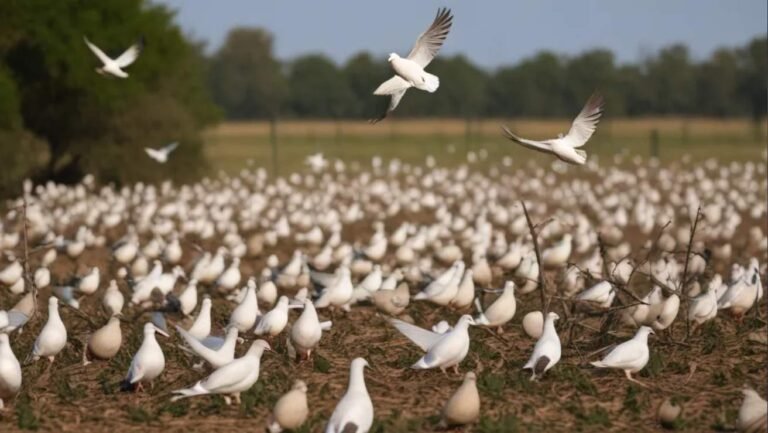
Missouri’s dove opener is one of the most anticipated mornings in the Midwest. On the first day of September, grain fields, old pastures, and freshly disturbed soil across the Show-Me State come alive with shotgun reports and retrievers quartering through sunflowers, millet, and standing corn. For resident hunters and out-of-state visitors alike, the early fall dove hunt is a tradition, a social event, and a gateway into a long year of wingshooting that stretches all the way into January.
Under the current 2026-2027 migratory game bird framework approved by the U.S. Fish and Wildlife Service, the Missouri Department of Conservation (MDC) has confirmed that the regular dove season is September 1, 2026 through November 29, 2026, with a brief late-season re-opening on December 7, 2026 for Eurasian collared doves. Daily limits remain at 15 doves, and the possession limit is 45, taken as a combined total of mourning, white-winged, and Eurasian collared doves. Hunters can expect this to be one of the most accessible, widely distributed, and least expensive wingshooting experiences in North America, especially because Missouri operates on a statewide dove calendar—no north, south, or central dove zones exist in Missouri.
🗓️ Missouri Dove Season 2026-2027 Overview
| Species | Season | Zone | Opening Date | Closing Date | Daily Bag Limit | Possession Limit | Status |
|---|---|---|---|---|---|---|---|
| Mourning Dove | Regular | Statewide | Sept. 1, 2026 | Nov. 29, 2026 | 15 | 45 | Confirmed ✅ |
| White-winged Dove | Regular | Statewide | Sept. 1, 2026 | Nov. 29, 2026 | (combined in 15) | (combined in 45) | Confirmed ✅ |
| Eurasian Collared Dove | Regular | Statewide | Sept. 1, 2026 | Nov. 29, 2026 | (combined in 15) | (combined in 45) | Confirmed ✅ |
| Eurasian Collared Dove | Late Split | Statewide | Dec. 7, 2026 | Pending Final Notice | (combined in 15) | (combined in 45) | Pending Official Announcement ⏳ |
“At the time of writing, final season dates have not yet been officially released. The information below is based on the latest available regulations and official proposals.”
📅 Official Dove Season Dates
The MDC has confirmed a single statewide mourning, white-winged, and Eurasian collared dove season running from September 1, 2026 through November 29, 2026. This 90-day window is the heart of Missouri dove hunting and aligns closely with long-term harvest data showing the strongest bird numbers during the early September split and a small migration bump in late October.
A second short split is normally published toward the end of October, opening a brief late-season window that focuses on Eurasian collared doves, an invasive species with no closed season or annual population cap. Hunters can expect that re-opening to start on December 7, 2026, pending final approval.
There are no species-specific splits for mourning doves, and there is no February conservation-order season for doves in Missouri as there is for light geese. Hunters interested in deeper listings should bookmark the state’s Missouri Waterfowl Season overview to compare frameworks side by side.
🚫 Dove Hunting Zones in Missouri
This is where many out-of-state guides lead hunters astray: Missouri does not use north, south, or central zones for doves. Dove seasons in Missouri are statewide, meaning the same opening day, closing day, and bag limits apply from Kansas City to Cape Girardeau and from St. Joseph to the Bootheel.
The three-zone structure (North, Middle, South) that Missouri is famous for applies only to ducks, geese, and coots—not doves. If you’re planning a dove trip, you only need to worry about one calendar.
Some hunters ask about “special management units” for mourning doves. MDC manages dozens of dedicated Dove Management Areas scattered across every region, but those areas do not affect the regulatory calendar—they only affect where you can find planted food plots. I’ll cover those next.
🎯 Daily Bag Limits
| Species | Daily Limit | Possession Limit | Special Rules |
|---|---|---|---|
| Mourning Dove | 15 (aggregate) | 45 (aggregate) | Combined with white-winged & collared |
| White-winged Dove | 15 (aggregate) | 45 (aggregate) | Statewide, occasional in southern Missouri |
| Eurasian Collared Dove | 15 (aggregate) | 45 (aggregate) | No closed season; can be taken year-round where allowed |
| Combined Total | 15 | 45 | All three species count toward one daily limit |
The “aggregate bag” wording is critical: if you shoot 10 mourning doves and 5 Eurasian collared doves, your day is done. Possession limit triple is the federal standard, not a Missouri-specific rule.
⏰ Legal Hunting Hours
Missouri follows federal migratory bird hunting hours: shooting is permitted from one-half hour before sunrise to sunset every day of the dove season. Twilight shooting is prohibited, and hunters should consult official sunrise/sunset tables for the exact cutoff.
There is no opening day exception, no special youth hour, and no extended afternoon hunting on any MDC area. Hunting past sunset is a violation that the MDC Conservation Agents take seriously.
🎟️ Licenses Needed
Missouri dove hunters must carry three documents in the field:
- Small Game Hunting Permit
- Resident: ~$11.50
- Nonresident: $108.50
- Migratory Game Bird Permit
- $12.50 (resident or nonresident)
- HIP (Harvest Information Program) Registration
The HIP registration is free and can be completed online through the MDC permit portal or at any license vendor. It’s required even if you only plan to hunt one dove.
Exemptions & Discounts
- Youth (15 and under): Hunting permit is free; migratory bird permit ($12.50) still required
- Residents 65+ and disabled veterans: Qualify for a reduced or no-cost small game permit
- Military (active-duty and former): Several permit categories are waived
- Nonresidents: Full-price small game + migratory bird + HIP registration
Always confirm current pricing in the Missouri Hunting License Guide before your hunt—prices typically adjust each June.
🔫 Legal Hunting Methods
Shotguns
Only shotguns may be used. The shotgun must be capable of holding no more than three shells total (federal “plug” requirement). A magazine extender is illegal for migratory bird hunting.
Gauge & Shot Size
Any gauge is legal, although 20 gauge and 12 gauge are the most popular choices. The recommended load is a 1 to 1⅛ ounce payload of #7½ or #8 shot. On the 36 MDC areas that require nontoxic shot, hunters must use steel, bismuth, or tungsten instead of lead.
Nontoxic Shot Areas
MDC now requires nontoxic shot on 36 designated conservation areas, including popular dove fields at Capps Creek, Shawnee Trail, and several locations in northwest Missouri. Hunt these areas with steel #7½ or heavier.
Baiting
Hunting over baited fields is a federal violation. “Normal agricultural practices” such as harvesting, post-harvest discing, and naturally occurring grain are allowed, but do not spread grain, millet, or corn within 10 days of hunting.
Decoys & Calls
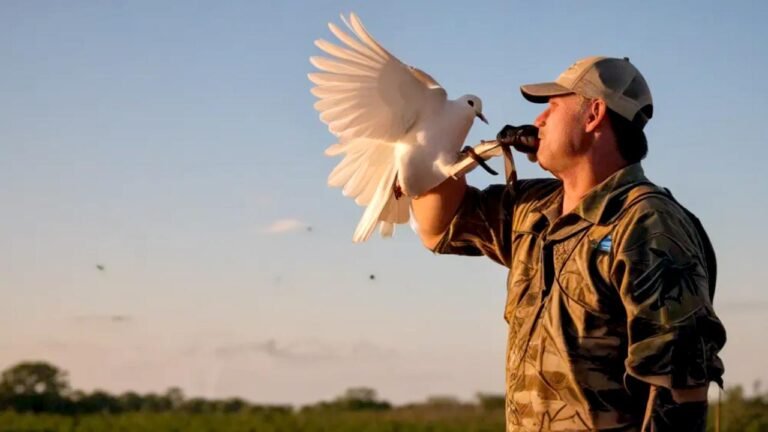
- Electronic and mouth-blown calls: Both legal statewide
- Decoys (full-body, silhouette, or motion spinner): Legal and highly effective
- Retriever dogs: Legal and strongly encouraged
Motor Vehicles
Driving or riding ATV on a dove field outside designated roads is prohibited. Park at the field edge and walk in.
📍 Best Places to Hunt Doves in Missouri
Missouri is uniquely blessed with public dove hunting, thanks to MDC’s aggressive Dove Management Area program. Here are some of the most productive destinations:
- Columbia Bottom Conservation Area (St. Louis metro) – Managed dove hunt with a special draw application (residents 11+ only)
- Capps Creek Conservation Area (Newton County) – Southwest Missouri dove hotspot; nontoxic shot required
- Shawnee Trail Conservation Area – Newly added to the nontoxic-shot list
- Hunnewell Lake Conservation Area (Shelby County) – Northeast Missouri ag-bordered field
- Browning Road, August A. Busch, Forest 44 (St. Louis area) – High-pressure spots with planted sunflowers
- Ted Shanks Conservation Area (Pike County) – Mississippi River bottoms
- Mingo National Wildlife Refuge (Stoddard/Wayne counties) – Limited dove hunting; check current refuge-specific regulations
- Private CRP & WRP fields – Throughout northern Missouri; knock on doors; many landowners welcome responsible hunters
📌 Always check mdc.mo.gov/discover-nature/places/dove-management-areas for the most current 2026 Dove Field Webmap, refreshed every August.
🏆 Top Dove Hunting Tips (Missouri-Specific)
- Scout the day before opener—morning flights reveal where the seed is.
- Hit MDC Dove Management Areas for September 1; managed sunflowers bring birds in steadily.
- Pick a south-facing tree line to keep your back to the sun during evening shoots.
- Bring bright orange for upland dove hunting; it also keeps coyotes wary.
- Watch the wind—in northwest Missouri, prevailing southerly winds stack doves in CRP draws.
- On opener, arrive 90 minutes before sunrise—parking lots at popular fields fill by 5:30 a.m.
- Carry two shotguns: a 20-gauge for clean shots, a 12-gauge for distance.
- Use #7½ steel on nontoxic areas; carry backup #8 lead for private fields.
- Plant a fall sunflowers or millet strip by July 1—that’s how MDC’s best fields work.
- Pair with a Lab or English setter; doves fall far and a dog doubles your recovery.
- Hunt agricultural edges—wheat stubble, cut hay fields, and bean combines draw hungry flocks.
- Set decoys in a V-formation with a motion spinner 20 yards in front of you.
- Move at mid-morning, when flocks shift from roost to feed fields.
- Watch for Eurasian collared doves—larger, paler, often the lead birds in flocks.
- Use the MDC HIP portal the morning of the hunt; recent updates added digital verification.
- Don’t hunt the same field two days in a row—pressure pushes doves to neighboring food.
- Pair your dove hunt with squirrel or rabbit for a true Missouri mixed-bag day.
🔄 Recent Regulation Changes for 2026-2027
The biggest change for 2026 is the expansion of the nontoxic-shot requirement to 36 Dove Management Areas, including Capps Creek and Shawnee Trail. MDC has publicly stated this rule helps reduce lead contamination in mourning doves that ingest spent pellets. Permit price adjustments for 2027 included moving the nonresident small game permit to $108.50. Beyond these changes, Missouri dove regulations remain substantially unchanged from recent years. Dates, bag limits, hunting hours, and species composition mirror long-standing frameworks.
🛡️ Hunter Safety Tips
- Treat every shotgun as loaded until the breech is open.
- Wear sunglasses—dove wings toss feathers, chaff, and dirt into your eyes.
- Use foam earplugs or muffs; one September morning will damage hearing for life.
- Stay hydrated; Missouri September heat regularly tops 90°F.
- Keep dogs shaded and watered between retrieves.
- Identify birds before pulling the trigger—wounded or sitting birds must be retrieved.
- Lead by example for youth hunters; dove season is many hunters’ first wingshooting experience.
🕊️ Common Dove Species Found in Missouri
Mourning Dove
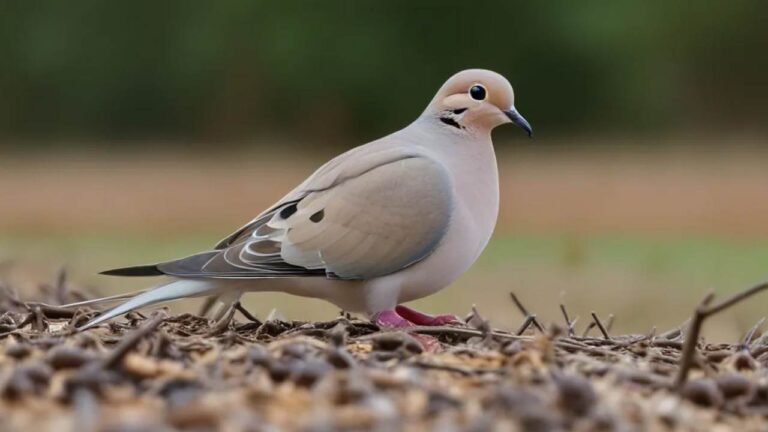
Tan-colored, streamlined, black spots on the wings, pointed tail with white edges. Found in every county. Migratory but a small overwintering population remains. Best strategy: hunt open agricultural fields at sunrise and again two hours before sunset.
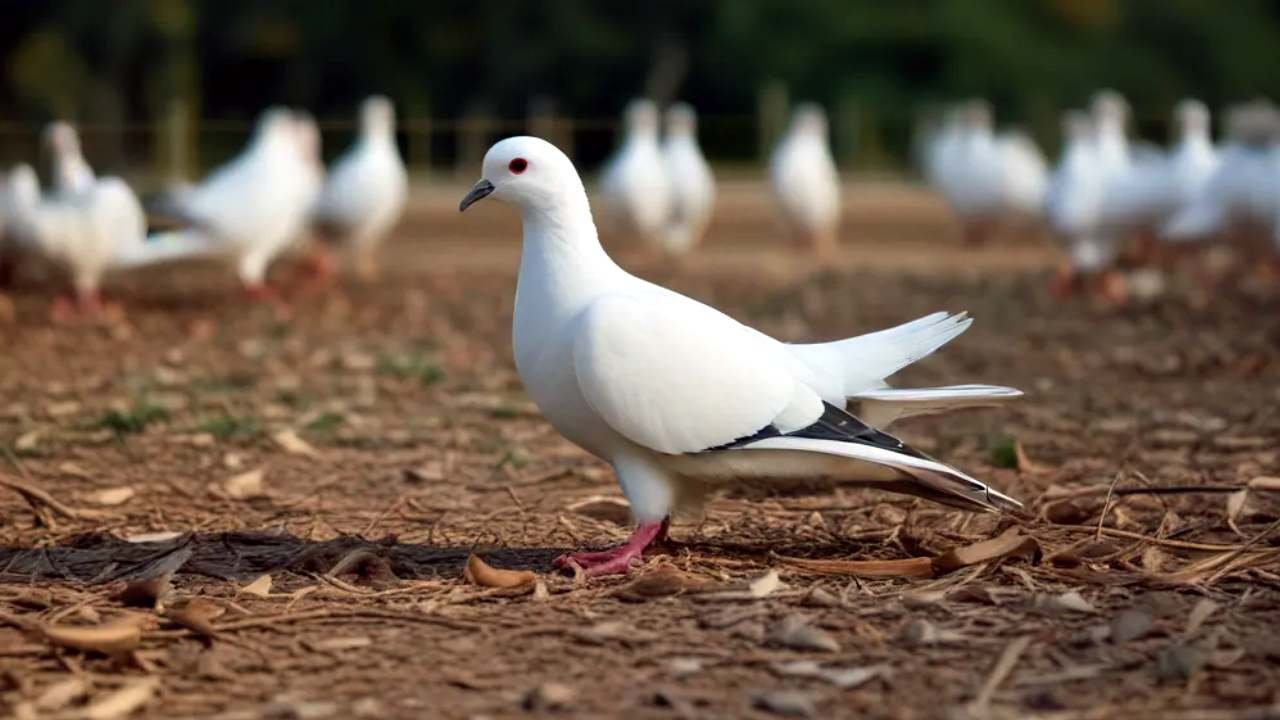
Eurasian Collared Dove
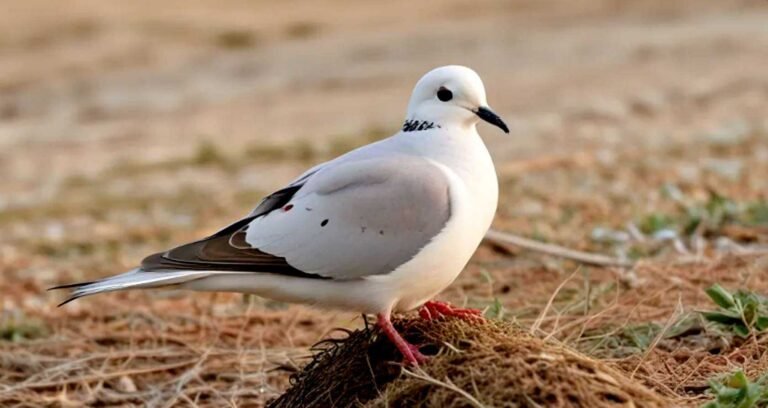
Larger and paler than mourning dove; distinctive black collar on the back of the neck. Non-migratory; populations expanding in southern and central Missouri. Best strategy: target farmsteads, grain bins, and small-town parks.
White-winged Dove
Mostly found in southwest Missouri in late summer; larger than a mourning dove with a bold white wing patch. Increasingly common as climate shifts. Best strategy: hunt near pecan trees, mesquite edges, and water sources.
❓ Frequently Asked Questions
How many doves can I shoot in Missouri in one day?
Fifteen birds, taken as a combined total of mourning, white-winged, and Eurasian collared doves.
Does Missouri have north and south dove zones?
No. Missouri dove seasons are statewide—a single set of dates applies to the entire state. The North/Middle/South zones apply only to ducks and geese.
Do I need a state permit to hunt doves in Missouri?
Yes—every dove hunter needs a small game hunting permit, the migratory game bird permit, and a HIP registration.
Can I hunt Eurasian collared doves in December?
Yes. Missouri typically opens a brief late-season window starting December 7, 2026 for Eurasian collared doves.
Is lead shot legal for doves in Missouri?
Lead shot is allowed on private land and most public areas, but is prohibited on 36 MDC Dove Management Areas where nontoxic shot is now required.
When is the best time of day to hunt doves in Missouri?
The first 90 minutes of light and the last 90 minutes before sunset consistently produce the most shots.
Do I need orange clothing to hunt doves?
Does Missouri require blaze orange for dove hunting? No; orange is recommended for upland safety but not legally required for dove hunts.
Can nonresidents hunt doves in Missouri?
Yes. Nonresidents purchase a $108.50 small game permit, a $12.50 migratory bird permit, and complete the HIP registration.
Where can I find a map of MDC dove fields?
The 2026 MDC Dove Field Webmap is published each August at mdc.mo.gov/discover-nature/places/dove-management-areas.
Can I use an electronic dove call?
Yes. Electronic calls and mouth-blown calls are both legal throughout Missouri.
🎬 Final Thoughts
Missouri’s dove season is a tradition, a teaching ground, and a reliable wingshooting opportunity rolled into one 90-day opener. With 15 daily birds combined across three species, public hunting on more than 100 managed fields, statewide dates, and one of the lowest resident permit costs in the country, the Show-Me State remains one of the best places in America to introduce a young hunter to the sport—or to fill a cooler on a September afternoon.
Before you head afield, always verify the current regulations through MDC’s official hunting digest and the U.S. Fish & Wildlife Service migratory bird frameworks. Dates, permit prices, and nontoxic-shot area boundaries can change annually, and you alone are responsible for what’s in your vest.