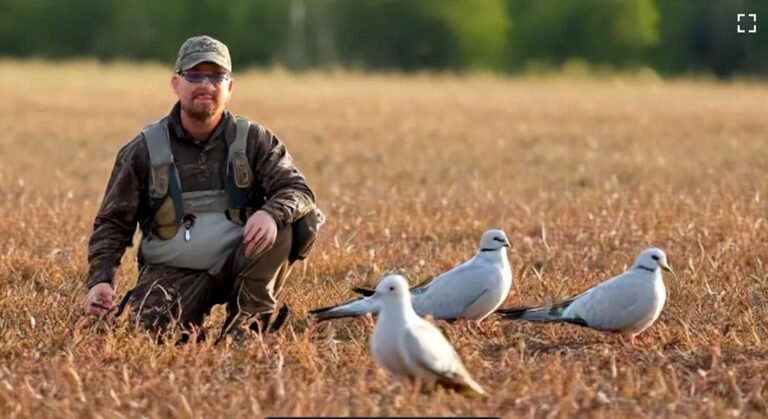
Dove Opening 2026-2027 Louisiana North And South Season
Every September, Louisiana hunters gear up for one of the most anticipated openings in the South — dove season. If you’re planning your fall hunts, the Louisiana Dove Season 2026-2027 opens with that classic Sept. 5 statewide feel: warm mornings, sun-soaked grain fields, and the whir of mourning doves pouring into a freshly cut rice or soybean field before sunrise. Whether you’re heading to a Wildlife Management Area (WMA) on opening day, a leased field in DeRidder or Colfax, or your friend’s cattle pasture, this guide breaks down everything you need to know before stepping into the field.
Louisiana operates under the U.S. Fish & Wildlife Service migratory bird framework, but the Louisiana Department of Wildlife and Fisheries (LDWF) sets the actual season dates, zones, and bag limits. That means Louisiana-specific rules apply, including a North Zone and South Zone split with three season segments each, a 15-bird daily aggregate bag limit, and a few WMA-only nontoxic shot requirements you won’t want to overlook.
Below, you’ll find the official 2026-2027 dove dates confirmed by LDWF, license prices, allowed methods, the best public dove fields in the state, and 15 field-tested Louisiana hunting tips.
⚡ Quick Answer
When does Louisiana dove season open in 2026? September 5, 2026, statewide for both zones. The North Zone runs Sept. 5–27, Oct. 10–Nov. 15, and Dec. 19–Jan. 17. The South Zone runs Sept. 5–20, Oct. 17–Nov. 29, and Dec. 12–Jan. 10. The daily bag limit is 15 doves in aggregate (mourning, white-winged, and Eurasian collared) with a 45-bird possession limit.
Louisiana Dove Season 2026-2027 Overview 🗺️
LDWF has confirmed the following 2026-2027 dove framework:
| Species | Zone | Opening Date | Closing Date | Daily Bag Limit | Possession Limit | Status |
|---|---|---|---|---|---|---|
| Mourning & White-winged Dove | North | Sep. 5, 2026 | Jan. 17, 2027 (split) | 15 (aggregate) | 45 | Confirmed |
| Mourning & White-winged Dove | South | Sep. 5, 2026 | Jan. 10, 2027 (split) | 15 (aggregate) | 45 | Confirmed |
| Eurasian Collared & Ringed Turtle (fully dressed) | Both | Sep. 5, 2026 | Jan. 17/10, 2027 | 15 (aggregate) | 45 | Confirmed |
A note on Eurasian collared doves: While LDWF groups the fully-dressed Eurasian collared dove into the 15-bird aggregate, the bird is widely treated as an unprotected exotic in most other states — Louisiana requires they be fully dressed (plucked and head/wings removed) in the field to count in the bag. Verify the exact field-care provision in the current Louisiana hunting regulations digest before the season.
📅 Official Dove Season Dates
Louisiana runs a three-segment split for both zones, which spreads the season across fall and winter and lets hunters chase doves arriving at different times. The 2026-2027 framework from LDWF:
North Zone
- Sept. 5 – Sept. 27, 2026
- Oct. 10 – Nov. 15, 2026
- Dec. 19, 2026 – Jan. 17, 2027
South Zone
- Sept. 5 – Sept. 20, 2026
- Oct. 17 – Nov. 29, 2026
- Dec. 12, 2026 – Jan. 10, 2027
The mourning dove, white-winged dove, Eurasian collared dove, and Ringed Turtle-Dove (all fully dressed) share the same dates and bag limits. There is no separate white-winged-only split in Louisiana — they’re combined into the aggregate. Extended falconry runs a separate Sept. 13–28 window under falconry limits of 3 birds daily / 9 in possession.
Dove Hunting Zones in Louisiana 🧭
Louisiana divides the state into two dove zones — that is it. There is no central or coastal dove zone.
- North Zone: Starts at the Texas-Louisiana border along LA 12 and follows highways and parish lines north of the boundary described in the LDWF migratory bird regulations.
- South Zone: Everything south of that boundary, including the Acadiana, coastal, and Florida-Parishes region.
A LDWF zone map is published on the agency’s Seasons and Regulations page (see official link at the end) — print or screenshot it before you go because the parishes of East Carroll versus Madison, for example, fall into different zones.
Zone-to-season comparison:
| Feature | North Zone | South Zone |
|---|---|---|
| First segment | Sept. 5–27 | Sept. 5–20 |
| Second segment | Oct. 10–Nov. 15 | Oct. 17–Nov. 29 |
| Third segment | Dec. 19–Jan. 17 | Dec. 12–Jan. 10 |
| Total days | ~70 | ~70 |
| Early-season weather | Hotter, drier | Hot, humid |
🎯 Daily Bag Limits
Federal frameworks cap the aggregate at 15 over most of the country; Louisiana follows that ceiling exactly.
| Species | Daily Limit | Possession Limit | Special Rules |
|---|---|---|---|
| Mourning Dove | 15 (aggregate) | 45 (aggregate) | Standard species |
| White-winged Dove | 15 (aggregate) | 45 (aggregate) | Combined with mourning |
| Eurasian Collared Dove | 15 (aggregate) | 45 (aggregate) | Must be fully dressed in field |
| Ringed Turtle-Dove | 15 (aggregate) | 45 (aggregate) | Must be fully dressed in field |
| Falconry (Extended) | 3 (aggregate) | 9 (aggregate) | Sept. 13–28 only |
Possession limit is three times the daily bag at your permanent residence — there is no tagging or sealed-container rule beyond that for doves.
⏰ Legal Hunting Hours
Louisiana follows the federal standard for doves: shooting hours begin one-half hour before sunrise and end at sunset. There is no opening-day exception for doves in Louisiana — your first shot must wait until that pre-sunrise window opens.
You can pull sunrise/sunset times from the LDWF app, NOAA, or any almanac. On opening day, you’ll want to be set up at least 30 minutes early so you’re positioned before the first flight.
🪪 Licenses Needed
Every Louisiana dove hunter 18 or older needs the following — and yes, HIP is free.
| License / Permit | Resident Fee | Nonresident Fee |
|---|---|---|
| Basic Hunting License | $20 | $200 (or $65 5-day) |
| HIP Certification (mandatory) | Free | Free |
| WMA Access Permit | $20 | $20 |
| Senior Hunting/Fishing License (60+) | $5 | N/A |
| Sportsman’s Paradise License | $100 | $400 |
| Youth Hunting License (under 18) | $5 | $5 |
A few things hunters often miss:
- No waterfowl or duck stamp is needed for doves. Those are only required for ducks, geese, and coots.
- HIP is mandatory — even though it’s free, hunters must certify annually.
- Louisiana residents born before June 1, 1940 do not need a license at all, but should carry proof of age.
- Youth 17 and under may hunt without a basic license when pursuing dove (and other small game); however, they still need a Youth License if actively hunting deer, turkey, or trapping.
- Military, students, and disability rates are available — see the full Louisiana Hunting License Guide on the official LDWF site.
- Residency requires a 6-month continuous Louisiana domicile, a state driver’s license (or ID), voter registration, and tax filings if applicable.
🔫 Legal Hunting Methods
Louisiana’s dove-hunting methods follow the federal framework almost exactly.
- Shotguns only. No rifles or pistols for doves.
- Gauge: Any shotgun that holds no more than 3 shells total (2 in the magazine + 1 in the chamber).
- Plugs: A one-piece plug that fills the magazine is required for all migratory birds, including doves.
- Nontoxic shot: Not required statewide for doves — lead is legal. However, LDWF-designated lease fields (DeRidder, Colfax) and some National Wildlife Refuges do require nontoxic shot size 6 or smaller. Always check the field’s posted rules.
- Decoys and calls: Both legal. Traditional mourning dove decoys work great; electronic calls are legal for doves statewide.
- Baiting: strict — you cannot hunt over a baited field. “Normal agricultural practices” (broadcast seed during ordinary operations) are exempt, but piled or conditioned feed is not. If the farmer disked or top-sowed within 10 days, don’t shoot.
- Vehicles: No shooting from or across a public road; ATV use is restricted to designated field roads when posted wet conditions exist.
- Falconry: Permitted during the extended Sept. 13–28 season with raptor-specific limits.
🏞️ Best Places to Hunt Doves in Louisiana
Louisiana has more public dove-hunting opportunities than almost any other state.
- WMA Dove Fields (Top Picks): Bodcau WMA, Boeuf WMA, Clear Creek WMA, Elbow Slough WMA, John Franks WMA, Pointe-aux-Chenes WMA, Richard K. Yancey WMA, Russell Sage WMA, Sabine WMA, Sandy Hollow WMA, and West Bay WMA. Each opens fields on opening day and select weekends — check the field-by-field calendar.
- U.S. Forest Service: Calcasieu Ranger District (Vernon Unit) often hosts popular dove fields on opening day.
- LDWF Lease Fields: DeRidder and Colfax are the two flagship openings. Permit registration is $10/adult (youth free) via the LDWF dove-hunt portal.
- National Wildlife Refuges: Limited — contact the refuge office before going. Lake Ophelia and Big Branch Marsh typically host permitted hunts.
- Private Land: Louisiana’s agricultural heartland — rice, soybean, and milo fields in Vermilion, Acadia, Evangeline, and St. Landry parishes — is consistently the best public-style opportunity through permission hunts.
For a full breakdown of every WMA dove field, visit the official LDWF dove fields page.
🦅 Top Dove Hunting Tips
- Hunt the first hour and last hour. Mourning doves in Louisiana fly hardest just after sunrise and again at dusk.
- Scout for cut grain. Walk or drive rice and soybean fields the week before the opener; doves stack up where grain is dry and exposed.
- Set up near a water source. A pond, slough, or irrigation canal halfway between roost and feed boosts your bag.
- Use field-style motion decoys. Spin-wing decoys work magic on opening day in Louisiana’s open ag fields.
- Plant a stop. A single tall stake, stubble row, or fence line gives incoming birds a perch to land on — they hesitate, you swing.
- Try #7½ or #8 shot. Smaller pellets do more damage on doves; many Louisiana veterans skip 6s entirely.
- Bring a bucket of water in the truck. Louisiana heat in September regularly tops 90°F — your dog and your hunting partners need it.
- Wear a blaze-orange hat. Required or strongly recommended on many WMAs during opening weekend and helps everyone stay safe.
- Walk downed birds quickly. Louisiana’s washy early-season weeds swallow doves in a heartbeat — train your retriever to mark.
- Skip windy days. Light south or east winds work; anything over 12 mph makes shot angles brutal.
- Time your hunt to agriculture. Doves key in on defoliating soybeans in mid-to-late September.
- Talk to the farmer. Permission hunts on private rice ground often outperform WMAs. Bring a six-pack to the conversation.
- Use the youth exception. Take a 17-and-under hunter — they don’t need a license — to stretch your group’s bag through mentorship.
- Mind the bait line. If grain is spread, piled, or disked in within 10 days, walk away. Baiting citations can cost you a license.
- Hunt the second segment. Mid-October birds in the South Zone are often heavier and more concentrated than opening-weekend migrants.
- Check LDWF news weekly. Last-minute field additions or weather-related cancellations post in real time.
🆕 Recent Regulation Changes for 2026-2027
Per the LWFC-approved 2026-2027 proposed migratory bird framework at LDWF:
- Dates shifted slightly from prior-year patterns to mirror the federal framework — nine-day Sept. 5 opener statewide.
- Eurasian collared and Ringed Turtle-Doves remain aggregate species — no separate bag or season.
- Black-bellied whistling duck season added as a special Oct. 3–11 permit-only hunt — not a dove change, but worth noting for hunters on WMAs.
- Drone language clarified for recovery of wounded game — does not apply to doves.
- Bag limits unchanged: mourning/white-winged aggregate still 15 daily / 45 possession.
Otherwise, dove regulations remain substantially unchanged from 2025-2026.
🛡️ Hunter Safety Tips
- Firearm safety first. Treat every gun as loaded; keep the action open until you’re on the stool.
- Eye and ear protection. Even light #8 shot can deflect off stubble and into your eye; shooting glasses are non-negotiable.
- Watch the heat. Louisiana September means heat indexes of 100°F+. Hydrate before you’re thirsty.
- Protect your dog. Wet towels, shade between flights, and shade in the truck.
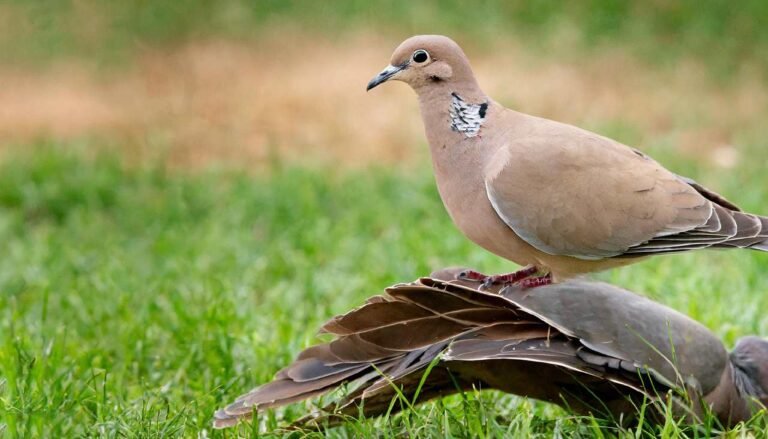
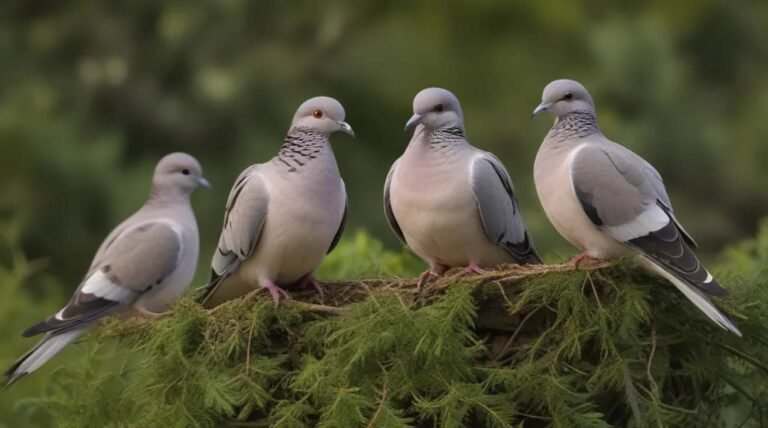
- Identify before you shoot. Mourning doves are brown with pointed tails; white-winged have a bold white wing patch and rounded tails; Eurasian collared are buffy with a black collar. Eurasian collared must be fully dressed in the field to count toward your bag.
- Hunt ethically. Pass on long shots; respect baited-field boundaries; call your shots.
🪶 Common Dove Species Found in Louisiana
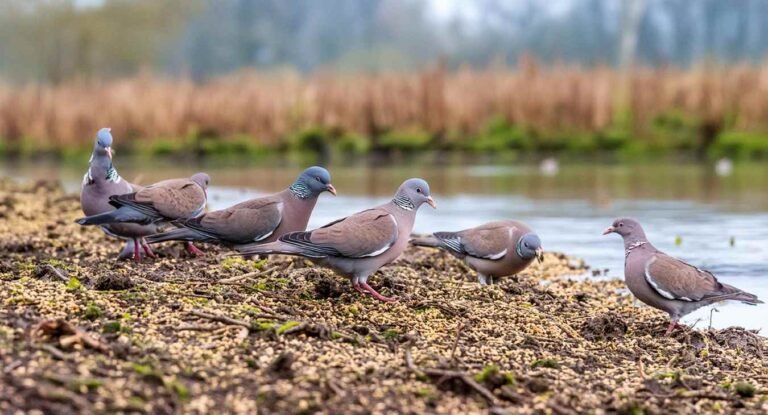
Mourning Dove — Louisiana’s most abundant game bird; soft tan with a long pointed tail and black spots on the wings. Lives near agricultural edges year-round. Best strategy: set up on field edges between roost and feed with motion decoys.
White-winged Dove — Larger, with a white wing patch and blue eye-ring. Common in the southern coastal parishes and along the Texas border. Best strategy: hunt near citrus, huisache, or mesquite — but Louisiana is at the eastern edge of their range.
Eurasian Collared Dove — A non-native, invasive species with a black collar and squared tail. Found statewide in increasing numbers. Best strategy: hunt near barns, grain storage, and cattle operations. No federal protection — many states treat them as exotic, but Louisiana still requires field-dressing and counts them in your aggregate.
Common Ground Dove — Tiny, scaly-headed dove. Protected; no open season. Identify carefully — pass if you’re unsure.
❓ Frequently Asked Questions
When does Louisiana dove season start in 2026?
Both zones open Saturday, September 5, 2026. The North Zone closes its first segment on Sept. 27, and the South Zone on Sept. 20.
How many doves can you shoot in Louisiana per day?
15 doves per day in aggregate (mourning, white-winged, and Eurasian collared combined). The possession limit is 45.
Do I need a HIP certification to dove hunt in Louisiana?
Yes. Every Louisiana migratory bird hunter must complete HIP certification annually. It’s free but mandatory — and LDWF does check.
Are Eurasian collared doves fair game in Louisiana?
Yes, but with rules. They count in your 15-bird aggregate and must be fully dressed in the field (head and one wing removed, or fully plucked) before transport. Check the latest LDWF regulation digest for the exact provision.
Can non-residents hunt doves in Louisiana?
Absolutely. A $200 nonresident Basic Hunting License covers the entire license year, or a $65 5-day license works well if you’re traveling in just for opening weekend. HIP certification is still required.
Are there youth dove hunts in Louisiana?
Louisiana doesn’t run a youth-only dove weekend, but youths under 18 are exempt from the Basic Hunting License requirement and HIP when dove hunting. Many clubs and WMAs host youth-friendly opening weekends.
What shot size is best for Louisiana doves?
Most veterans use #7½, #8, or #9 lead shot for early-season mourning doves. On LDWF lease fields and most WMAs, nontoxic shot size 6 or smaller is required — typically steel #6 or #7.
Is dove hunting on Sundays legal in Louisiana?
No. Louisiana prohibits hunting on Sunday statewide, including for doves. Check any parish-specific ordinances for additional restrictions.
Final Thoughts 🎯
The Louisiana Dove Season 2026-2027 promises another outstanding opener with that signature Sept. 5 statewide feel, 70+ days of hunting opportunity across split seasons, and Louisiana’s legendary combination of public WMA acreage and world-class private agricultural land. The framework is well-established — 15-bird daily bag, HIP certification, plug-in shotguns, and two-zone splits — but always verify the current digest on the official LDWF Seasons and Regulations page before heading out: farmers change planting schedules, fields get baited, and weather patterns shift.
Whether you’re chasing mourning doves over a Sabine Parish soybean field, hunting Eurasian collared doves near a Vermilion Parish cattle operation, or setting up on opening day at the Colfax lease field, Louisiana delivers one of the best dove-hunting experiences in the country. Tight lines, safe shooting, and good luck this fall!
🔗 Related State Dove Season Guides
If you’re planning hunts across state lines, our neighbors to the east and west offer their own unique dove seasons — see our Mississippi Dove Season and Texas Dove Season guides for comparison.