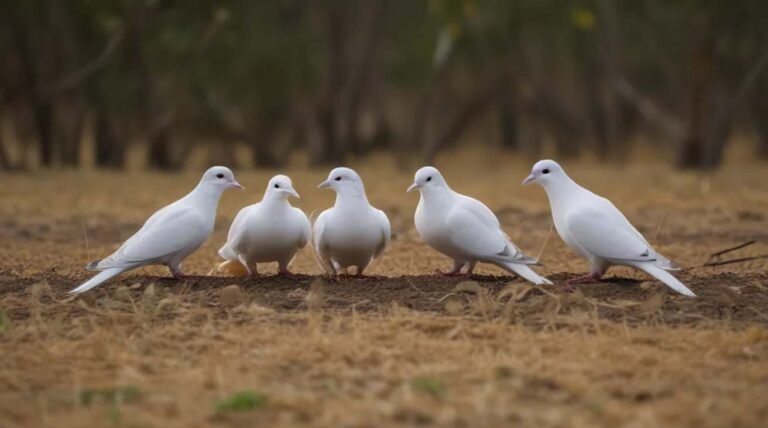
Tennessee Doves: 2026-2027 Season Opportunities in Migratory Bird Hunting
Tennessee dove season is one of the most anticipated small-game openers in the state, and for good reason. It arrives at the front edge of fall, gives hunters fast action, and offers plenty of public-field opportunity if you plan ahead. For 2026-2027, Tennessee is using a statewide split dove season with the traditional noon opener on September 1, a 15-bird daily bag limit, and a Tennessee Migratory Bird Permit requirement for most hunters. This guide is built from the latest official state and federal rules, including the current TWRA migratory bird regulations and U.S. Fish & Wildlife Service migratory bird hunting regulations.
If you are searching for Tennessee Dove Season 2026-2027 dates, legal shooting hours, bag limits, licenses, and the best public places to hunt, you are in the right place. I’ll also cover what changed, where hunters get tripped up most often, and how to stay legal around baiting, plugs, and public dove fields.
Quick Answer
Tennessee Dove Season 2026-2027 opens September 1, 2026, at noon and runs in three statewide segments: Sept. 1-Sept. 28, Oct. 10-Nov. 1, and Dec. 8-Jan. 15, 2027.
The daily bag limit is 15 doves, and the possession limit is 45, except that opening-day possession is the daily limit and second-day possession is double the daily limit.
Eurasian collared-doves have no limit if clearly identified. Most hunters need a valid Tennessee hunting license plus a Tennessee Migratory Bird (HIP) Permit.
🗓️ Tennessee Dove Season 2026-2027 Overview
| Species | Season | Zone | Opening Date | Closing Date | Daily Bag Limit | Possession Limit | Status |
|---|---|---|---|---|---|---|---|
| Mourning dove | Split 1 | Statewide | Sept. 1, 2026 (noon) | Sept. 28, 2026 | 15 aggregate doves | 45* | Official |
| Mourning dove | Split 2 | Statewide | Oct. 10, 2026 | Nov. 1, 2026 | 15 aggregate doves | 45 | Official |
| Mourning dove | Split 3 | Statewide | Dec. 8, 2026 | Jan. 15, 2027 | 15 aggregate doves | 45 | Official |
| White-winged dove | Same as dove season | Statewide | Sept. 1, 2026 (noon) | Jan. 15, 2027 (split season) | Counts in 15 aggregate | 45 | Official framework applied through statewide dove season |
| Eurasian collared-dove | During open dove season | Statewide | Sept. 1, 2026 (noon) | Jan. 15, 2027 (split season) | No limit if clearly identified | No listed limit | Official |
* Opening day possession equals the daily bag limit; second day equals twice the daily bag limit.
📅 Official Dove Season Dates
Tennessee keeps dove hunting simple compared with many other states. There are no separate north, south, or coastal dove zones. Instead, hunters follow one statewide three-split season.
Mourning dove
- Sept. 1, 2026 (opens at noon) – Sept. 28, 2026
- Oct. 10, 2026 – Nov. 1, 2026
- Dec. 8, 2026 – Jan. 15, 2027
White-winged dove
Tennessee does not publish a separate white-winged dove season. In practice, white-winged doves fall under the same statewide dove structure and count toward the regular aggregate dove limit.
Eurasian collared-dove
Tennessee states no limit on Eurasian collared-doves. However, if a bird is not readily identifiable as a Eurasian collared-dove, officers will treat it as a mourning dove for bag-limit purposes. That makes clean identification essential.
Split-season takeaway
The split format helps hunters catch three different windows:
- The hot-weather September opener
- Mid-fall local and migratory movement
- A late-season December-January chance
🌍 Dove Hunting Zones in Tennessee
Here’s the key point many hunters miss: Tennessee does not divide dove season into north, south, central, or coastal hunting zones.
The season is statewide.
What Tennessee does divide is its public dove field information. TWRA organizes public opportunities by Region 1, Region 2, Region 3, and Region 4 for field maps, directions, and local access notes.
- Region 1: West Tennessee public fields and WMAs
- Region 2: Middle Tennessee public fields and WMAs
- Region 3: Upper East / Chattanooga-area public fields
- Region 4: East Tennessee public fields
So if you’re hunting private land, you follow statewide dove dates. If you’re hunting public fields, you also need to check the specific field’s access rules, youth-only days, stake draws, or limited hunt schedules.
🎯 Daily Bag Limits
| Species | Daily Limit | Possession Limit | Special Rules |
|---|---|---|---|
| Mourning dove | 15 aggregate doves | 45 | Opening day possession = 15; second day = 30 |
| White-winged dove | Counts in 15 aggregate | Counts in 45 aggregate | No separate Tennessee bag listed |
| Eurasian collared-dove | No limit | No listed limit | Must be readily identifiable |
A smart way to think about it: if it is not obviously a collared-dove, count it against your 15.
⏰ Legal Hunting Hours
Tennessee follows the standard migratory bird rule of sunrise-related daylight hunting, with one major exception hunters already know well.
- Opening day of dove season begins at noon
- On other days, dove hunting runs from one-half hour before sunrise until sunset
- Tennessee’s general migratory bird rules end shooting at official sunset
- Federal frameworks still control the outer boundaries for migratory bird hunting
That means no early-morning shots on September 1. Plan for a hot, bright noon start, slower first-hour action in some fields, and a stronger late-afternoon flight in many places.
🪪 Licenses Needed
Most Tennessee dove hunters need two things:
- A valid Tennessee hunting license
- A Tennessee Migratory Bird (HIP) Permit
License price summary
- Resident annual combination hunt/fish license (ages 16-64): $33
- Nonresident annual small game/waterfowl hunting license: $110
- Tennessee Migratory Bird Permit: $1
- WMA Small Game/Waterfowl permit if hunting most WMAs/public dove fields: $61
- WMA 1-day permit option: $12
Important exemptions and notes
- Residents and nonresidents under 13 do not need a basic license
- Tennessee residents under 13 generally do not need the migratory bird permit
- Landowners hunting their own land are exempt from the migratory bird permit requirement
- Military personnel on leave or furlough may qualify for license exemptions with leave papers
- Resident seniors 65+ have reduced-fee senior options
- Annual Sportsman and Lifetime license holders do not pay for the HIP permit
- If you hunt a public dove field on a WMA, check whether a WMA permit is required
- Hunters born on or after January 1, 1969 must carry hunter education proof
Federal requirements
For dove hunting, you do not need a Federal Duck Stamp. That stamp applies to waterfowl hunters age 16 and older, not regular dove hunters.
🔫 Legal Hunting Methods
Tennessee dove hunting rules are strict where they matter most.
Shotguns
- Your shotgun must be plugged so it cannot hold more than three shells total
- Current Tennessee dove rules focus on shell capacity, not a special dove-only gauge rule
Nontoxic shot
- Tennessee’s statewide dove rules do not impose a blanket non-toxic-shot requirement for ordinary dove hunting
- But some federal areas do
- Tennessee National Wildlife Refuge, for example, requires federally approved non-toxic shot for dove hunts
Decoys and calls
- Live decoys are illegal
- Electronic calls and recordings of bird sounds are illegal
Baiting laws
This is the biggest legal trap in dove hunting.
- Hunting over bait is illegal
- A baited area stays baited for 10 days after all bait is removed
- Tennessee and federal law treat baiting as a strict-liability issue, so “I didn’t know” is not a good defense
Vehicles and boats
- You may not take migratory birds from a motor vehicle or powered boat, except limited disability exceptions under federal law
Retrievers and recovery
- A dog is a great asset in cut grain, sunflower, and millet fields
- More importantly, the law requires hunters to retrieve crippled or dead birds if possible and keep them in custody
📍 Best Places to Hunt Doves in Tennessee
Tennessee gives dove hunters strong public access, especially through managed fields.
Top public options
- Region 1 (West Tennessee): Big Sandy, Bogota, Camden, Eagle Lake, Harmon Creek, John Tully, Obion River, Thorny Cypress, Three Rivers, Tigrett, White Oak, and Wolf River Unit 1
- Region 2 (Middle Tennessee): Bark Camp Barrens, Cheatham Lake, Haley Jaqueth, Haynes Bottom, Laurel Hill, Mingo Swamp, Percy Priest, Sheltons Ferry, Williamsport, and Yanahli
- Region 3: Bridgestone Firestone, Catoosa, Hiwassee, Jackson Swamp, North Chickamauga, Prentice Cooper, and Tellico Lake
- Region 4: Buffalo Springs, Chuck Swan, Forks of the River, Joachim Bible Refuge Field, and Lick Creek Bottoms
A few standouts
- Percy Priest area fields often draw attention because of managed access and staked-position setups
- Mingo Swamp WMA area fields offer classic Middle Tennessee agricultural-field hunting
- Hixson-area tracts in Region 3 provide scheduled hunt-day opportunities near Chattanooga
- Forks of the River fields near Knoxville give East Tennessee hunters a practical public option
- Tennessee National Wildlife Refuge also allows dove hunting, with state bag limits but refuge-specific ammunition rules
If you like neighboring-state comparisons and trip planning, a useful related read is Kentucky Dove Season.
🧠 Top Dove Hunting Tips
- Arrive early on public fields, especially for the Sept. 1 opener.
- Expect the first legal shot at noon, not sunrise.
- Carry extra water; Tennessee’s opener is usually brutally warm.
- Walk the field edge before loading your gun and check for baiting red flags.
- Hunt shade-side tree lines in early afternoon heat.
- Watch utility lines and dead snags; Tennessee doves love quick staging perches.
- In sunflower fields, set up where birds cross gaps rather than where they feed longest.
- In cut grain, hunt corners, not the middle, when pressure is high.
- Use a stool and stay still; movement flares birds fast.
- Bring a dog if possible because Tennessee fields can hide birds well.
- Keep birds separated and count often so you do not drift past 15.
- If a bird looks questionable, count it as a mourning dove.
- On managed public fields, study youth-only dates and stake-draw rules before you drive.
- Late splits can be excellent around grain, silage, and roost routes after cold fronts.
- On federal refuges, double-check ammo rules before you leave home.
- Wear light clothing, eye protection, and hearing protection from the first shot.
- If you hunt private land, get permission in writing and confirm how the field was prepared.
🔄 Recent Regulation Changes for 2026-2027
For Tennessee dove hunters, the 2026-2027 rules appear substantially unchanged in structure.
The big-picture updates are:
- Tennessee continues to use a statewide three-split dove season
- The 15-bird daily bag remains in place
- Sept. 1 still opens at noon
- The Tennessee Migratory Bird Permit remains required for most hunters
- Federal officials updated the broader rulemaking process in 2026 to give states earlier certainty, but that change did not create a dramatic on-the-ground shift for Tennessee dove hunters
In short, this season looks familiar, which is good news for hunters who already know the routine.
🦺 Hunter Safety Tips
Dove season is fun, but it is one of the easiest seasons to get careless.
- Keep muzzles up and safe in crowded fields
- Pick a shooting lane and never swing through another hunter
- Wear shooting glasses
- Wear hearing protection
- Hydrate aggressively in early September heat
- Check your dog for overheating and seed-head irritation
- Identify birds carefully before shooting
- Retrieve every bird you can
- Respect spacing on public fields
- If power lines are nearby, be extra careful with shot angles and downed-bird recovery
🕊️ Common Dove Species Found in Tennessee
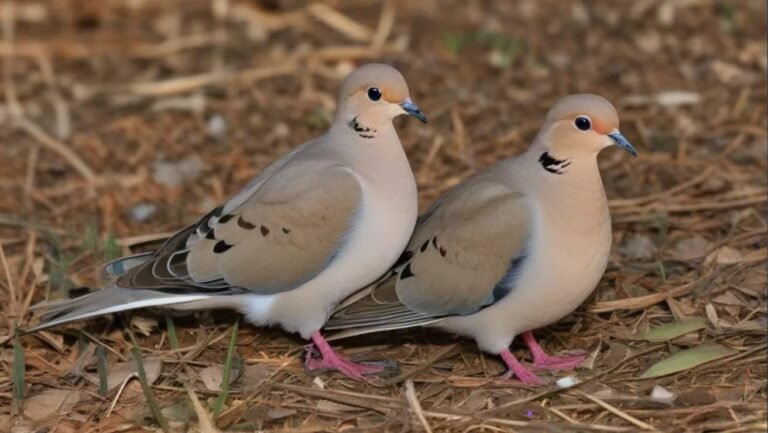
Mourning Dove
Identification: Slim body, small head, black wing spots, long pointed tail with white outer edges.
Habitat: Farms, open woods, field edges, suburbs, and towns statewide.
Migration: Tennessee has local birds plus fall movement that boosts hunting opportunity.
Best strategy: Hunt flight lines between feed fields and nearby loafing cover.
White-winged Dove
Identification: White wing bar, blue eye ring, rounded tail, bulkier look than a mourning dove.
Habitat: More common farther south and west, but hunters should know the ID because mixed flocks happen.
Migration: Federal guidance notes range expansion and fall flocking.
Best strategy: Treat them like fast-flying field doves, but confirm the white wing bar before assuming species.
Eurasian Collared-Dove
Identification: Larger than a mourning dove, pale gray-buff body, black half-collar on the neck, square tail.
Habitat: Grain facilities, farmyards, towns, silos, and suburban edges.
Migration: Not managed like native migratory doves in the same way; Tennessee allows no limit when clearly identified during the open dove season.
Best strategy: Check grain bins, rural homesites, and edges of agricultural communities.
❓ Frequently Asked Questions
When does Tennessee dove season open in 2026?
It opens September 1, 2026, at noon.
What are the Tennessee dove season split dates for 2026-2027?
The statewide splits are Sept. 1-Sept. 28, Oct. 10-Nov. 1, and Dec. 8-Jan. 15, 2027.
Are there dove hunting zones in Tennessee?
No. Tennessee uses one statewide dove season, not north/south/coastal zones.
What is the daily bag limit for doves in Tennessee?
The daily bag limit is 15 doves.
What is the possession limit?
The normal possession limit is 45, but it is 15 on opening day and 30 on the second day.
Do Eurasian collared-doves count toward the limit?
No, if they are readily identifiable as Eurasian collared-doves. If not, count them as mourning doves.
Do I need HIP registration in Tennessee for dove hunting?
Yes. Most hunters need the Tennessee Migratory Bird Permit, which serves the HIP requirement.
Is nontoxic shot required for dove hunting in Tennessee?
Not statewide for ordinary dove hunts. But some federal properties, including Tennessee National Wildlife Refuge, require non-toxic shot for dove.
Can I hunt over a freshly prepared grain field?
Only if the field was prepared through a legal agricultural practice or legal wildlife-field manipulation. If grain was added or redistributed as bait, the hunt is illegal.
Do I need a WMA permit for public dove fields?
Usually, yes, on many TWRA-managed public dove fields. Always check the field listing before you go.
🧭 Final Thoughts
Tennessee Dove Season 2026-2027 is straightforward on paper but easy to mess up in the field if you ignore the details. The dates are statewide, the bag limit is 15, opening day starts at noon, and most hunters need both a hunting license and a Tennessee Migratory Bird Permit. Beyond that, the real keys are field legality, species identification, and checking site-specific public-land rules before you drive.
If you want a productive and drama-free opener, scout early, count birds honestly, carry plenty of water, and verify the latest field notices before hunting. That last check matters most on public dove fields, where access rules, youth hunts, and leased-field updates can change close to opening day.