Hunt Among the Peaks: A Guide to Colorado’s Dove Hunt (2026-2027)
Colorado dove hunters have a pretty straightforward season structure compared with many states. For 2026-2027, the current approved Colorado migratory bird rule keeps mourning dove and white-winged dove season open statewide from Sept. 1 through Nov. 29, with a 15-bird daily bag and a 45-bird possession limit in the aggregate. Colorado also allows year-round hunting for Eurasian collared-doves, which are treated as an invasive species under a separate set of rules.
That said, smart hunters should still double-check the final Colorado Small Game & Waterfowl Brochure before opening day. Access details, license fees, and property-specific restrictions can change even when the core dove framework stays the same. In Colorado, success usually comes down to scouting feed, water, and flight lines on the plains, not just memorizing dates.
This guide breaks down the latest official rules, legal methods, licenses, hunting hours, bag limits, and the best public-land options to start your scouting. It is written for real hunters who want clean, usable information without fluff. The season dates and core regulations below are based on current Colorado rulemaking and federal migratory bird standards. Colorado Parks and Wildlife small-game hunting information
Colorado Dove Season 2026-2027 Overview
Mourning dove and white-winged dove season is currently set statewide for Sept. 1-Nov. 29. The daily bag limit is 15 doves in the aggregate, and the possession limit is 45. Hunters need a valid Colorado small-game license and annual HIP registration. Eurasian collared-doves may be hunted year-round with no bag limit, but special transport and identification rules apply. Federal baiting rules still control where you can legally hunt doves, including the 10-day rule for baited areas. U.S. Fish & Wildlife Service dove-hunting guidance
| Species | Season | Zone | Opening Date | Closing Date | Daily Bag Limit | Possession Limit | Status |
|---|---|---|---|---|---|---|---|
| Mourning Dove | Regular dove season | Statewide | Sept. 1, 2026 | Nov. 29, 2026 | 15 aggregate with white-winged doves | 45 | Current approved rule |
| White-winged Dove | Regular dove season | Statewide | Sept. 1, 2026 | Nov. 29, 2026 | 15 aggregate with mourning doves | 45 | Current approved rule |
| Eurasian Collared-Dove | Invasive species season | Statewide | Year-round | Year-round | Unlimited | Unlimited | Open year-round |
| Band-tailed Pigeon | Separate migratory bird season | Statewide | Sept. 1, 2026 | Sept. 14, 2026 | 2 | 6 | Separate permit required |
Colorado’s dove setup is hunter-friendly. There is one statewide regular season for mourning and white-winged doves, no complicated zone map, and no split segments to track. The tradeoff is that you still need to pay close attention to property rules, access hours, and bird identification.
Official Dove Season Dates
Colorado’s current approved migratory bird regulation sets the regular mourning dove season and white-winged dove season from Sept. 1 through Nov. 29 annually. Those two species share one combined limit, so your mixed strap cannot exceed the aggregate daily or possession cap.
Mourning dove
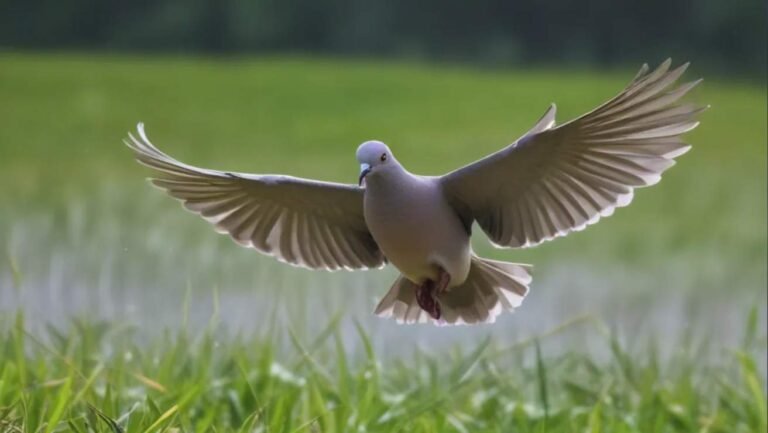
This is the bread-and-butter bird for Colorado’s early migratory bird opener. If you plan to hunt grain edges, weedy corners, pivots, stock ponds, or shelterbelts on the eastern plains, this is the species you will see most often.
White-winged dove
White-wings are legal during the same statewide Sept. 1-Nov. 29 season and count toward the same 15-bird daily limit. They are less common than mourning doves in Colorado, so identification matters.
Eurasian collared-dove
Eurasian collared-doves are not managed under the same regular-season framework. Colorado treats them as an invasive species. They are open year-round, require no hunting license, and carry no daily or possession limit. However, they must remain fully feathered in the field or during transport unless counted within the regular dove bag during the Sept. 1-Nov. 29 season.
Additional species note
Band-tailed pigeons are sometimes confused with doves by newer hunters, but they are regulated separately. In Colorado, they have their own short season and require a separate permit. Do not assume pigeon rules match dove rules.
Dove Hunting Zones in Colorado
Colorado does not currently divide dove hunting into north, south, central, coastal, or special dove zones.
That means:
- mourning dove season is statewide
- white-winged dove season is statewide
- no split-zone map is required for standard dove hunting
- local property rules can still vary by SWA, refuge, park, or walk-in parcel
This is an important planning advantage. Once you know the statewide season is open, your next job is access and scouting rather than figuring out which dove zone you are standing in.
Daily Bag Limits
| Species | Daily Limit | Possession Limit | Special Rules |
|---|---|---|---|
| Mourning Dove | 15 aggregate with white-winged doves | 45 | Combined bag with white-winged doves |
| White-winged Dove | 15 aggregate with mourning doves | 45 | Combined bag with mourning doves |
| Eurasian Collared-Dove | Unlimited | Unlimited | Must remain fully feathered except when counted in regular dove bag during Sept. 1-Nov. 29 |
| Band-tailed Pigeon | 2 | 6 | Separate permit required |
A key point for mixed bags: Colorado counts mourning and white-winged doves together. If you shoot 12 mourning doves and 3 white-wings, you are done for the day.
Legal Hunting Hours
Colorado keeps legal dove hunting hours simple. For small game and migratory birds, legal hunting time is one-half hour before sunrise to sunset.
Here is what that means in practice:
- You can set up early, but do not shoot before legal light.
- Colorado does not list a special noon opener or opening-day delay for doves.
- The same standard hours apply from the start of the season unless a site-specific rule says otherwise.
- Federal migratory bird rules set the broad framework, and Colorado follows the traditional half-hour before sunrise to sunset standard for doves.
Always check the daily sunrise table or a reliable field app the night before a hunt, especially when moving between counties.
Licenses Needed
To hunt regular dove season in Colorado, most hunters need:
- a valid Colorado small-game license
- HIP registration for the current license year
- proof of hunter education if required by age/law
What is required for most dove hunters?
A standard Colorado dove hunter needs a small-game license plus HIP. If you buy through CPW, make sure HIP is actually attached to your account and printed or recorded correctly.
Do you need a duck stamp?
No. A Federal Duck Stamp and Colorado Waterfowl Stamp are for waterfowl hunting, not regular dove hunting.
Habitat Stamp
Colorado requires a Habitat Stamp for many hunters ages 18-64, unless an exemption applies. Because fee rules can update with the new brochure, verify the final 2026 requirements before purchase.
Youth hunters
Youth still need a valid license to hunt small game in Colorado. They do benefit from youth license options, and many younger hunters are exempt from the Habitat Stamp requirement based on age.
Senior hunters
Colorado residents 65 and older have senior combo options for small game and fishing. That is useful if you regularly hunt birds and fish in the same season.
Military and veteran considerations
There is no blanket military exemption for regular dove hunting licenses, but Colorado does provide certain residency accommodations and special lifetime small-game/fishing benefits for qualifying disabled resident veterans and some disabled first responders.
Nonresident hunters
Nonresidents can buy annual or short-duration small-game licenses. That makes Colorado a solid option for traveling early-season hunters.
Legal Hunting Methods
Colorado’s legal dove methods are straightforward, but the details matter.
Shotguns
- Shotguns must be 10 gauge or smaller
- They cannot hold more than 3 shells total in the chamber and magazine combined
- If the gun holds more than 3 shells by design, it must be properly plugged with a one-piece filler that cannot be removed without disassembly
Nontoxic shot requirements
Colorado does not impose a blanket statewide nontoxic-shot rule for regular dove hunting the way it does for ducks, geese, and coots. Still, some individual properties may carry tighter rules, and lead-free loads are increasingly encouraged.
Retrievers and dogs
Dogs are legal for pursuing, flushing, pointing, and retrieving small game and migratory birds. A steady dog is a huge advantage on hot September afternoons when birds drop into cover.
Decoys
Artificial decoys are legal and effective. A small spinning-free spread near a water source or cut field can help, especially for passing birds.
Electronic calls
Do not use recorded or electronically amplified calls for doves. Colorado allows those for crows and certain goose situations, not for regular dove hunting.
Baiting laws
This is where hunters get into trouble. You may hunt over fields affected by normal agricultural planting, harvesting, or post-harvest manipulation. You may not hunt over a baited area. If bait is present, the area stays closed to dove hunting for 10 days after complete removal.
Motor vehicle restrictions
You cannot shoot from a motor vehicle. You also cannot shoot from, on, or across a public road. Park, unload, and hunt on foot.
Best Places to Hunt Doves in Colorado
Colorado is not a classic “public dove field” state. Most public opportunity comes from access programs, reservoirs, agricultural edges, and selected wildlife areas.
1. Walk-In Access parcels east of I-25
CPW highlights more than 154,000 acres open to dove hunting through the Walk-In Access program. This should be the first place many hunters start, especially on the eastern plains.
2. Mike Higbee SWA
Located in Prowers County, Mike Higbee SWA lists dove among its hunting opportunities. It is worth a look for hunters focusing on southeastern Colorado and wanting a managed public-access property.
3. Tamarack Ranch SWA
Tamarack Ranch SWA in northeast Colorado specifically lists dove among hunting opportunities. It also has useful structure for planning: open hours, mandatory check-in/check-out, and some seasonal reservation logistics.
4. Prewitt Reservoir SWA
Prewitt Reservoir SWA lists dove as a hunting opportunity and gives hunters another eastern Colorado public-land option around water and ag country.
5. Alamosa National Wildlife Refuge
Alamosa NWR allows limited small game hunting, including dove. Refuge rules can be more specific than state rules, so read the refuge brochure before you go.
6. Broader public-land options
Colorado also offers major access through:
- State Wildlife Areas
- BLM lands
- selected state parks with hunting
- some USFS lands where habitat exists
If you hunt several western states each fall, it can also help to compare neighboring opportunities like the Wyoming dove season.
Top Dove Hunting Tips
- Scout water first in dry years.
- Then scout feed: sunflowers, millet, wheat stubble, weed patches.
- Watch evening flight lines, not just morning movement.
- Set up where birds want to cross, not where you wish they would.
- Sit in shade whenever possible during September heat.
- Wear dull colors and keep movement minimal.
- Bring more shells than you think you need.
- Use an improved cylinder or modified choke for most setups.
- Pick one lane and avoid sky-busting.
- Mark downed birds immediately; doves disappear fast in grass.
- Carry water for yourself and your dog.
- Hunt field edges, fence lines, and isolated trees near feed.
- If birds flare, move 20 to 40 yards instead of blaming the decoys.
- Learn the look of white-wings and Eurasians before opening day.
- Leave a field if baiting looks questionable. A limit is never worth a ticket.
Recent Regulation Changes for 2026-2027
For dove hunters, the good news is that Colorado’s core rules appear substantially unchanged going into 2026-2027.
The major takeaways:
- mourning and white-winged dove season remains Sept. 1-Nov. 29
- the season remains statewide
- the daily bag remains 15 aggregate
- the possession limit remains 45
- Eurasian collared-doves remain year-round and unlimited
In other words, no major dove-specific liberalization or rollback stands out in the current approved rule. Hunters should still review the final 2026 brochure for any updates to fees, access procedures, or property-level restrictions.
Hunter Safety Tips
Dove season is simple, but it is not risk-free.
- Keep the muzzle above the line when birds approach low.
- Never swing through another hunter.
- Wear eye protection for pellets, dust, and seed heads.
- Wear hearing protection, even for quick afternoon shoots.
- Hydrate aggressively in early-season heat.
- Check paws, tongues, and body temperature if running a dog.
- Positively identify birds before firing.
- Respect property lines and posted access rules.
- Pick up every downed bird you can reasonably recover.
- Pick up hulls and leave the field cleaner than you found it.
Common Dove Species Found in Colorado
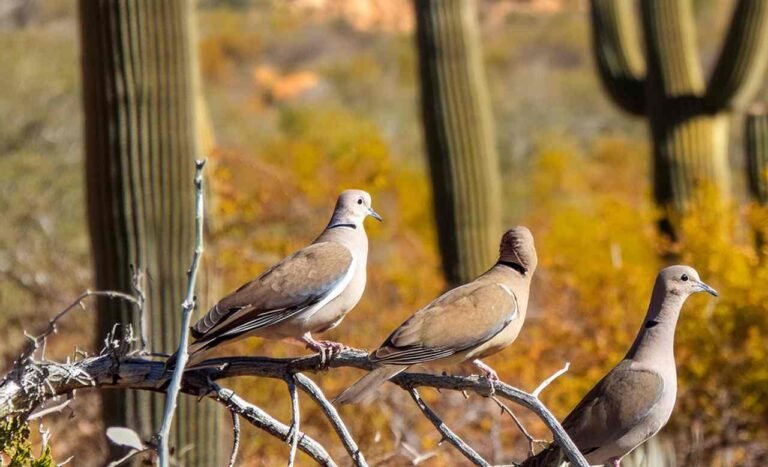
Mourning Dove
Identification: Slim body, pointed tail, fast direct flight, dark wing spots.
Habitat: Open country, ag edges, prairie shelterbelts, towns, and water sources.
Migration: Strong early-fall movement drives much of the best hunting.
Best strategy: Hunt feed-to-water travel routes and sit near isolated perches.
White-winged Dove
Identification: Larger, chunkier profile with a bold white wing patch that flashes in flight.
Habitat: Often near agriculture, shelterbelts, towns, and lower-elevation openings.
Migration: Less numerous than mourning doves in Colorado, but present during season.
Best strategy: Treat them like mourning doves, but slow down and identify before shooting.
Eurasian Collared-Dove
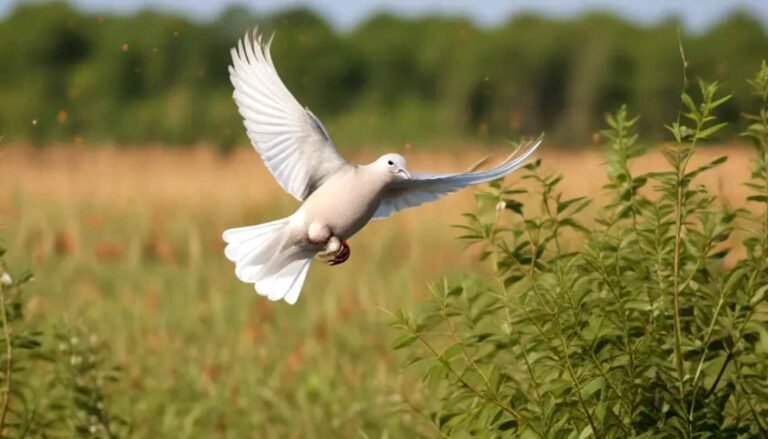
Identification: Bigger than a mourning dove, pale overall, squared tail, dark collar on the neck.
Habitat: Farmsteads, grain facilities, towns, barns, feedlots, and rural edges.
Migration: Largely resident rather than a classic migratory pulse bird.
Best strategy: Focus on roosts, grain sources, and afternoon loafing areas.
Frequently Asked Questions
When does Colorado dove season open in 2026?
Regular mourning and white-winged dove season opens Sept. 1, 2026 under the current approved state rule.
Is there a dove zone map for Colorado?
No. Colorado currently runs a statewide dove season rather than splitting the state into dove zones.
What is the bag limit for mourning doves in Colorado?
The daily bag is 15, and the possession limit is 45. Mourning doves and white-winged doves count together in one combined bag.
Do I need HIP registration to hunt doves in Colorado?
Yes. If you are hunting regular migratory birds such as mourning doves or white-winged doves, you need annual HIP registration.
Do I need a federal duck stamp for dove hunting?
No. Duck stamps are for waterfowl, not for regular dove hunting.
Can I hunt Eurasian collared-doves year-round in Colorado?
Yes. Colorado allows year-round hunting for Eurasian collared-doves with no bag limit, but they must stay fully feathered in the field or during transport except under the regular dove-season exception.
Can I hunt doves over cut corn or harvested grain?
Sometimes yes, but only if the grain is there because of a normal agricultural operation. If an area is baited, it is illegal to hunt there.
Are electronic dove calls legal in Colorado?
No. Recorded or electronically amplified calls are not legal for regular dove hunting.
Is lead shot legal for Colorado dove hunting?
Generally yes for standard dove hunting, but always check the property you are hunting because some sites can have tighter ammunition rules.
Final Thoughts
Colorado keeps dove hunting refreshingly simple: a statewide Sept. 1-Nov. 29 season, a 15-bird daily bag, and plenty of public opportunity if you are willing to scout. The hunters who do best are usually the ones who locate fresh feed, dependable water, and clean travel lines a day or two before the hunt.
Before you load the truck, verify the final 2026 Colorado brochure, confirm HIP, and read the property-specific rules for the land you plan to hunt. That last step matters just as much as your choke tube.