Gear Up and Go Dove Hunting in Illinois 2026-2027: Exploring The Season
Illinois Dove Season 2026-2027 runs September 1-November 14, 2026, and December 26, 2026-January 9, 2027, statewide for mourning doves and white-winged doves. The daily limit is 15 birds and the possession limit is 45 birds in the aggregate. Illinois does not use separate north, central, south, or coastal dove zones. Statewide hunting hours are generally sunrise to sunset, but some public permit dove fields use special hours for the first five days.
This guide breaks down the official Illinois rules into plain English so you can plan a clean, legal, productive hunt. For final verification before opening day, check Illinois Hunting & Trapping Digest and the current U.S. Fish & Wildlife Service migratory bird regulations.
Illinois Dove Season 2026-2027 Overview
Illinois dove season is one of the state’s best early-fall hunting opportunities, and for 2026-2027 the key details are finally straightforward: the statewide mourning dove and white-winged dove season opens September 1, 2026, runs through November 14, 2026, then reopens December 26, 2026, through January 9, 2027. The daily bag limit is 15 doves, with a 45-bird possession limit, and those limits apply to mourning doves and white-winged doves combined.
For most hunters, the big things to watch are licenses, HIP registration, and public-land rules. Illinois requires an appropriate hunting license, annual HIP certification, and in most adult cases a state habitat stamp. If you plan to hunt managed public dove fields, the first five days of the season are often permit-only, and some sites have tighter shooting-hour or shot restrictions than the statewide rules.
| Species | Season | Zone | Opening Date | Closing Date | Daily Bag Limit | Possession Limit | Status |
|---|---|---|---|---|---|---|---|
| Mourning Dove | Split season | Statewide | Sept. 1, 2026 | Nov. 14, 2026 | 15* | 45* | Final |
| Mourning Dove | Split season reopens | Statewide | Dec. 26, 2026 | Jan. 9, 2027 | 15* | 45* | Final |
| White-winged Dove | Same as mourning dove | Statewide | Sept. 1, 2026 | Jan. 9, 2027 | Included in 15* | Included in 45* | Final |
| Eurasian Collared Dove | Not separately limited | Statewide | Not separately listed | Not separately listed | No limit** | No limit** | Special rule |
* Mourning doves and white-winged doves count together in the same daily and possession limit.
** Hunters may not remain in the field to pursue Eurasian collared doves after reaching the daily bag limit for mourning/white-winged doves.
Official Dove Season Dates
Illinois keeps dove hunting simple compared with its zoned waterfowl structure.
Mourning dove
For 2026-2027, Illinois lists a statewide split season:
- September 1, 2026-November 14, 2026
- December 26, 2026-January 9, 2027
That gives hunters a classic early opener around cut grain, sunflower fields, and travel corridors, plus a short late split after Christmas.
White-winged dove
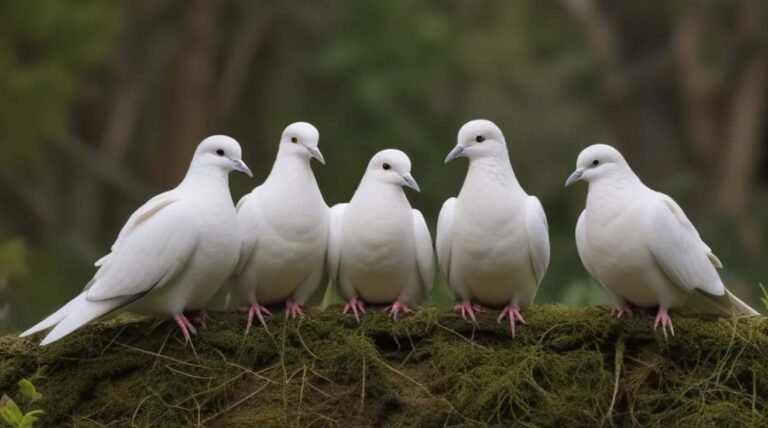
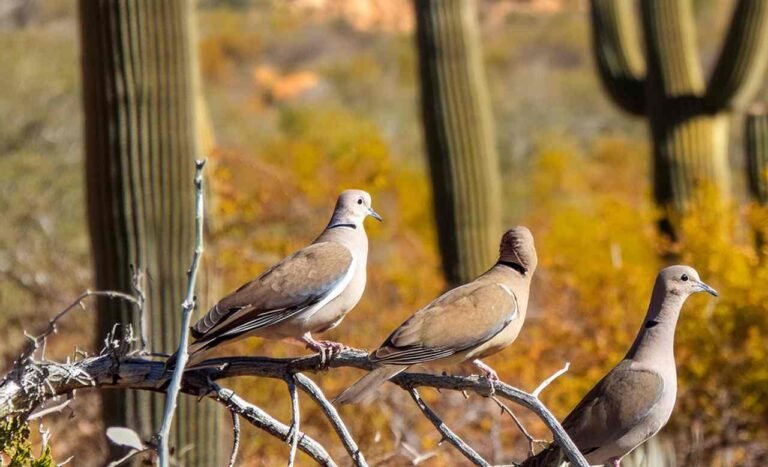
White-winged doves follow the same open dates as mourning doves in Illinois. They are less common than in southern states, but they do show up and count toward the same aggregate limit.
Eurasian collared dove
Illinois does not list a separate bag limit for Eurasian collared doves in the same way it does for mourning and white-winged doves. Practically, that means hunters need to know the identification difference and also remember the important restriction: you cannot stay afield chasing collared doves after filling your legal mourning/white-winged limit.
Split-season takeaway
The first split is the money stretch for most hunters. The late split can still be worthwhile near food, grit, and sheltered roost routes, especially during milder winter weather.
Dove Hunting Zones in Illinois
Here’s the easy answer: Illinois does not divide dove hunting into north, central, south, or coastal dove zones.
That matters because many hunters assume dove rules work like Illinois duck or goose seasons. They do not. Dove dates are statewide.
What Illinois does have is:
- site-specific public dove fields
- permit-only public hunts for the first five days at certain locations
- local hunter check-in rules
- occasional special field-hour rules on managed areas
So if you are hunting doves in Illinois, think statewide season, local site rules.
Daily Bag Limits
| Species | Daily Limit | Possession Limit | Special Rules |
|---|---|---|---|
| Mourning Dove | 15 aggregate | 45 aggregate | Combined with white-winged dove |
| White-winged Dove | Included in 15 | Included in 45 | Combined with mourning dove |
| Eurasian Collared Dove | No limit | No limit | Cannot stay in the field for them after filling mourning/white-winged limit |
| Pigeons / Ringed Turtle Doves | No limit | No limit | Same stay-in-field restriction applies after legal dove limit |
Legal Hunting Hours
Statewide Illinois dove hours for the regular season are generally:
- Sunrise to sunset
However, hunters need to slow down and read the fine print for managed public fields.
For the first five days of the permit dove hunts on listed public areas, Illinois states:
- Noon to 5:00 p.m. on many permit fields
- Exception: Johnson Sauk Trail State Park, sunrise to 11:30 a.m.
That is a major detail because plenty of hunters assume every Illinois opener starts at sunrise. On private land or non-restricted ground, the statewide season hours apply. On special public permit fields, they may not.
Licenses Needed
If you want to hunt doves legally in Illinois, start with the basics.
Required for most hunters
- Illinois hunting license or sportsman’s combo license
- Annual HIP registration
- State habitat stamp in most adult situations
- Site-specific permit if required on certain public dove fields
- Public Hunting Site Windshield Card on many public properties
Illinois license price summary
| License / Permit | Price |
|---|---|
| Resident Hunting License | $12.50 |
| Resident Sportsman’s Combination License | $26.25 |
| Nonresident Hunting License | $57.75 |
| Nonresident 5-Day Hunting License | $35.75 |
| Youth Hunting and Trapping Combo License | $7.50 |
| Hunting Apprentice License | $7.50 |
| Resident Senior Hunting License | $6.50 |
| Resident Super Senior Hunting License | $1.50 |
| State Habitat Stamp | $5.50 |
| Resident Super Senior Habitat Stamp | $0.50 |
| HIP Registration | $0.00 |
| Free Public Dove Permit | $0.00 |
Exemptions and special cases
Illinois lists several important exceptions:
- Annual HIP registration is required even for lifetime-license holders.
- Illinois residents on active military leave may qualify for a license exemption.
- Illinois residents with qualifying disabled person ID cards may be exempt from the hunting license requirement.
- Disabled veterans with qualifying Illinois documentation may also be exempt from the hunting license requirement.
- The state habitat stamp is not required for certain exempt groups, including some disabled veterans, former POWs, and qualifying older lifetime-license holders.
- Resident youth 18 and under can use the youth license structure, and apprentice options are available.
Federal requirements
For dove hunting, hunters often ask about duck stamps. Here’s the practical answer:
- Federal Duck Stamp: not required for dove hunting
- Illinois Migratory Waterfowl Stamp: not required for dove hunting
- HIP registration: required
Legal Hunting Methods
Illinois dove hunting is straightforward, but public-land details matter.
Shotguns
Use a legal shotgun suitable for migratory birds. As a practical rule, keep your dove gun set up to comply with migratory bird capacity restrictions and always double-check the plug before opening day.
Gauge restrictions
The current Illinois materials do not create a special statewide dove gauge rule. Common field guns in 12, 20, and 28 gauge remain the normal tools.
Plug requirements
Migratory bird hunters should expect the standard three-shell maximum setup. If you have not checked your plug since last season, do it now.
Nontoxic shot
This is a major Illinois public-land issue.
On the listed public permit areas, Illinois requires:
- nontoxic shot only
- No. 6 steel or smaller
- No. 7 1/2 bismuth or smaller
- Exception: lead allowed at Iroquois County SWA only
If you bounce between public and private ground, carrying legal nontoxic loads everywhere is often the simplest way to stay clean.
Retrievers and decoys
Both are practical and useful. A steady retriever is a huge advantage in cut fields, grass edges, and crowded shoots where birds can disappear fast.
Electronic calls
For migratory birds, avoid assumptions. Stick with decoys, field position, and concealment rather than pushing the line with devices.
Baiting laws
This is where hunters get burned. Never hunt over a baited area. In Illinois farm country, legal field manipulation and illegal baiting are not the same thing. If you did not prepare the field yourself, ask questions before you set up.
Motor vehicle restrictions
Do not use a vehicle in a way that creates an illegal or unsafe shot opportunity. Public-site rules can be stricter, especially around designated hunt zones, check stations, and parking areas.
Best Places to Hunt Doves in Illinois
Illinois public dove hunting is built around managed fields, especially for the first five days.
Strong public options
- Jim Edgar Panther Creek SFWA — One of the better-known dove destinations, with six sunflower areas and strong managed-field tradition.
- Des Plaines SFWA — Reliable name for hunters in northern Illinois looking for structured public access.
- Green River SWA — Good western Illinois option with permit history.
- Iroquois County SWA — Notable because of the lead-shot exception on the permit hunt information.
- Johnson Sauk Trail State Park — Worth remembering because of its special opening-hour exception.
- Kankakee River State Park — A convenient option for many northeast Illinois hunters.
- Mackinaw River SFWA — Productive central Illinois-style habitat.
- Sangchris Lake State Park — Solid public opportunity with permit history.
- Silver Springs SFWA — Popular managed-field choice.
- Horseshoe Lake SP (Madison County, Bend Road Unit) — Southwestern Illinois public option.
- Sam Parr SFWA — Strong southern-half public access option.
- Snakeden Hollow SFWA / Victoria PHA — Good fit for hunters willing to scout.
Other public access
- Shawnee National Forest can offer access, but it is not the same thing as a managed dove field.
- Some Illinois properties require a windshield card after the first permit window.
- The first five days on many state dove fields are permit-only, so plan early.
Related reading for border hunters: Indiana Dove Season
Top Dove Hunting Tips
- Scout cut grain and sunflower fields the evening before opening day.
- Set up where birds want to cross, not where it is easiest to park.
- Hunt shade early in hot September weather.
- On Illinois public fields, arrive early enough for check-in and stand-by procedures.
- Carry extra shells but sort loads by public vs. private rules.
- Use a stool; Illinois field edges often offer low cover, not much comfort.
- Watch powerlines and lone dead snags at first light.
- Hunt windward sides of fields when birds are landing into the breeze.
- If birds are skirting high, back off the obvious crowd line.
- Bring a dog or mark birds carefully in tall weeds.
- In central Illinois, burned wheat and sunflower setups can be excellent.
- Don’t over-call your shots; doves punish rushed shooting.
- If the first field is dead after 45 minutes, move.
- During the late split, focus harder on food and sheltered travel.
- Learn white-winged vs. Eurasian collared dove ID before the opener.
Recent Regulation Changes for 2026-2027
For 2026-2027, Illinois did not announce a major statewide overhaul of dove limits or season structure. The core framework remains familiar:
- statewide split season
- 15-bird daily limit
- 45-bird possession limit
- permit-first public-field structure on selected areas
The biggest updates for hunters are practical, not dramatic: the current digest is posted, 2026 public dove permit dates are live, and public-field instructions remain important enough that hunters should review them before opening week.
Hunter Safety Tips
- Keep muzzles up and safe on crowded public fields.
- Wear eye and hearing protection every hunt.
- September heat in Illinois is real; carry more water than you think you need.
- Don’t let dogs overheat in cut fields with little shade.
- Pick birds cleanly and identify them before shooting.
- Respect safe shot angles when hunters are lined along a field edge.
- Mark every downed bird immediately.
- Leave gates, crops, and access roads exactly as you found them.
- Stop shooting once you hit your legal aggregate limit.
Common Dove Species Found in Illinois
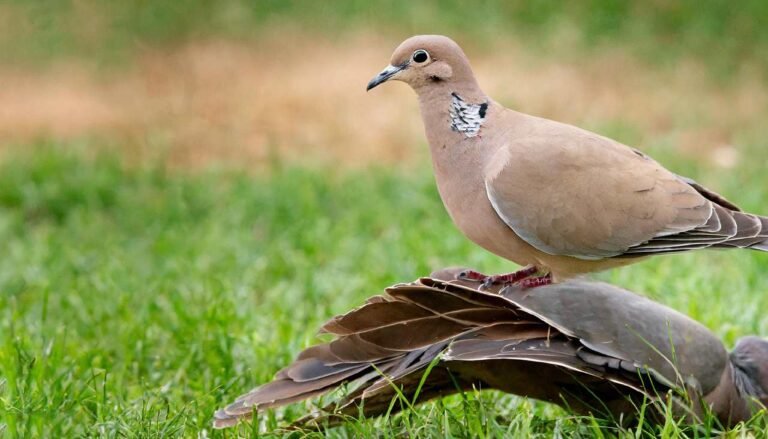
Mourning Dove
Identification: slim, pointed tail, fast wingbeat, common statewide.
Habitat: grain fields, farm edges, utility lines, open country.
Migration: peaks around the early opener and continues through fall.
Best strategy: hunt flyways between roost trees and food.
White-winged Dove
Identification: bolder body, bright white wing patch visible in flight.
Habitat: more scattered than mourning doves, but increasingly noted in some Midwestern areas.
Migration: irregular in Illinois compared with southern states.
Best strategy: hunt them the same way you hunt mourning doves, but be sure of your ID.
Eurasian Collared Dove
Identification: larger pale dove with a black neck collar and square-tipped tail.
Habitat: barns, grain facilities, small towns, feed areas.
Migration: largely local rather than classic migratory movement.
Best strategy: watch farmsteads and grain-handling areas, but stay aware of the field-limit rule.
Frequently Asked Questions
Do I need a permit to hunt doves in Illinois?
Not everywhere. On private land and many ordinary setups, no dove permit is needed beyond your license, HIP, and other required credentials. But many Illinois public dove fields are permit-only for Sept. 1-5.
Are Illinois dove dates zoned by region?
No. Illinois dove season is statewide, unlike some waterfowl seasons.
What is the daily dove limit in Illinois?
The daily limit is 15 birds total for mourning doves and white-winged doves combined.
What is the possession limit?
The possession limit is 45 birds in the aggregate.
Are statewide shooting hours sunrise to sunset?
Yes, generally. But some public permit fields have special first-five-day hours, including noon-5 p.m. at many sites.
Do I need HIP registration every year?
Yes. Illinois requires annual HIP certification for migratory bird hunters, including dove hunters.
Do I need a federal duck stamp to hunt doves?
No. A federal duck stamp is for waterfowl, not doves.
Is nontoxic shot required?
On Illinois public permit dove areas, yes, with the listed size rules. Some private-land hunters still use traditional dove loads where lawful, but public-land hunters must read the site rules carefully.
Can I shoot Eurasian collared doves after reaching my dove limit?
No. Even though they are not counted the same way for bag limits, you may not stay in the field to pursue them after hitting your mourning/white-winged limit.
Final Thoughts
Illinois offers a clean, hunter-friendly dove season for 2026-2027: a statewide split season, generous 15/45 limits, and a strong network of managed public fields. The real keys are simple: know your dates, get HIP-certified, bring the right license and stamp, and never assume a public-field rule is the same as the statewide rule.
If you are building out your fall calendar, good next reads would be Illinois hunting seasons, Illinois waterfowl season, Illinois deer season, an Illinois hunting license guide, and more detailed dove shooting tips.
Above all, verify the final site rules before you load the truck. In Illinois dove hunting, small details like permit windows, field hours, and shot requirements are where legal hunts stay legal.