Mourning Doves Texas: 2026-2027 Early Fall Season for Hunting
Texas dove season is one of the biggest hunting traditions in the country, and the 2026-2027 season is already set. For most hunters, the headline is simple: the regular season opens September 1, 2026, with dates changing by zone and split. If you plan to hunt mourning doves or white-winged doves in Texas, you need to know your zone, your daily bag limit, your license requirements, and the rules on legal shooting hours, baiting, and public-land access.
This guide is built for hunters who want the facts fast, then the details that actually matter in the field. It follows the current 2026-27 Texas Outdoor Annual and the latest federal migratory bird framework updates from Texas Parks and Wildlife Department and U.S. Fish & Wildlife Service.
Texas uses three dove zones—North, Central, and South—and each has its own split season. Bag limits are generous, but species ID still matters, especially in South Texas where white-tipped doves can show up. And while dove hunting is straightforward compared with waterfowl, hunters still need a valid license, HIP certification, and—if age 17 or older—a migratory game bird endorsement.
Quick Answer
Texas Dove Season 2026-2027 opens September 1, 2026 in all three zones.
- North Zone: Sept. 1-Nov. 8, 2026 and Dec. 18, 2026-Jan. 7, 2027
- Central Zone: Sept. 1-Oct. 25, 2026 and Dec. 11, 2026-Jan. 14, 2027
- South Zone: Sept. 1-Oct. 25, 2026 and Dec. 18, 2026-Jan. 21, 2027
- Daily bag limit: 15 doves
- Possession limit: 45 doves
- Special rule: No more than 2 white-tipped doves in the daily aggregate
- Shooting hours: One-half hour before sunrise to sunset
🗓️ Texas Dove Season 2026-2027 Overview
| Species | Season | Zone | Opening Date | Closing Date | Daily Bag Limit | Possession Limit | Status |
|---|---|---|---|---|---|---|---|
| Mourning Dove | Regular Split 1 | North | Sept. 1, 2026 | Nov. 8, 2026 | 15 aggregate | 45 | Official |
| Mourning Dove | Regular Split 2 | North | Dec. 18, 2026 | Jan. 7, 2027 | 15 aggregate | 45 | Official |
| Mourning Dove | Regular Split 1 | Central | Sept. 1, 2026 | Oct. 25, 2026 | 15 aggregate | 45 | Official |
| Mourning Dove | Regular Split 2 | Central | Dec. 11, 2026 | Jan. 14, 2027 | 15 aggregate | 45 | Official |
| Mourning Dove | Regular Split 1 | South | Sept. 1, 2026 | Oct. 25, 2026 | 15 aggregate | 45 | Official |
| Mourning Dove | Regular Split 2 | South | Dec. 18, 2026 | Jan. 21, 2027 | 15 aggregate | 45 | Official |
| White-winged Dove | Same as regular dove season | By zone | Same as zone | Same as zone | Included in 15 | 45 | Official |
| White-tipped Dove | Included in regular season where lawful | Mostly South Texas | Same as zone | Same as zone | Max 2 within aggregate | 45 | Official |
| Eurasian Collared-Dove | No closed season | Statewide | N/A | N/A | No bag limit | No possession limit | Official |
| Falconry Dove Season | Falconry | Statewide | Nov. 13, 2026 | Nov. 29, 2026 | 3 | 9 | Official |
📍 Official Dove Season Dates
Texas keeps dove season simple once you know your zone.
Mourning dove
Mourning dove season is split in all three Texas zones:
- North Zone: Sept. 1-Nov. 8, 2026 and Dec. 18, 2026-Jan. 7, 2027
- Central Zone: Sept. 1-Oct. 25, 2026 and Dec. 11, 2026-Jan. 14, 2027
- South Zone: Sept. 1-Oct. 25, 2026 and Dec. 18, 2026-Jan. 21, 2027
White-winged dove
White-winged dove season follows the same regular zone dates. The big change for 2026-2027 is that Texas removed the old Special White-winged Dove Days in the South Zone. That means South Zone hunters now follow the same regular opening structure and shooting hours throughout the season.
Eurasian collared-dove
Eurasian collared-doves are not part of the regular dove bag-limit system in Texas. There is no closed season and no bag limit, although leaving plumage attached for identification is strongly recommended.
Additional species
White-tipped doves may be harvested as part of the regular dove season, but they are tightly limited. You can take no more than 2 white-tipped doves within your daily 15-bird aggregate.
🧭 Dove Hunting Zones in Texas
Texas has three dove zones, not four.
North Zone
The North Zone covers the part of Texas north of the official TPWD boundary line that runs from the Fort Hancock area east through the Interstate corridors toward the Arkansas line. This is classic opening-day country for grain fields, sunflower strips, stock tanks, and cattle country flyways.
Central Zone
The Central Zone sits between the North and South zones. It includes a huge swath of mixed habitat—Hill Country edges, ag land, brush, and scattered water. This zone often gives hunters a good mix of mourning doves and increasing numbers of white-wings.
South Zone
The South Zone covers the state south of the TPWD line beginning near Del Rio and running east toward Louisiana. This is prime white-winged dove country, especially around the Rio Grande Valley, agricultural ground, roost trees, and urban-edge feeding routes.
Special management note
Texas no longer lists separate Special White-winged Dove Days for the South Zone in 2026-2027. That is one of the most important changes this season.
🎯 Daily Bag Limits
| Species | Daily Limit | Possession Limit | Special Rules |
|---|---|---|---|
| Mourning dove | Included in 15-bird aggregate | 45 | Combined with other legal doves |
| White-winged dove | Included in 15-bird aggregate | 45 | Combined with other legal doves |
| White-tipped dove | Max 2 within aggregate | 45 | No more than 2 per day |
| Eurasian collared-dove | No limit | No limit | Keep plumage for ID when possible |
| Falconry season doves | 3 | 9 | Statewide falconry season |
⏰ Legal Hunting Hours
Texas legal shooting hours for dove are straightforward:
- One-half hour before sunrise to sunset
- Applies across regular dove seasons
- Also applies on public lands unless a unit has tighter access or check-in rules
For 2026-2027, South Zone hunters should note that the old special white-wing schedule is gone. In past years, some hunters had to watch for midday opening restrictions tied to special days. That complication is out. For this season, the South Zone uses standardized hours across the regular structure.
Federal migratory bird rules still matter in the background, but Texas has already published the state season dates and legal shooting hours for this license year.
🪪 Licenses Needed
Before you hunt Texas dove season 2026-2027, make sure you have the right paperwork.
Basic requirements
- Valid Texas hunting license
- HIP certification
- Migratory Game Bird Endorsement if you are 17 or older
Texas hunting license price summary
| License | Fee |
|---|---|
| Resident Hunting License | $25 |
| Senior Resident Hunting License | $7 |
| Youth Hunting License | $7 |
| Nonresident General Hunting License | $315 |
| Nonresident Special 5-Day Small Game/Exotic License | $48 |
| Resident Super Combo | $68 |
| Senior Super Combo | $32 |
| Annual Public Hunting Permit (for qualifying public lands) | $48 |
Important license notes
- Youth under 17 are exempt from state endorsement requirements, but they still need HIP certification when hunting migratory birds.
- Nonresidents under 17 can use the youth hunting license.
- The Migratory Game Bird Endorsement is included in the Super Combo package.
- A Federal Duck Stamp is not required for dove hunting. That applies to waterfowl hunters, not dove hunters.
- On certain public lands, you may also need an Annual Public Hunting Permit or a Daily Hunting Permit.
- Texas offers certain military and disabled-veteran license packages, but dove hunters still need the proper qualifying license coverage and HIP.
🔫 Legal Hunting Methods
Texas dove regulations are hunter-friendly, but there are a few rules that get people in trouble every year.
Legal methods
- Shotguns
- Lawful archery equipment
- Falconry
- Dogs and retrievers
- Artificial decoys
- Manual or mouth-operated bird calls
Shotgun rules
- Shotgun only for migratory game birds
- No larger than 10-gauge
- Must be fired from the shoulder
- Must be plugged to hold no more than 3 shells total
Baiting laws
Baiting is one of the fastest ways to ruin a hunt and earn a citation.
You cannot hunt doves over a baited area or with the aid of bait. However, Texas still allows dove hunting:
- over standing crops
- over flooded harvested crops
- over manipulated natural vegetation
- over planted crops manipulated for dove hunting, where lawful
If grain has been placed in a way that lures birds unnaturally, walk away.
Electronic calls
- Recorded or electronically amplified bird calls are illegal
- Mouth calls and manual calls are allowed
Motor vehicle restrictions
- No hunting from or by means of a motor-driven vehicle
- No using vehicles, boats, or aircraft to drive or rally birds
Nontoxic shot
Texas does not impose a blanket statewide nontoxic-shot rule for all dove hunting the way it does for waterfowl. Still, some public hunting units do require nontoxic shot only, so always read the area-specific rules before you hunt.
🌾 Best Places to Hunt Doves in Texas
Texas is loaded with opportunity, but the best public options usually start with planning.
1. Annual Public Hunting dove and small game areas
TPWD’s Annual Public Hunting system gives hunters access to more than 180 areas, including roughly 120 dove and small game areas leased from private landowners. For hunters without a private-field connection, this is often the smartest starting point.
2. Justin Hurst WMA
This South Zone WMA offers dove hunting on the North Stringfellow Unit with walk-in access and on-site registration. Check unit rules carefully because this area has its own access and ammunition requirements.
3. Mason Mountain WMA
Mason Mountain WMA is a useful Central Zone option. TPWD notes that dove hunting is allowed during the open Central Region dove season with an APH permit, and registration is required.
4. National Forests and Grasslands in Texas
Public hunting access exists across the National Forests and Grasslands in Texas, and hunters should follow current county bag limits and state regulations. Baiting is not allowed on these federal lands.
5. Hagerman National Wildlife Refuge
Hagerman offers public dove hunting in specified areas during designated parts of the open season without a TPWD drawn permit, but refuge-specific rules always control access.
🧠 Top Dove Hunting Tips
- Scout power lines at first light and last light.
- In South Texas, watch grain-field-to-roost flights, not just feed fields.
- Set up on edges, not in the middle of the field.
- Bring more water than you think you need.
- Use shade whenever possible in September heat.
- Keep your dog cooled down between flights.
- Hunt stock tanks and small water in dry country.
- If white-wings are working high, move closer to roost routes.
- Don’t over-hide; Texas doves usually care more about movement than perfect camouflage.
- Wear shooting glasses with amber or bronze lenses for bright, dusty fields.
- Pick up hulls—public-land etiquette matters.
- If birds flare, check for shiny gear or poor sun position.
- On public hunts, arrive early and know the check-in process.
- Learn the flight style of white-tipped doves before hunting brush country.
- Keep separate counts in mixed-species shoots so you do not exceed the white-tipped limit.
🔄 Recent Regulation Changes for 2026-2027
The main Texas dove change for 2026-2027 is in the South Zone.
- The regular South Zone first segment now opens September 1
- Special White-winged Dove Days were eliminated
- Daily bag limits and shooting hours were standardized across South Zone days
Outside of that, Texas dove regulations remain substantially familiar: three zones, split seasons, a 15-bird daily aggregate, and the same core licensing and migratory bird rules.
At the federal level, the U.S. Fish & Wildlife Service moved to a more streamlined multi-year migratory game bird framework process in 2026, which should give states and hunters more certainty earlier in the planning cycle.
🦺 Hunter Safety Tips
Dove hunting looks relaxed until the opener turns crowded and hot.
- Keep muzzles up and actions open when moving between spots
- Wear eye protection and hearing protection
- Stay hydrated and watch for heat stress
- Rest dogs often and carry water for them too
- Know your backdrop before every shot
- Positively identify birds before pulling the trigger
- Respect private property lines and public-land boundaries
- Retrieve every downed bird and avoid waste
- Give nearby hunters safe spacing on opening day
🕊️ Common Dove Species Found in Texas
Mourning Dove
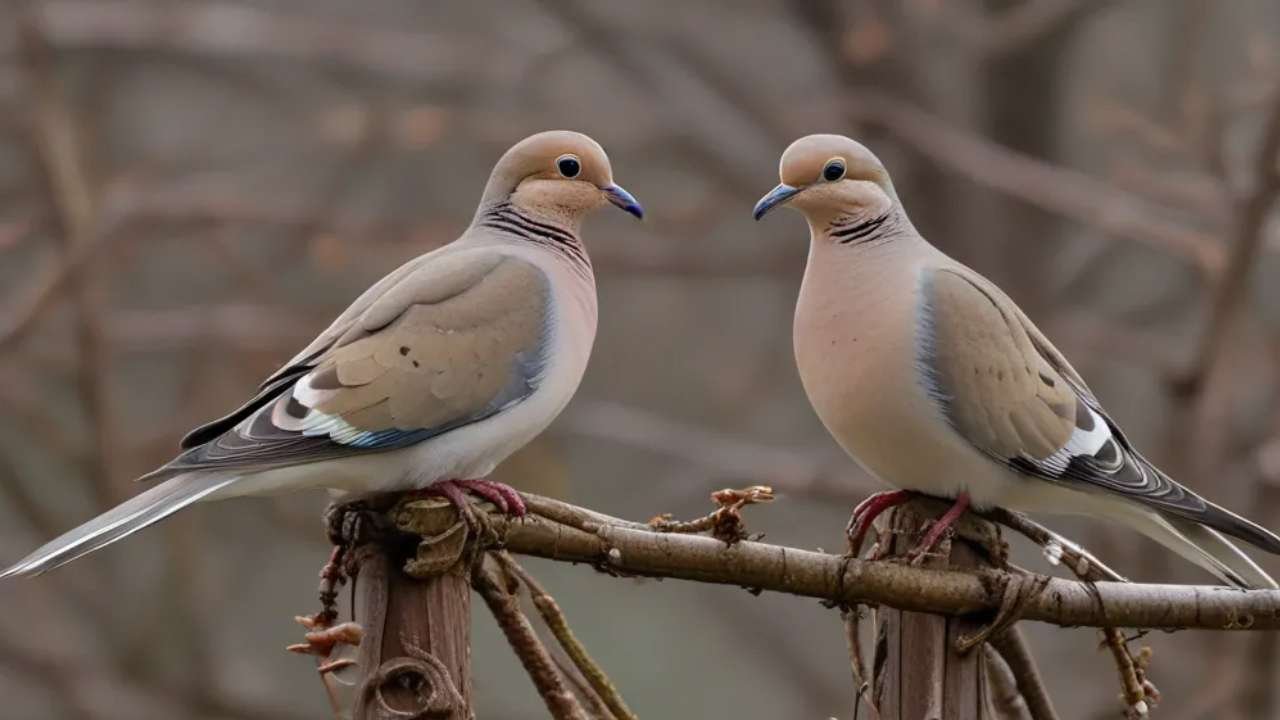
Identification: Slim brown dove with black wing spots and a long pointed tail.
Habitat: Grain fields, pasture edges, ranch country, water sources.
Migration: Strong early-fall movement boosts opener action.
Best strategy: Hunt water, flyways, and freshly cut grain.
White-winged Dove
Identification: Bold white wing patch, heavier body, rounded tail.
Habitat: South Texas, ag country, towns, roost trees, brush edges.
Migration: Some are resident; others shift regionally with food.
Best strategy: Target roost-to-feed traffic and afternoon returns.
White-tipped Dove
Identification: Larger, chunkier dove with rusty wing linings and white tail tips.
Habitat: Brushy South Texas cover.
Migration: More localized than mourning doves.
Best strategy: Hunt carefully in brush country and confirm ID before shooting.
Eurasian Collared-Dove
Identification: Pale body, squared tail, dark collar on the neck.
Habitat: Barns, grain bins, rural homesites, small towns.
Migration: Mostly resident.
Best strategy: Work grain and roost sites near agriculture, but keep plumage for identification.
❓ Frequently Asked Questions
Can you hunt doves in Texas on September 1, 2026?
Yes. All three Texas dove zones open on September 1, 2026 for their first segment.
What is the daily bag limit for Texas dove season 2026-2027?
The daily aggregate bag limit is 15 doves, with no more than 2 white-tipped doves.
What is the possession limit for dove in Texas?
The possession limit is three times the daily bag, which is 45 doves.
Do you need HIP to hunt doves in Texas?
Yes. HIP certification is required for migratory bird hunters, including dove hunters.
Do you need a migratory bird endorsement for dove in Texas?
Yes, if you are 17 or older. Youth hunters are exempt from the state endorsement requirement, but not from HIP.
Is there a South Zone special white-wing dove season in 2026-2027?
No. Texas eliminated the Special White-winged Dove Days for 2026-2027.
Can you use lead shot for dove in Texas?
Usually yes on private land unless another rule applies, but some public hunting units require nontoxic shot only. Always check the property rules.
Can nonresidents hunt dove in Texas?
Yes. Nonresidents can buy either the full nonresident hunting license or, in many dove-hunting situations, the 5-day nonresident special small game/exotic license.
Where can you find public dove hunting in Texas?
Start with the TPWD Annual Public Hunting program. It includes WMAs, leased dove areas, and other accessible public lands across the state.
✅ Final Thoughts
Texas Dove Season 2026-2027 is set up to be straightforward: same three-zone structure, a strong September 1 opener statewide, and one major South Zone change with the end of Special White-winged Dove Days. If you know your zone, count birds carefully, and stay on top of license and access rules, you’ll be in good shape.
Before opening day, double-check your county, your public-land rules, and your ammunition requirements—especially if you’re hunting a WMA, refuge, or leased public dove field. For readers building out a full fall plan, good companion topics include Texas hunting seasons 2026-2027, Texas waterfowl season, Texas deer season, and a Texas hunting license guide. If you also hunt across state lines, compare nearby dates with Oklahoma Dove Season.