Why There’s No Dove Hunting Season in Maine — And What Hunters Can Do About It
Maine does not currently have an open mourning dove hunting season for 2026-2027. Mourning doves are classified as migratory birds under federal law, and Maine’s Department of Inland Fisheries and Wildlife (MDIFW) has not established a state dove season — meaning it’s illegal to hunt them in the Pine Tree State. That said, mourning dove populations in Maine are growing steadily, the federal framework does allow states to open seasons, and understanding exactly why the season doesn’t exist — plus what neighboring alternatives look like and how to prepare if that ever changes — is exactly what this guide covers. Read on for the full picture.
The Core Reality: Is Dove Hunting Legal in Maine?
The short answer is no — and it’s worth knowing exactly why. Maine law explicitly states that “except for migratory game birds, there is no hunting season on any species of bird or animal which is not listed” in the state’s official season schedule. Mourning doves are not listed. Furthermore, Maine’s migratory game bird regulations define legal migratory gamebirds as only species from three families:
| Family | Species Covered |
|---|---|
| Anatidae | Wild ducks, geese, and brant |
| Rallidae | Rails, coots, moorhens, and gallinules |
| Scolopacidae | Woodcock and snipe |
Mourning doves (family Columbidae) are absent from that list entirely. So while 49 other states — and Puerto Rico — allow some form of dove hunting, Maine remains one of the few holdouts with no open season.
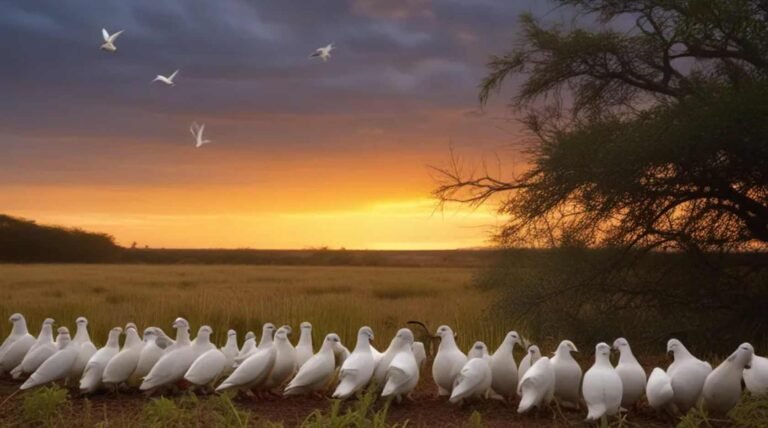
This isn’t because doves don’t live in Maine. In fact, mourning dove populations have been expanding north and east in Maine since the 1950s, driven by climate shifts, land clearing, and the spread of bird feeders. Research published via ResearchGate confirms this range expansion has been documented for decades. The birds are here. The politics and public pressure to keep them off the harvest list are what have kept the season closed.
A Brief History: Why Maine Never Opened a Dove Season
This has been a topic of debate in Maine sporting circles for a long time. Back in the early 2000s, a former MDIFW information director publicly called for a legal dove hunt in Maine, noting that “there is no good reason why Maine should not become the 41st state to offer a legal dove hunt.” At the time, the Sportsman’s Alliance of Maine even floated a $20 dove season permit as a revenue enhancer — one that required no new legislation, only MDIFW Advisory Council approval.
The pushback? Anti-hunting groups and birdwatchers who view the mourning dove as a symbol rather than a game bird. That cultural and political resistance has kept Maine’s season door firmly closed, even as the federal migratory bird framework fully permits states to establish dove seasons. Nothing biologically stands in the way — it’s a management and public perception issue.
Maine Hunting Licenses and What You Actually Need
Even though doves can’t be hunted in Maine, understanding the licensing structure is important — especially if you’re planning to hunt other species or if a dove season eventually opens. Here’s what a typical Maine hunting license costs:
| License Type | Resident Cost | Non-Resident Cost |
|---|---|---|
| Standard Hunting License | $26.00 | $115.00 |
| Junior Hunting License | Lower rate | Lower rate |
| Apprentice License | Available up to 5 times | Available |
| Pheasant Permit (add-on) | Required separately | Required separately |
| State Migratory Waterfowl Permit | $7.50 | $7.50 |
You can purchase licenses through the Maine Department of Inland Fisheries and Wildlife.
Important: For any species classified as a migratory bird — woodcock, snipe, rails, ducks, geese — HIP (Harvest Information Program) registration is federally required and must be completed at the time of license purchase in Maine. If a dove season ever opens here, HIP would apply. Hunters must indicate their intention to hunt migratory species when buying their license, or they’d be hunting in violation of federal law.
What Is the HIP Program and Why Does It Matter for Dove Hunters?
The Migratory Bird Harvest Information Program (HIP) is a joint state-federal survey system that helps the U.S. Fish and Wildlife Service estimate how many migratory birds are harvested each year. That data directly informs season lengths, bag limits, and population management decisions.
Key HIP Facts for Maine Hunters
- HIP is free — it’s a survey, not a paid permit
- You register at the point of license purchase by indicating your intent to hunt migratory birds
- HIP applies to woodcock, ducks, geese, snipe, rails — and would apply to doves if a season opens
- Hunters who fail to register for HIP and later decide to pursue migratory species are hunting in violation of law
- The USFWS uses HIP data to keep seasons fair, sustainable, and legally defensible
For more details on HIP specifically as it applies to Maine, visit the Maine HIP Program page.
What Migratory Birds CAN You Hunt in Maine (2026-2027)?
Since dove hunting isn’t on the table, here’s what you can pursue legally during the 2026-2027 season in Maine. These are the migratory and upland bird species with confirmed open seasons:
| Species | Season Dates (2026-2027) | Daily Bag Limit | Notes |
|---|---|---|---|
| American Woodcock | Opens late September 2026 | 3 birds | HIP required |
| Wilson’s Snipe | Opens early September 2026 | 8 birds | HIP required |
| Rails (Sora & Virginia) | Opens early September 2026 | 25 combined | HIP required; no lead shot |
| Ruffed Grouse | Late Sept – late Nov 2026 | 4/day | No HIP needed |
| Ring-necked Pheasant | Sept – Dec 31, 2026 | 2/day | Pheasant permit required |
| Common Snipe | Sept – Jan 2027 | 8 birds | HIP required |
| Ducks/Geese | Zone-dependent, Sept–Jan | Varies by species | Federal Duck Stamp + state permit |
Always verify exact dates directly with MDIFW, as zone-specific dates can shift annually.
Legal shooting hours for all migratory game birds in Maine are one-half hour before sunrise to sunset daily — a rule that applies uniformly statewide.
Mourning Dove Habitat in Maine: Where Do They Live?
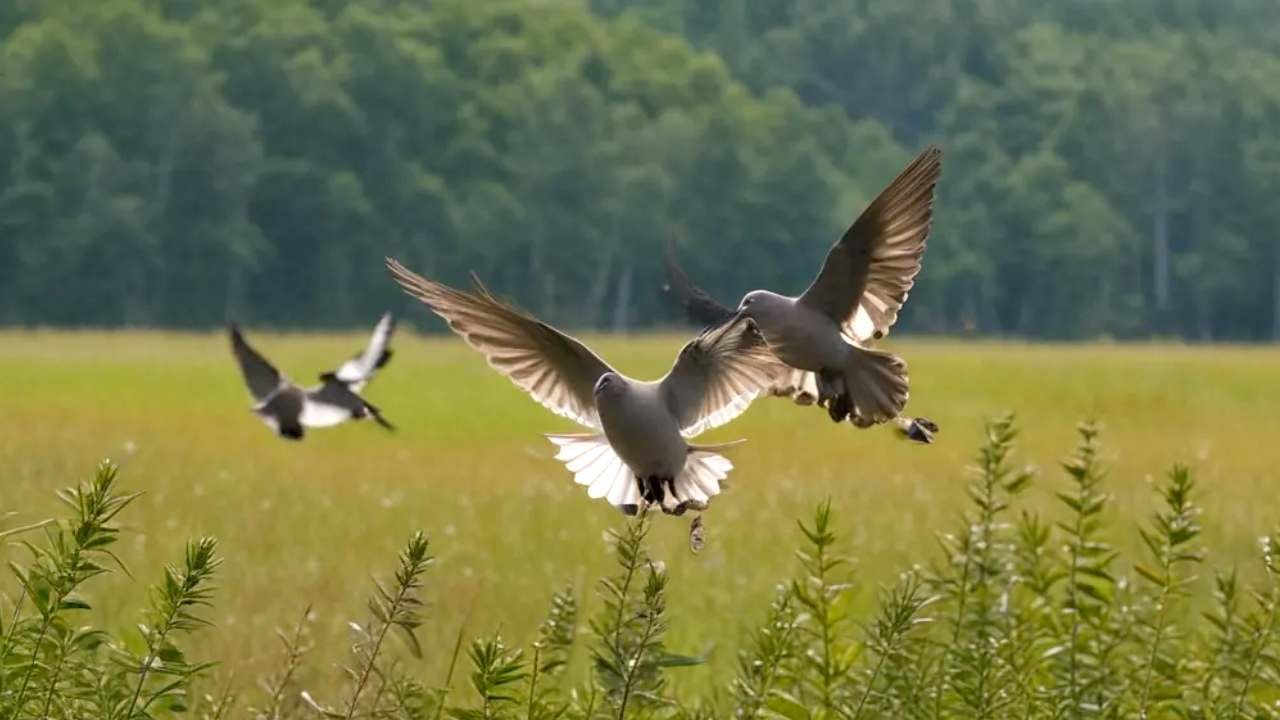
Understanding dove habitat is useful whether you’re a naturalist, a dog trainer, or a hunter preparing for the day Maine eventually opens a season. Mourning doves are adaptable birds found throughout the state, particularly in:
Prime Mourning Dove Habitat Types in Maine
- Agricultural fields and grain stubble — especially corn and sunflower fields in late summer and fall
- Open farmland with scattered trees — doves need both food sources and elevated perches
- Suburban and semi-rural areas — hedgerows, backyards, and bird-feeder zones
- Gravel pits and road edges — doves require grit for digestion and actively seek gravel
- Power line corridors — favorite loafing and roosting spots
- Recently cut logging areas — weedy edges adjacent to forest structure
According to the Maine Bird Atlas via eBird, mourning doves are “found in a variety of habitats from agricultural fields to lightly wooded areas” and are common in suburban zones across the southern half of the state. Their range continues to push northward.
Neighboring States Where You Can Hunt Doves (2026-2027)
Since Maine doesn’t have a season, many Maine-based hunters cross state lines to pursue doves. Here are the closest alternatives with confirmed dove seasons:
| State | Season Status | Notes |
|---|---|---|
| New Hampshire | Has open dove season | Check NH Fish & Game for exact 2026 dates |
| Vermont | Has open dove season | Similar September opener typical |
| New York | No open dove season | One of few states without a season |
| Massachusetts | Has open dove season | September opener, standard bag limits |
| Connecticut | Has open dove season | September opener |
If you’re interested in comparing how nearby and Southern states structure their seasons, check out the New Hampshire dove season guide for a close-to-home alternative.
For hunters willing to travel, states like Virginia, Pennsylvania, and Maryland offer excellent early-season mourning dove action. The Maryland dove season is particularly accessible from New England and opens September 1 most years with a daily bag limit of 15.
Federal Dove Hunting Regulations (Applicable Nationally)
If you’re hunting doves in any state that has an open season, these federal regulations apply universally under the Migratory Bird Treaty Act. Ignoring them isn’t just a state violation — it’s a federal one.
Federal Rules Every Dove Hunter Must Know
| Regulation | Requirement |
|---|---|
| Shotgun plug rule | Shotgun must be plugged to hold no more than 3 shells total |
| No motorized vehicle hunting | Cannot shoot from or by use of any motor vehicle or aircraft |
| Shooting hours | Only during legally set hours (varies by state) |
| Closed season | Possessing freshly killed doves during closed season is illegal |
| Wanton waste | Must make reasonable effort to retrieve all killed or crippled birds |
| Tagging rule | If birds are left with another person, they must be tagged with your name, address, and license number |
| HIP enrollment | Must carry proof of HIP registration while hunting |
| No baiting | Cannot hunt over a baited area — and the area remains off-limits for 10 days after bait is removed |
| Non-toxic shot (certain states) | Lead restrictions vary by state — always verify locally |
The baiting regulation is the one that trips up the most hunters. Even if you didn’t place the bait, if you hunt over an area you should reasonably know is baited, you’re still in violation. The U.S. Fish & Wildlife Service publishes clear guidance on what constitutes legal vs. baited field conditions.
Dove Hunting Gear: What You’d Need If Maine Opens a Season
Planning ahead never hurts. Here’s a practical gear breakdown for mourning dove hunting — based on what experienced hunters use across states with open seasons:
Shotgun Selection
| Gauge | Verdict |
|---|---|
| 12-gauge | Most popular; versatile and widely available |
| 20-gauge | Excellent for upland-style dove hunting; lighter carry |
| 28-gauge | Fun challenge option for experienced shots |
| .410 | Only for very close shots; not recommended for beginners |
Shot Size and Choke Recommendations
| Situation | Recommended Shot Size | Choke |
|---|---|---|
| Standard field shots (20–35 yards) | #7.5 or #8 | Improved Cylinder |
| Longer crossing shots | #7 or #7.5 | Modified |
| Decoying birds close in | #8 or #9 | Skeet |
Key gear checklist for a dove field:
- Camouflage or earth-tone clothing (doves have sharp eyes)
- Comfortable folding stool or bucket seat
- Decoys (optional but effective — spinning-wing or stationary)
- Cooler with ice to keep harvested birds fresh
- Blaze orange for any situation requiring it under state law
- Eye and ear protection — always
- Plenty of shells (doves are notoriously challenging to hit — expect a higher shell-per-bird ratio than most upland species)
- Water and snacks — dove hunts during September heat can be brutal
Dove Hunting Safety: 6 Non-Negotiable Rules
Safety in the dove field is a bigger deal than many first-timers expect. Because multiple hunters often share a single field, sweeping angles and crowded positions create real risks.
- Never shoot below the tree line — a downward angle is a low angle toward other hunters
- Know your zone of fire — if other hunters are on either side of you, your shooting arc narrows dramatically
- Wear eye and ear protection at all times — wads and debris from other shooters can travel surprising distances
- Don’t load until you’re ready to shoot — walk to your position with an unloaded firearm
- Identify your target completely before swinging your gun — protected species (like swallows and swifts) sometimes fly in dove fields
- Never combine game bags — keep your birds separate from hunting partners to maintain bag limit accountability
What It Would Take for Maine to Open a Dove Season
This is an honest question that Maine hunters have been asking for two decades. Here’s what would actually need to happen:
- MDIFW would need to propose a season to the Maine Outdoor Sporting Advisory Council
- The Advisory Council would need to approve it — no new state legislation is technically required
- The federal framework under the Migratory Bird Treaty Act already permits it
- A public comment period and biological review would likely follow
- The season could be established as limited or experimental initially
The biological case is solid. Mourning dove populations nationally sit around 150 million birds, making them the most abundant game bird in North America. Heavy hunting pressure in states with open seasons has never threatened population viability. The resistance in Maine has always been cultural and political, not scientific.
FAQs: Maine Dove Hunting 2026-2027
Q: Is dove hunting legal in Maine in 2026?
No. Maine does not have an open hunting season for mourning doves in 2026-2027. It is illegal to harvest them in the state.
Q: Are mourning doves found in Maine?
Yes. Mourning dove populations have been expanding in Maine since the 1950s. They’re common in agricultural areas, suburbs, and open landscapes — especially in southern Maine.
Q: What is the closest state to Maine with an open dove season?
New Hampshire and Massachusetts both offer mourning dove seasons, typically opening in early September. Vermont also has a season. New York, like Maine, does not.
Q: Do you need a federal duck stamp to hunt doves?
No. A federal duck stamp is required for waterfowl only. However, HIP registration is required for all migratory bird hunting, including doves.
Q: What shotgun is legal for dove hunting under federal law?
Any shotgun — semi-auto, pump, or double — as long as it’s plugged to hold no more than three shells total. No restrictions on gauge under federal law, though individual states may have rules.
Q: Can you use lead shot for dove hunting?
In most states with open dove seasons, lead shot is legal for doves (unlike waterfowl). However, some states and specific areas restrict it. Always verify with your state agency.
Q: Will Maine ever open a dove season?
Possibly. The biological and regulatory framework supports it. MDIFW could establish a season by Advisory Council approval alone, with no new legislation required. Public and political will remain the primary barriers.
Q: What birds CAN you hunt in Maine that are similar to doves?
American woodcock and Wilson’s snipe are the closest equivalents — both are migratory, fast-flying birds requiring similar wingshooter skills. Both have open seasons in Maine with HIP requirements.
Regulations change. Always verify current season status and license requirements directly with the Maine Department of Inland Fisheries and Wildlife before heading into the field.