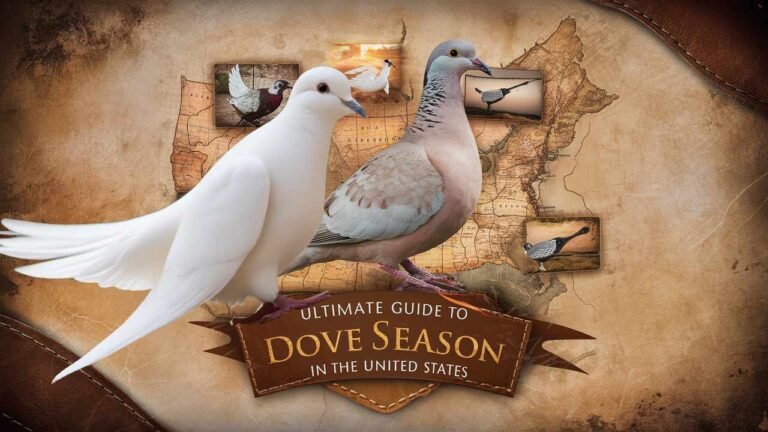
South Dakota Mourning Doves: 2026-2027 Seasons and Hunting Hotspots
Dove season is the unofficial start of fall in South Dakota, and the 2026-2027 cycle is shaping up like a classic: a statewide mourning dove season that opens September 1 and runs into early November, a generous 15-bird daily limit, and enough sunflower, wheat, and milo stubble to keep birds moving all September long.
Here’s what hunters should expect: fast, twisting wings at dusk, a box of shells that disappears faster than you’d like, and cooler nights that gradually push the last birds south toward Texas and Mexico. Everything you do in the field is governed by the regulations published in the South Dakota Hunting and Trapping Handbook and federal migratory bird rules enforced by the U.S. Fish and Wildlife Service, so this guide sticks strictly to what the South Dakota Game, Fish and Parks (GF&P) currently has on the books.
You’ll need a small game license, a State Migratory Bird Certificate, and — if you’re 18 or older — a habitat stamp. There are no dove hunting zones in South Dakota; the season is uniform across the state, which keeps planning simple. Below you’ll find the official dates, bag limits, license prices, legal methods, hunting spots, and the kind of field-tested advice that only comes from spending Septembers in the Dakotas.
📌 When Is Dove Season in South Dakota?
South Dakota’s 2026 mourning dove season runs from September 1 through November 9, 2026, statewide. The daily bag limit is 15 mourning doves per hunter, with a possession limit of 45 (accrued at the daily limit rate). Shooting hours run from one-half hour before sunrise to sunset. Hunters need a valid small game license, the State Migratory Bird Certificate ($5), and a habitat stamp (18 and older). Eurasian collared doves are legal to hunt year-round with no daily or possession limit. No federal duck stamp is required for doves. Per GF&P’s official calendar, these 2026 dates are already published, so you can plan your opener with confidence South Dakota Game, Fish and Parks.
📅 South Dakota Dove Season 2026-2027 Overview {#overview}
The table below reflects the official season structure from the South Dakota Game, Fish and Parks 2026 season calendar and the current Hunting and Trapping Handbook. Because South Dakota runs a single, continuous season rather than split segments, there’s only one season window to remember.
| Species | Season | Zone | Opening Date | Closing Date | Daily Bag Limit | Possession Limit | Status |
|---|---|---|---|---|---|---|---|
| Mourning Dove | Regular | Statewide | Sept. 1, 2026 | Nov. 9, 2026 | 15 | 45 | Official — GF&P |
| Eurasian Collared Dove | Year-round | Statewide | Open all year | Open all year | No limit | No limit | Official — GF&P |
| White-winged Dove | N/A | N/A | N/A | N/A | N/A | N/A | Not a managed species; rare vagrant |
A quick word on the “2026-2027” label: South Dakota’s dove season is contained entirely within fall 2026 (September 1 – November 9), so there is no separate spring or 2027 segment for doves. The 2026-2027 designation simply reflects the migratory bird regulatory cycle that GF&P adopted season dates under.
🗓️ Official Dove Season Dates {#dates}
Mourning dove. The statewide season is set: September 1 through November 9, 2026. It’s a continuous 70-day season with no split segments — you can hunt daily from opener to close, which is a simpler setup than many southern states use. This follows South Dakota’s long-standing tradition of opening doves on September 1, so mark the calendar now.
Eurasian collared dove. These non-native birds are open to hunting year-round with no daily or possession limit in South Dakota, per GF&P. They’re legal to take while you’re out for mourning doves, and they count separately — they don’t eat into your 15-bird mourning dove limit.
White-winged dove. White-winged doves are essentially a non-factor for South Dakota hunters. They’re a rare vagrant in the state — occasional sightings near Pierre and along the Missouri River make local birding news — and there’s no separate white-winged season or management framework. The 15-bird daily limit applies to mourning doves, and hunters should have solid species ID before taking any dove that doesn’t look like the standard mourning dove.
Why September 1 matters. Doves are tied to the harvest. Opening day lines up with fresh-cut wheat and early sunflower fields across the East River farmland, when grain is on the ground and birds are concentrated. By late October, as frosty nights arrive, most mourning doves have migrated out of the state entirely — a fact GF&P biologists document through annual banding programs. Those banded South Dakota birds show up in harvests across the southern U.S. and as far as Central America.
🗺️ Dove Hunting Zones in South Dakota {#zones}
Here’s an area where South Dakota keeps things refreshingly simple: there are no dove hunting zones. The mourning dove season is statewide and uniform — same dates, same limits, same hours everywhere from Sioux Falls to Rapid City.
This stands in contrast to South Dakota’s waterfowl seasons, which are carved into Low Plains and High Plains zones with different duck and goose dates, or migratory bird setups in states like Texas with multiple dove zones and coastal units. For doves, you buy one license, learn one set of rules, and hunt anywhere in the state. The only local differences you’ll encounter involve land status, not zone structure: nontoxic shot rules vary by property type, and some public areas have specific use restrictions. So the real “zones” to think about are grain belt country in the east and grassland country in the west — and if you want steady dove action, the East River agriculture district is where the birds and the feed are.
🎯 Daily Bag Limits {#bag-limits}
South Dakota’s dove limits sit at the top end of what federal frameworks allow, making it one of the more generous dove states in the region. These figures come directly from the 2026 Hunting and Trapping Handbook.
| Species | Daily Limit | Possession Limit | Special Rules |
|---|---|---|---|
| Mourning Dove | 15 | 45 (accrued at daily-limit rate) | Birds must be taken while flying; no ground shooting |
| Eurasian Collared Dove | None | None | Year-round; does not count toward mourning dove limit |
| White-winged Dove | Not managed | Not managed | Rare vagrant; confirm species ID before shooting |
The 45-bird possession limit means you can accumulate birds over multiple hunting days, as long as you never possess more than three daily limits. Keep in mind that any birds you cripple and retrieve count toward your daily limit, and the possession limit applies everywhere — in the field, in your vehicle, and at home.
🌅 Legal Hunting Hours {#hours}
Shooting hours for mourning doves in South Dakota run from one-half hour before sunrise to sunset, every day of the season. This rule is spelled out in both the hunting handbook and the state’s administrative rules (ARSD 41:06:40).
There’s no opening-day noon exception in South Dakota — that’s a tradition in some southern states, but not here. The half-hour-before-sunrise rule means you can be set up in the dark, listening for the first wingbeats as the sky cracks gray. In late August and early September, sunrise in South Dakota comes around 6:45–7:00 a.m. Central Time, which puts legal shooting light at roughly 6:15–6:30 a.m. At the other end of the day, sunset in early November lands near 5:15 p.m., and that last 30 minutes of legal shooting can be the best flight of the whole season.
Shooting hours are a federal standard (50 CFR Part 20) that states must stay within, and South Dakota adopts them uniformly statewide.
🪪 Licenses Needed {#licenses}
Dove hunting in South Dakota requires a small game license plus the State Migratory Bird Certificate. Here’s the complete breakdown, with official prices from GF&P’s license types page and the 2026 handbook:
| License / Requirement | Who Needs It | Fee |
|---|---|---|
| Resident Small Game | SD residents 18+ | $36* |
| Resident Youth Small Game | Residents 12–17 | $5 |
| Resident Mentored Youth Small Game | Residents under 16 with unarmed adult mentor | $5 |
| Resident Combination (small game + fishing) | Residents 18+ | $60* |
| Senior Combination | Residents 65+ | $43* |
| State Migratory Bird Certificate | Every dove hunter (landowners on own land exempt) | $5 |
| Habitat Stamp | Hunters 18+ (1-day, youth, and landowner exemptions) | $10 resident / $25 nonresident |
| Nonresident Small Game | Two 5-day periods (10 hunting days total) | $142* |
| Nonresident Youth Small Game | Nonresidents 12–17, two 5-day periods | $10 |
*A license agent fee (up to $8) is not included in these prices.
The Migratory Bird Certificate doubles as your HIP registration. The federal Harvest Information Program (HIP) requires every migratory bird hunter to enroll so agencies can track harvest; South Dakota bundles that enrollment into its $5 State Migratory Bird Certificate. Don’t treat the certificate as optional — it’s just as mandatory as the small game license, and it’s required for ducks, geese, snipe, cranes, and coots too.
The good news on federal stamps: you do not need a Federal Waterfowl Stamp to hunt mourning doves. That $25 stamp applies to ducks, geese, swans, and mergansers only. Keep your wallet happy — the dove regs are clear on this.
Youth rules. Residents 12–17 pay just $5 for the youth small game license, and kids under 16 can hunt under the $5 mentored youth license with an unarmed adult. Hunters under 16 must show hunter education certification unless they’re in the mentored program.
Military and senior breaks. Resident active-duty service members stationed out of state can hunt small game license-free, though they still must purchase the State Migratory Bird Certificate. Resident seniors 65+ step down to the $43 Senior Combination.
Landowners. If you own or lease the land you’re hunting, you’re exempt from the small game license, the habitat stamp, and the State Migratory Bird Certificate while hunting that property — but all season dates, limits, and hunting methods still apply.
Nonresidents. Out-of-state hunters buy the $142 small game license, which includes two 5-day periods, plus the $5 certificate and a $25 habitat stamp. That’s a meaningful investment, so nonresidents should maximize their 10 days in the field and time them to the early-season flights.
🔫 Legal Hunting Methods {#methods}
Shotguns and the 3-shell rule. You may only hunt mourning doves with a shotgun incapable of holding more than three shells. If your gun holds more, it must be blocked with a one-piece plug that can’t be removed without disassembling the firearm. This is a federal rule for all migratory game birds, and it’s uniformly enforced in South Dakota.
Shooting only flying birds. South Dakota is explicit: you may not shoot at a dove that isn’t flying. Ground-shooting is illegal, full stop.
Nontoxic shot. There’s no statewide nontoxic shot mandate for doves on private land, but the requirement kicks in on many public properties. Nontoxic shot is required for dove hunting on state Game Production Areas, federal Waterfowl Production Areas, U.S. Army Corps of Engineers lands, state park and recreation areas, and Lakeside Use Areas. If you hunt Missouri River bottomlands or any GPAs — and most SD public land hunters do — shoot steel, bismuth, or tungsten and skip the lead.
No shot size restriction. South Dakota law doesn’t dictate a specific shot size for doves, so pick based on range and season. Early September, with light-feathered birds at mid-range, #7.5 and #8 work beautifully; as the season cools and birds get warier (and shot distances stretch), many SD hunters bump up to #6.
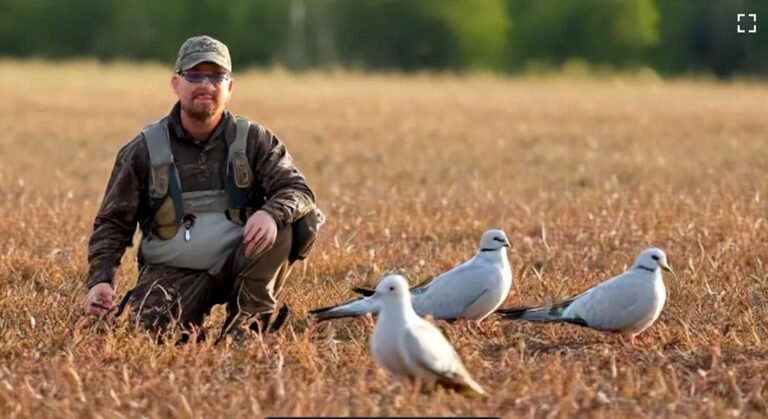
Decoys and retrievers. Decoys are legal and effective — a good spread on a bare dirt bank or stubble edge slows birds into range. Retrievers are welcome company; a steady dog saves cripples in thick sunflower stalks better than any boot can.
Electronic calls. Dove hunting doesn’t revolve around calling — doves respond to sight and movement far more than sound. Traditional mouth-blown cooing calls can work casually, but a quiet spread on the right field out-calls any electronic device in this state.
Baiting is illegal — know the federal rules. You cannot hunt doves over bait, and a field stays “baited” for 10 full days after all grain, salt, or other feed is completely removed. The trap for new hunters is that just-picked grain from a normal agricultural harvest is legal to hunt over, while scattered feed put out to draw doves is not. Manipulated crops — mowed, shredded, or disced fields where grain lies from normal farming — are legal hunting grounds. When in doubt, the official guidance from the U.S. Fish and Wildlife Service’s dove hunter guide is simple: ask the landowner, inspect the field, and walk away if you can’t explain why the grain is there.
Motor vehicles and road rights-of-way. Federally, you can’t hunt migratory birds from or with the aid of a motor vehicle or motor-driven conveyance. And at the state level, SD specifically prohibits hunting mourning doves within road rights-of-way — so keep both feet (or a wheelchair-accessible stationary setup, for qualifying disabled hunters) on legal ground.
🏞️ Best Places to Hunt Doves in South Dakota {#places}
Game Production Areas (GPAs). GF&P’s network of several hundred thousand acres of public GPAs is your best free bet, especially in East River counties where they interlock with harvested corn, soybean, and sunflower fields. Use the GFP public lands atlas online to find a GPA adjoining a recently cut field, and you’ve found birds.
Waterfowl Production Areas (WPAs). Federally managed by USFWS and concentrated in the prairie pothole region, WPAs are open to dove hunting (with nontoxic shot) and frequently hold top-notch late-summer dove habitat around wetland edges.
Missouri River Corps lands and Lakeside Use Areas. Corps of Engineers land along Lake Oahe and Lake Sharpe, plus state Lakeside Use Areas, offer hunting where croplands meet the river bottom — a classic dove corridor that catches both morning flights off the water and evening pushes back to it.
National grasslands. Custer, Buffalo Gap, Fort Pierre, and Grand River National Grasslands in western South Dakota are open to hunting under state regulations. Western birds can be spottier than the East River abundance, but the solitude and wide-open country have their own appeal.
Private land with permission. The most productive SD dove fields are private — sunflower, milo, and wheat stubble. Landowner permission opens more ground than any public atlas. And if access is a hurdle, licensed shooting preserves and guided dove hunt outfits across the state offer pay-to-play opportunities throughout September.
🧠 Top Dove Hunting Tips {#tips}
- Scout the last week of August. Birds pattern hard before the opener. Find the field they’re feeding in, and they’ll likely be in the same field September 1.
- Hunt the East River ag belt. Sunflower, milo, and wheat country holds the state’s densest dove populations — the Missouri River is roughly the dividing line between dove country and grass country.
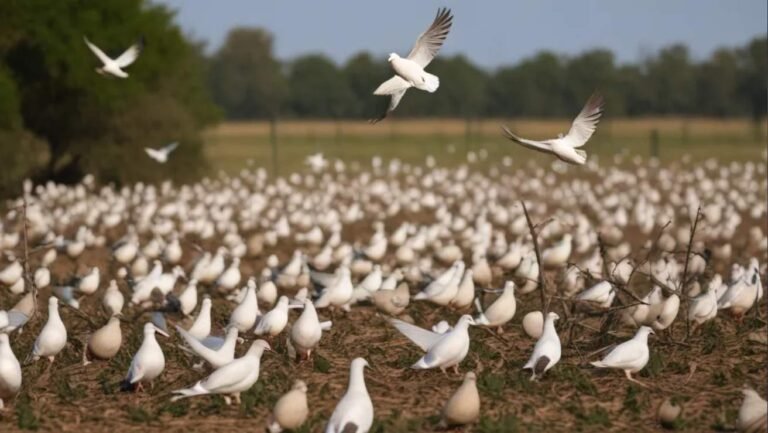
- Hit the late-season push. In South Dakota, doves are most vulnerable in the first three weeks of September. By late October, frost has already pushed most birds south.
- Learn the daily loop. Doves fly from roost to feed in the morning, feed to water midday, then water back to feed in the evening. Park yourself between feed and water, not on top of either.
- Respect the wind. Doves land into the wind. Set up so approaching birds swing into your spread naturally, and don’t crowd the decoys with your silhouette.
- Use sunflowers as cover. A camo pattern matching standing sunflower or wheat stubble makes you nearly invisible — birds never flare off what they can’t see.
- Sheet the decoys. A dozen dove decoys — including a few flyers on stakes — on bare dirt near the field edge is all you need. Movement beats quantity.
- Skip the morning rush the first week. Opening-week mornings are chaos. The evening flight, 2–3 hours before sunset, is calmer, and educated birds come in more predictably.
- Shell up. Fifteen birds often take 75–150 shots in early season. Bring at least four boxes per hunter; you’ll be glad you did.
- Lead with confidence. Mourning dove flight is erratic and deceptive. On a crossing shot, give them a full body length or more — most misses are behind the bird.
- Don’t skybust. The 60-yard pop-up shot is how you bruise birds you’ll never retrieve. Let them commit to the spread and take the passing shot at 25–35 yards.
- Pack for heat, not fall. Opening day in SD regularly hits the mid-80s to 90s. Hydrate all day, and stash water by your blind.
- Defend against mosquitoes. Late-August scouting and September opening evenings are prime mosquito hours. Thermacell and head nets are standard gear on the prairie.
- Watch for ground hazards. Rattlesnakes den near rocky western-SD draws and CRP edges; watch where you sit and where your dog ranges.
- Pair it with other openers. September 1 is also the archery deer opener. Hunt doves at dusk, then grab your bow for an evening sit — a classic South Dakota September double.
- Consider a 20 gauge. For a full day of mount-pass shooting, a light 20 ga with #7.5s kills cleanly out to 35 yards and weighs half as much as a 12.
- Take kids on the opener. Dove hunting is the gentlest introduction to wingshooting — short waits, active shooting, and a $5 youth license.
📋 Recent Regulation Changes for 2026-2027 {#changes}
At the federal level, the framework itself is evolving. In June 2026, the U.S. Fish and Wildlife Service published a proposal to streamline how migratory game bird seasons are authorized, moving toward a multi-year approval cycle rather than annual federal rulemaking — a change designed to reduce regulatory complexity for states like South Dakota while keeping dove season frameworks within federally approved limits. Hunters should expect the same foundational rules (3-shell shotguns, legal hours, baiting standards) to remain in place.
In South Dakota, the 2026 season holds steady. The mourning dove season structure — September 1 through November 9, 15-bird daily limit, 45-bird possession limit, half-hour-before-sunrise shooting hours — is consistent with recent seasons, and GF&P has published it without major alterations for 2026. One thing worth repeating every year: the nontoxic shot requirement on GPAs, WPAs, and Corps lands, and the $5 State Migratory Bird Certificate that every dove hunter must hold. Those two items trip up more hunters than any season-date change ever will.
Always confirm details against the current South Dakota Hunting and Trapping Handbook before you head out — that’s the document of record for everything above.
🦺 Hunter Safety Tips {#safety}
Firearm safety. Treat every gun as loaded, keep muzzles pointed downrange or skyward away from partners, and the 3-shell plug means your gun is never “empty enough” to be careless. Pick your shot; never swing through another hunter.
Heat safety. September dove fields are sun-baked. Drink water all day, wear a hat and sunscreen, and watch for heat exhaustion in yourself and your hunting companions — particularly the dogs.
Dog safety. Keep your retriever hydrated between retrieves, check ears and feet for sunflowers and foxtails, and carry water on every walk to a downed bird in standing crops. Rattlesnake country means keeping dogs close in rocky western areas.
Eye and ear protection. Mourning dove wingshooting means looking skyward all day — police-grade or amber shooting glasses cut glare and protect your eyes from falling shot. Muffs or plugs preserve your hearing for the shot after next.
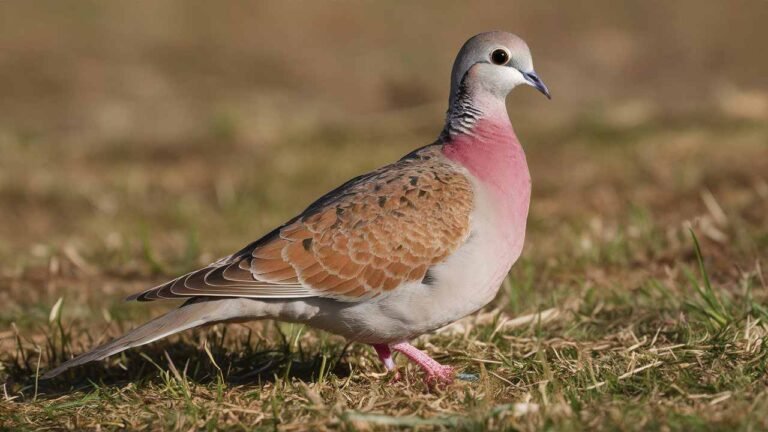
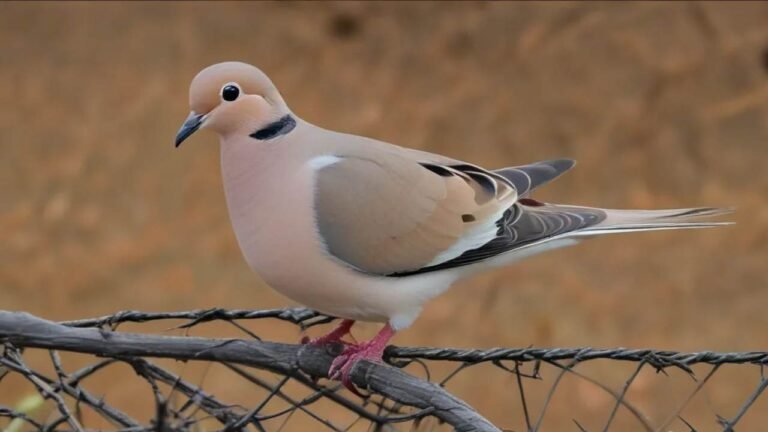
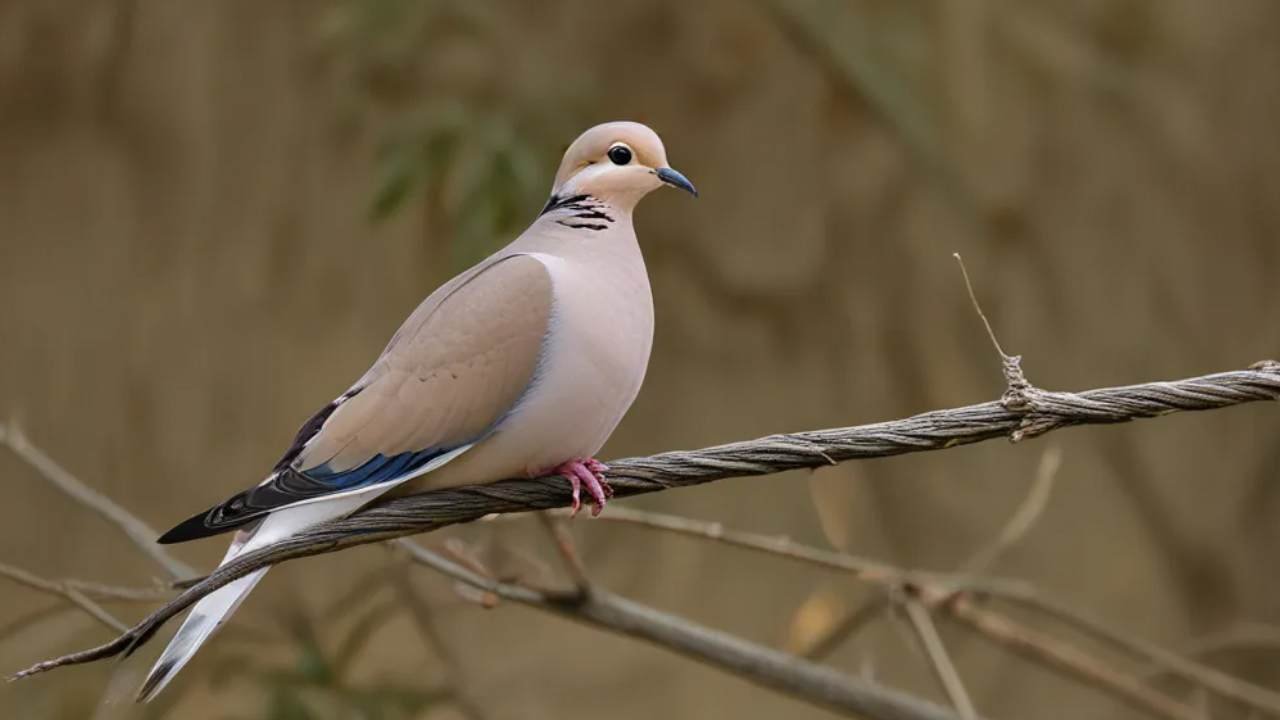
Bird identification. Mourning doves are slender, grayish-brown, with black spots on the wings and a long pointed tail. Eurasian collared doves are larger, pale, with a black collar at the nape — legal year-round. If you’re unsure what’s coming in, let it pass. Protected species like nighthawks and killdeer occasionally buzz a dove spread, and federal law protects them absolutely.
Ethical hunting. Retrieve every bird you knock down, count every cripple toward your limit, and leave the field better than you found it. Ethical hunters also respect posted land — trespass costs all of us access.
🐦 Common Dove Species Found in South Dakota {#species}
Mourning Dove (Zenaida macroura)
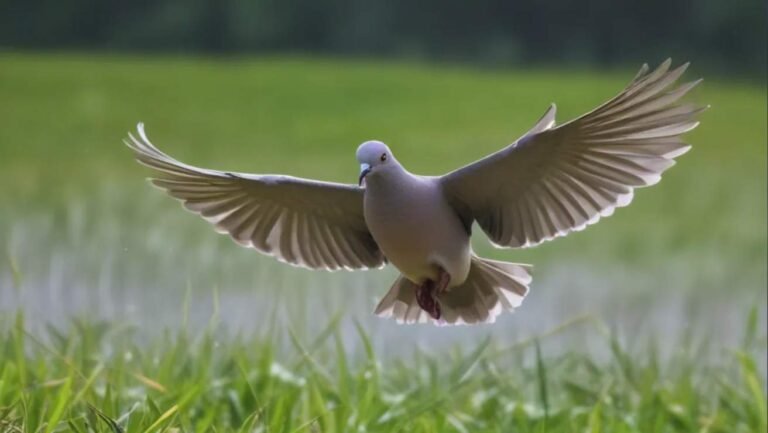
- Identification: Sleek, 11–13 inches, soft gray-brown body, black wing spots, long tapered tail edged in white; rapid, swooping flight with whistling wings.
- Habitat: Found nearly everywhere in SD during spring and summer breeding — farmland edges, shelterbelts, towns, and prairie. They feed on waste grain and seeds and need daily water.
- Migration: Highly cold-sensitive, they depart as frost sets in, wintering across the southern U.S., Mexico, and Central America. SD-banded birds are commonly recovered south of the border.
- Best strategy: Hunt grain-field edges in September during the evening flight to water; a decoy spread on bare ground near harvested sunflowers or wheat is the classic winning setup.
Eurasian Collared Dove (Streptopelia decaocto)
- Identification: Larger and paler than the mourning dove, with a squared tail and a distinctive black half-collar on the back of the neck.
- Habitat: A non-native species tied to farms, feedlots, and small towns — increasingly common around grain elevators and homesteads across SD.
- Migration: Essentially sedentary; they stay through winter, which is why they’re harvestable year-round.
- Best strategy: When you see a pale, heavy dove with a collar, take it freely — it doesn’t count against your 15-bird mourning dove limit, and every bird you remove helps native dove populations.
White-winged Dove (Zenaida asiatica)
- Identification: About the size of a collared dove, with a bold white wing patch visible in flight and a square tail.
- Habitat: A desert-southwest species that wanders; sightings in SD remain rare but are becoming more frequent, mostly along the Missouri River corridor.
- Migration: Uncommon vagrant in SD — no hunting season exists here.
- Best strategy: If one shows up over your decoys, admire it — and make sure you know the difference before you shoot, since it doesn’t fit SD’s mourning dove framework.
❓ Frequently Asked Questions {#faq}
When does dove season open in South Dakota?
The 2026 mourning dove season opens September 1, 2026, and runs through November 9, 2026, statewide. There’s no split season and no zone variation.
Do I need a license to hunt doves in South Dakota?
Yes. You need a valid small game license ($36 resident) plus the State Migratory Bird Certificate ($5), which also covers your federal HIP registration. Hunters 18 and older need a habitat stamp ($10 resident / $25 nonresident) unless exempt.
How many doves can I shoot per day in South Dakota?
The daily bag limit is 15 mourning doves, with a 45-bird possession limit. Eurasian collared doves have no limit and don’t count toward your mourning dove bag.
Do I need a federal duck stamp to hunt doves?
No. The Federal Waterfowl Stamp is only required for ducks, geese, swans, and mergansers. Mourning dove hunters need the state certificate but not the federal stamp.
Can I shoot doves on the ground in South Dakota?
No. South Dakota law requires that mourning doves be shot only while flying. Ground-shooting is a common citation, so let them get airborne.
Do I need to plug my shotgun for dove hunting?
Yes. Your shotgun must not be capable of holding more than three shells. A one-piece plug that requires gun disassembly to remove is the legal fix — this is federal law for all migratory birds.
Is hunting doves over bait legal if I remove the bait first?
No. A baited area stays baited for 10 days after all feed is removed. Hunting over grain scattered specifically to attract doves is a federal violation carrying serious fines. Normal agricultural harvest residue is legal.
Can kids hunt doves in South Dakota?
Absolutely. Resident youth 12–17 hunt on the $5 youth small game license; kids under 16 can use the $5 mentored youth license with an unarmed adult. Hunter education is required for those under 16 unless hunting in the mentored program.
Where can nonresidents hunt doves in South Dakota?
Nonresidents can hunt doves anywhere in the state with the $142 nonresident small game license (two 5-day periods), the $5 certificate, and the $25 habitat stamp. Public GPAs and WPAs are open to all licensed hunters.
What are the shooting hours for doves in South Dakota?
From one-half hour before sunrise to sunset, every day of the season — with no opening-day exceptions.
🏁 Final Thoughts {#final}
South Dakota’s dove season is a short window that long-time residents treat like a holiday: September 1, a handful of shells, a dusty field edge, and wings slicing through golden hour light. The 2026 season — September 1 through November 9, statewide, with a 15-bird daily limit — gives everyone from first-time youth hunters to grizzled prairie veterans a legitimate reason to dust off the shotgun early.
The money rule is simple: small game license + $5 Migratory Bird Certificate + plugged shotgun + flying birds only. Nontoxic shot on public lands, no hunting over bait or road rights-of-way, and you’ll stay on the right side of both state and federal law. Before you head out, pull the latest South Dakota Hunting and Trapping Handbook and confirm every detail — regulations are the one thing you shouldn’t take on faith.
And if the itch extends beyond your home state, neighboring states keep comparable seasons: North Dakota’s dove season opens on a similar September schedule, and Nebraska’s dove season runs its own early-fall framework, both worth a look for hunters planning a regional circuit. From one wingshooter to another — good luck, keep your eyes on the sky, and the 2026 South Dakota dove season should be one for the books. 🎯