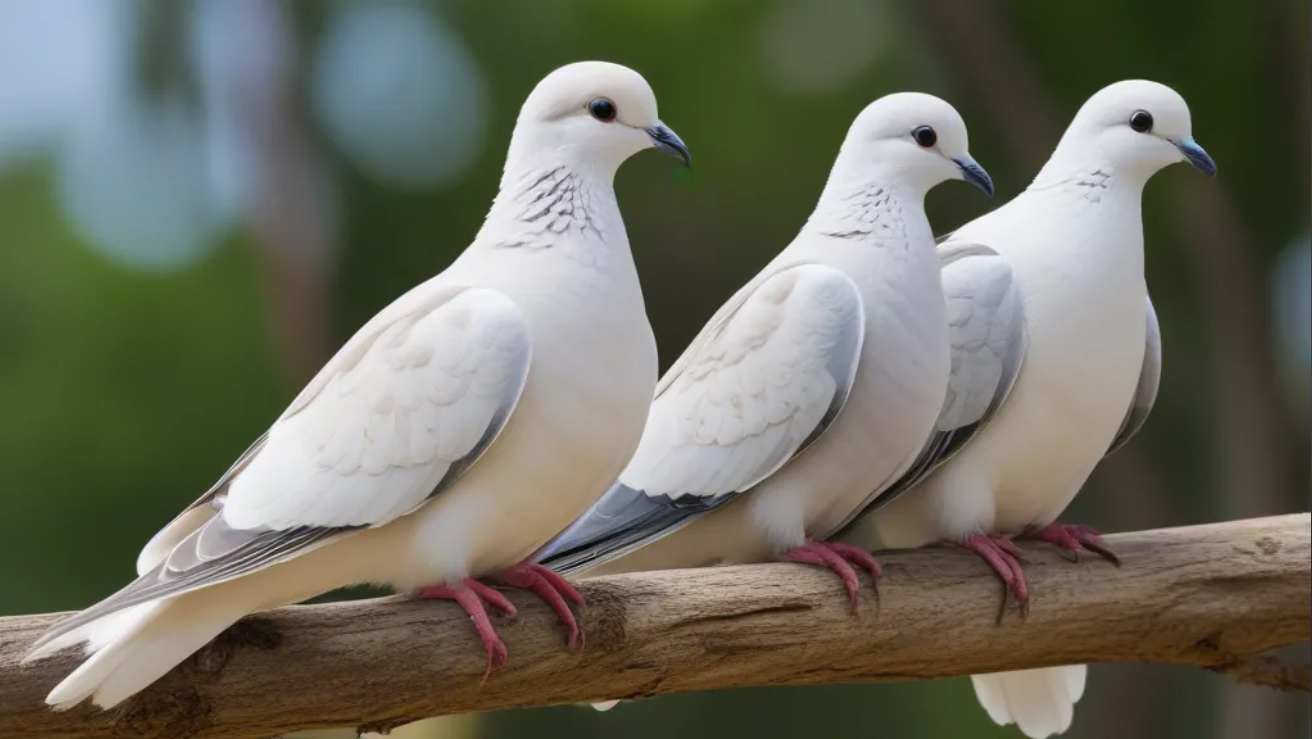
2026-2027 Pennsylvania Dove Game Regulation Fall Hunting and Statewide Season
Pennsylvania’s 2026-2027 dove season is now set, and the big headline is simple: dove hunting opens September 1, 2026, runs through November 27, 2026, then reopens December 18, 2026, through January 2, 2027. For most hunters, that means a classic early-season opener with warm weather, plenty of field scouting, and fast shooting over grain, weedy edges, and managed public dove fields.
Just as important, Pennsylvania keeps things fairly straightforward. The state is using a statewide split season, not separate north/south dove zones, and the daily bag limit is 15 doves with a possession limit of 45. Hunters also need a regular hunting license plus a Pennsylvania Migratory Game Bird License, which includes HIP survey participation through the licensing process. Sunday hunting remains closed for migratory game birds in Pennsylvania for 2026-2027.
This guide breaks down the official dates, bag limits, legal hours, licenses, methods, public-land options, and practical tips that matter in the field. It is built for hunters who want clear answers before opening day—not legal jargon.
Quick Answer
Pennsylvania dove season for 2026-2027 runs Sept. 1-Nov. 27, 2026, and Dec. 18, 2026-Jan. 2, 2027. The season is statewide, the daily bag limit is 15, and the possession limit is 45. Hunters need a valid Pennsylvania hunting license or mentored permit plus a Migratory Game Bird License/HIP. Legal shooting hours for doves are one-half hour before sunrise until sunset, and Sunday hunting for migratory game birds is not allowed in Pennsylvania this season.
🗓️ Pennsylvania Dove Season 2026-2027 Overview
| Species | Season | Zone | Opening Date | Closing Date | Daily Bag Limit | Possession Limit | Status |
|---|---|---|---|---|---|---|---|
| Mourning Dove | Split Season 1 | Statewide | Sept. 1, 2026 | Nov. 27, 2026 | 15 | 45 | Official |
| Mourning Dove | Split Season 2 | Statewide | Dec. 18, 2026 | Jan. 2, 2027 | 15 | 45 | Official |
| White-winged Dove | No separate Pennsylvania season published | Statewide | — | — | See statewide dove limit | See statewide dove limit | No separate PA species listing |
| Eurasian Collared Dove | No separate season table published in the statewide dove announcement | Statewide | — | — | Verify current digest | Verify current digest | Not separately broken out |
Pennsylvania’s official 2026-2027 materials publish one statewide dove season, not different season dates by region. Mourning doves are the main target species. Pennsylvania does not publish a separate white-winged dove split or separate white-winged bag structure in the statewide season notice, and Eurasian collared doves are not separately broken out in the season table.
📅 Official Dove Season Dates
For the 2026-2027 season, Pennsylvania has adopted a two-part statewide dove season:
- September 1, 2026 to November 27, 2026
- December 18, 2026 to January 2, 2027
That split gives hunters an early opener built around local birds and harvested farm fields, plus a late segment that can produce good action when weather and migration line up.
Mourning dove
Mourning doves are the primary game dove in Pennsylvania and the species most hunters will pursue. The official statewide split season above applies here.
White-winged dove
White-winged doves are not a major Pennsylvania target, and the state’s 2026-2027 season announcement does not create a separate white-winged dove season, zone, or special bag limit. If you believe you may encounter one, verify the current digest before hunting and make sure your identification is solid.
Eurasian collared dove
Pennsylvania’s hunting digest identifies Eurasian collared dove as a game bird, but the official 2026-2027 dove season table does not separately break out dates or limits for it. Because of that, hunters should verify the current digest before relying on any species-specific assumption.
🧭 Dove Hunting Zones in Pennsylvania
Here’s the key point: Pennsylvania does not use separate dove hunting zones the way some states divide seasons into north, south, central, coastal, or special management units.
That means:
- There is no North Zone dove season
- There is no South Zone dove season
- There is no Central Zone dove season
- There is no Coastal Zone dove season
- There are no special dove management units with separate dates in the 2026-2027 statewide season announcement
Instead, Pennsylvania runs a statewide dove season. What does vary is opportunity. The Game Commission manages dove fields across its six administrative regions, and productivity often depends on agriculture, field prep, pressure, and weather more than geography on paper.
🎯 Daily Bag Limits
| Species/Group | Daily Limit | Possession Limit | Special Rules |
|---|---|---|---|
| Doves (official Pennsylvania season category) | 15 | 45 | Statewide split season |
| Mourning Dove | Counts toward 15 | Counts toward 45 | Main target species |
| White-winged Dove | No separate PA limit published | No separate PA limit published | Verify current digest if encountered |
| Eurasian Collared Dove | Verify current digest | Verify current digest | Not separately broken out in season table |
Pennsylvania also follows the standard rule that you may take only one daily bag limit in a single day.
⏰ Legal Hunting Hours
Pennsylvania dove hunting hours are clear and hunter-friendly:
- One-half hour before sunrise until sunset
- Applies throughout the dove season
- The old noon start on the early dove opener has been eliminated
That last point matters. You no longer have to wait until midday on the early segment. If you are set up on a productive field, you can legally hunt at first light.
Federal migratory bird rules still matter in the background because states choose seasons within federal frameworks. Pennsylvania’s Game Commission specifically states its migratory bird seasons are set within those federal limits. So while the season is state-managed, the structure still sits inside federal guardrails.
🪪 Licenses Needed
To hunt doves in Pennsylvania, you need a base hunting credential plus the migratory bird add-on.
License price summary
| License/Permit | 2026-2027 Price |
|---|---|
| Resident Adult Hunting License | $20.97 |
| Resident Junior Hunting License | $6.97 |
| Resident Senior Hunting License | $13.97 |
| Nonresident Adult Hunting License | $101.97 |
| Nonresident 7-Day Small Game License | $31.97 |
| Resident Migratory Game Bird License | $3.97 |
| Nonresident Migratory Game Bird License | $6.97 |
| Mentored Youth Permit | $2.97 |
What most dove hunters need
- Pennsylvania hunting license
- Pennsylvania Migratory Game Bird License
- HIP survey participation through the licensing process
HIP registration
Pennsylvania collects HIP information during the license transaction, so it is tied into the migratory bird license purchase rather than handled as a separate stand-alone step.
Federal requirements
For dove hunting only, a federal duck stamp is not required. That federal stamp applies to waterfowl hunters age 16 and older, not standard dove hunters.
Youth, senior, and military notes
- Mentored youth may hunt with the proper permit structure
- Junior and senior licenses are available at reduced rates
- Pennsylvania also offers reduced-cost or no-cost options for certain resident military members and disabled veterans
Before you buy, check the current details in the Pennsylvania Game Commission’s 2026-27 migratory bird regulations.
🔫 Legal Hunting Methods
Pennsylvania keeps dove methods practical, but hunters still need to pay attention to the details.
Shotguns and gauge rules
A lawful dove gun is typically a shotgun no larger than 10 gauge, and it must be limited to a three-shell capacity in the chamber and magazine combined.
Plug requirements
If your shotgun can hold more than three shells, it must be plugged with a one-piece filler that cannot be removed without disassembling the gun.
Nontoxic shot
Pennsylvania’s reviewed dove materials do not impose a blanket statewide nontoxic-shot requirement specifically for dove hunting. However:
- The Game Commission strongly encourages lead-free shot
- Some refuges or special properties may have stricter rules
- Waterfowl regulations are more restrictive than dove regulations
Decoys and electronics
Static decoys are fine, and Pennsylvania materials indicate that electronic decoys can be used for doves. Still, don’t confuse that with a blanket approval for every electronic device. Pennsylvania generally restricts electronic hunting contrivances unless specifically allowed.
Baiting laws
This is one of the most important dove topics in Pennsylvania.
- You may hunt doves over manipulated agricultural crops
- Examples include mowed, shredded, disked, rolled, chopped, trampled, flattened, burned, or herbicide-treated crops
- You may not hunt where grain, salt, or feed has been illegally placed to attract birds
A managed dove field that has manipulated grain is also off-limits to hunting other species for 30 days after the grain or residue is removed.
Motor vehicle restrictions
You may not hunt migratory game birds from, by means of, or with the aid of:
- A motor vehicle
- A motor-driven land conveyance
- An aircraft
Retriever use
Dogs are a smart choice on early-season dove hunts. Pennsylvania’s dove rules emphasize retrieval and wanton-waste responsibilities, so a steady retriever can save birds, especially in tall weeds, sunflower strips, and warm-weather cover.
📍 Best Places to Hunt Doves in Pennsylvania
Pennsylvania does not use the “WMA” label. The closest public-land equivalent is State Game Lands.
1. Managed dove fields on State Game Lands
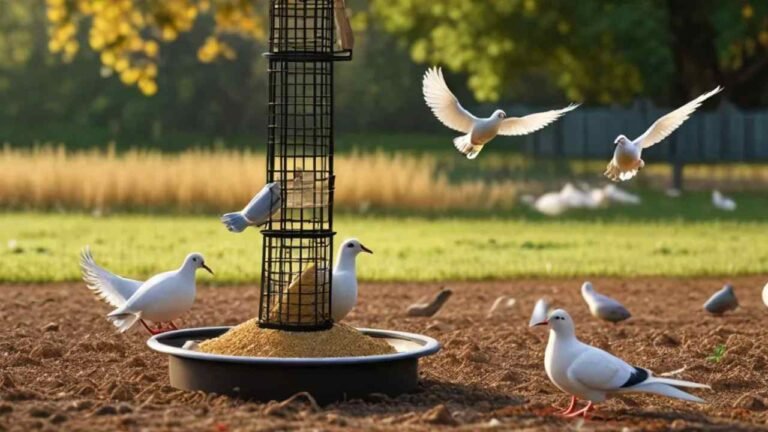
This is the top public option. The Game Commission maintains managed dove fields across the state, and these fields are specifically prepared to create legal, high-odds dove setups.
2. Agricultural State Game Lands in the Southeast and Southcentral regions
These regions usually give hunters the best blend of grain ground, edge cover, and dove density. If you want a strong opening-day public-land plan, start here.
3. Allegheny National Forest
This is better for hunters who like to scout openings, utility corridors, old fields, and edges instead of sitting a classic prepared field. It’s legal public hunting ground, but it usually requires more legwork.
4. Pennsylvania state forests
All 20 state forests are open to hunting during established seasons. They are not classic dove-field destinations everywhere, but forest edges near farms, gravel roads, powerlines, and water can produce pass-shooting opportunities.
5. Wildlife refuges with permitted hunting access
Some federal lands in Pennsylvania do allow hunting under refuge-specific rules. These are worth checking, but always verify current species access, unit boundaries, and ammo rules before making a trip.
6. Official mapping tools and public dove-field maps
Pennsylvania’s best public-land advantage is its mapping system. Use the state’s public hunting maps to find fields, parking, roads, and nearby access before the opener.
If you also hunt nearby states, a useful comparison piece is this Ohio dove season guide.
🧠 Top Dove Hunting Tips
Here are 15 Pennsylvania-specific tips that actually help:
- Scout managed dove fields two or three evenings before opening day.
- Focus on sunflowers, millet, buckwheat, sorghum, and cut grain.
- Watch powerlines, dead trees, and fence lines for evening sit spots.
- Set up on field corners where birds naturally funnel.
- Hunt the shade edge on hot September afternoons.
- Bring more shells than you think you need.
- Use a stool and sit still; movement flares doves fast.
- After opening week, shift to smaller overlooked fields.
- Check water sources near feed fields.
- Hunt the first hour and the last hour hardest.
- Expect higher success in agricultural counties than deep timber.
- Use a dog if possible; Pennsylvania field edges can swallow birds.
- Keep your shotgun plugged and paperwork on you.
- If birds are flaring, move 10 to 20 yards off the obvious line.
- On public fields, arrive early and pick a safe lane with room to swing.
🔄 Recent Regulation Changes for 2026-2027
For dove hunters, the 2026-2027 rules are substantially unchanged in the biggest ways that matter:
- The dove season remains a statewide split season
- The bag limit remains 15 daily / 45 possession
- Sunday hunting for migratory game birds remains closed
- Pennsylvania continues to use seasons set within federal migratory bird frameworks
The notable migratory-bird changes for 2026-2027 were focused more on goose structures than on dove hunting. In other words, dove hunters are looking at continuity rather than a major rewrite.
🦺 Hunter Safety Tips
Early dove season can be deceptively demanding.
- Keep your muzzle up and know every hunter’s position before birds start flying
- Wear eye and hearing protection
- Hydrate aggressively on warm September days
- Check dogs often for heat stress and burrs
- Positively identify every bird before shooting
- Don’t sky-bust at birds out of range
- Retrieve downed birds quickly
- Be extra cautious on crowded public dove fields
- Respect safe shooting angles and never swing through another hunter
🕊️ Common Dove Species Found in Pennsylvania
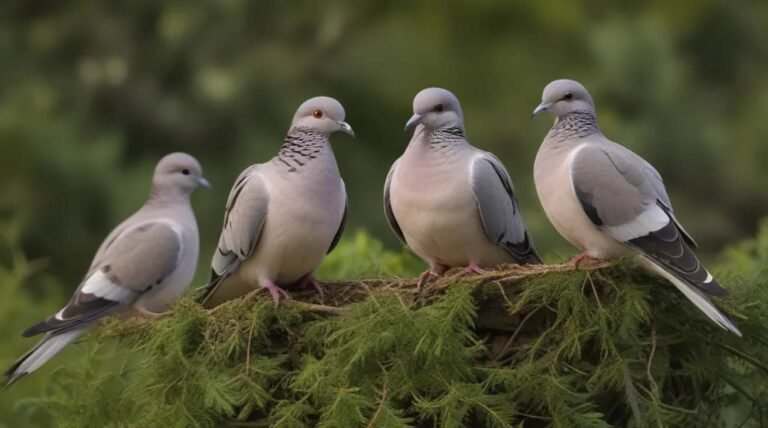
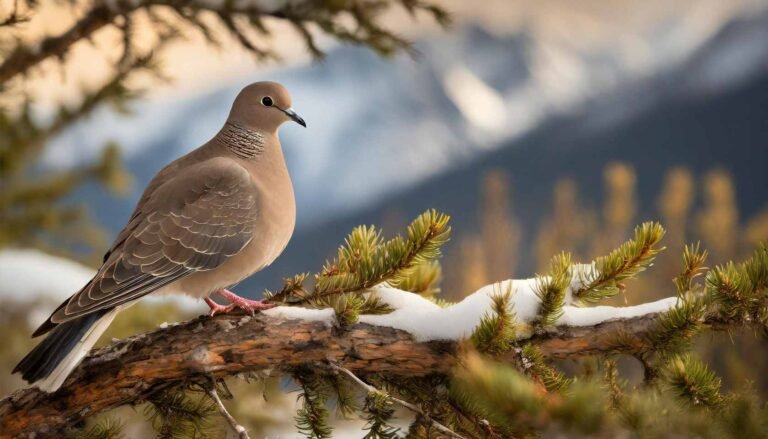
Mourning Dove
Identification: Slim body, pointed tail, gray-brown color, fast direct flight.
Habitat: Farm country, weedy fields, field edges, utility lines, and suburban fringes.
Migration: Strong early fall movement, with local birds present before migrant pulses.
Best strategy: Hunt feed-to-water flight lines and manipulated grain fields.
White-winged Dove
Identification: Larger look than a mourning dove, with obvious white wing flashes.
Habitat: Rare compared with mourning doves in Pennsylvania.
Migration: Irregular and uncommon in the state.
Best strategy: Don’t assume one is legal just because it looks like a dove—make a positive ID and verify current rules.
Eurasian Collared Dove
Identification: Pale buff-gray body with a black neck collar.
Habitat: Often tied to developed areas, grain sites, and farmsteads.
Migration: Mostly local rather than strongly migratory.
Best strategy: Confirm current Pennsylvania rules before targeting them because the season table does not break them out separately.
❓ Frequently Asked Questions
When does Pennsylvania dove season open in 2026?
It opens September 1, 2026.
Is dove season statewide in Pennsylvania?
Yes. Pennsylvania uses a statewide split season, not separate dove zones.
What is the daily limit for doves in Pennsylvania?
The daily bag limit is 15 doves, and the possession limit is 45.
Can you hunt doves on Sunday in Pennsylvania?
No. Sunday hunting remains closed for migratory game birds in Pennsylvania for 2026-2027.
What time can you start dove hunting in Pennsylvania?
You may begin one-half hour before sunrise and must stop at sunset.
Do I need HIP for dove hunting in Pennsylvania?
Yes. HIP information is collected when you buy the Pennsylvania Migratory Game Bird License.
Do I need a federal duck stamp to hunt doves?
No. A federal duck stamp is for waterfowl hunters, not standard dove hunters.
Can you hunt doves over cut or manipulated fields in Pennsylvania?
Yes, if the manipulation is lawful. Pennsylvania specifically allows dove hunting over manipulated agricultural crops, but illegal baiting is still prohibited.
Is non-toxic shot required for Pennsylvania dove hunting?
Not as a blanket statewide rule in the materials reviewed for 2026-2027, though lead-free shot is strongly encouraged and some properties may require non-lead ammunition.
Where can I find public dove fields in Pennsylvania?
Start with Pennsylvania’s official mapping tools, State Game Lands resources, and managed dove field information. Federal oversight still shapes the season structure through the U.S. Fish & Wildlife Service migratory bird hunting regulations.
Final Thoughts
Pennsylvania dove season 2026-2027 is refreshingly simple: a statewide split season, a 15-bird daily limit, and clear rules on hours, licenses, and field legality. For most hunters, success will come down to scouting, safe setups, and understanding how Pennsylvania’s manipulated-field rules work.
If you want the best public-land odds, start with managed dove fields and State Game Lands. If you prefer lower pressure, scout smaller agricultural edges, forest openings, and overlooked feed-to-water routes.
And before you go, verify the final details in the current digest and official state resources. That last check is always worth it.