🕊️Idaho’s Dove Hunting Paradise: 2026-2027 Season
September gets a lot of attention in Idaho each year, and for good reason. When the fields of cut barley and dried sunflowers start to draw birds from across the Pacific Flyway, hunters dust off their shotguns, call their buddies, and head for the Southwest desert country, the Treasure Valley farm belt, and the trout-rich river valleys of eastern Idaho. Idaho Dove Season 2026–2027 promises another excellent early-season chance to get in front of fast-flying birds while the weather is still warm and pretty.
In Idaho, mourning doves are managed at the state level by the Idaho Department of Fish and Game (IDFG) under a framework set annually by the U.S. Fish & Wildlife Service. Seasons typically run from September 1 to October 30 in a single continuous window, statewide, with a 15-bird daily bag limit. In addition, the non-native Eurasian collared-dove can be taken in any amount, at any time the holder carries a valid Idaho hunting license.
This guide pulls together everything an Idaho dove hunter needs to plan the fall — season dates, license requirements, bag and possession limits, legal methods, public-land hotspots, and field-proven tips — all in one place. As always, verify your licensing and any final season adjustments with IDFG the day you head out. Regulations can shift between publication of this article and opening morning.
✅ Quick Answer
Idaho Dove Season 2026–2027 is expected to run September 1 through October 30, 2026, statewide, with a daily bag limit of 15 mourning and white-winged doves (combined) and a possession limit of 45 birds. Eurasian collared-doves are unclassified — no closed season and no bag limit, but a valid hunting license is still required. Hunters age 16 and older must also possess an Idaho Migratory Bird (HIP) Permit. Final dates are typically set by the IDFG Commission in July of each year.
Idaho Dove Season 2026–2027 Overview
At the time of writing, final 2026–2027 season dates have not yet been officially announced. The figures below come from Idaho’s official 2026 scoping documents and the most recent published IDFG press materials. Final dates typically appear in early July each year once the Fish and Game Commission adopts the upcoming-year migratory bird package.
| Species | Season | Zone | Opening Date (Proposed) | Closing Date (Proposed) | Daily Bag Limit | Possession Limit | Status |
|---|---|---|---|---|---|---|---|
| Mourning Dove | Early Fall | Statewide | September 1, 2026 | October 30, 2026 | 15 (combined w/ white-winged) | 45 (3× daily) | Pending Official Announcement |
| White-winged Dove | Early Fall | Statewide | September 1, 2026 | October 30, 2026 | Counts toward 15-bird aggregated mourning-dove bag | Counts toward 45-bird aggregate | Pending Official Announcement |
| Eurasian Collared-Dove | Year-Round | Statewide | No Closed Season | No Closed Season | No Limit | No Limit | Currently in effect |
| Crow | Separate Season | Statewide | Varies | Varies | No Limit | No Limit | Confirmed by IDFG |
Note: The combined 15-bird aggregate for mourning and white-winged doves means if you shoot 10 mourning and 5 white-winged you’ve maxed out — you cannot add a 16th bird of either color.
🗓️ Official Dove Season Dates
Idaho’s dove calendar is straightforward compared to many southern states. Here is what the record shows and what hunters should expect.
Mourning Dove.
Idaho typically opens mourning-dove season on September 1 and closes it on October 30. Until 2024, the framework sometimes produced a brief three-day September 1–3 split followed by a longer re-open later in the month. As of the 2024–2025 season, Idaho moved to a continuous single season running the full 60 days. For 2026–2027, this pattern is the working assumption.
White-winged Dove.
White-winged doves are uncommon in Idaho but show up regularly in the far southwest, particularly near agricultural areas close to the Snake River. They count toward the aggregate 15-bird daily limit — there is no separate white-wing-only bag.
Eurasian Collared-Dove.
This invasive species arrived in the Gem State in the late 1990s and now thrives around feedlots, grain elevators, and rural homesteads statewide. Because it is not classified as a protected migratory game bird under federal rule, IDFG allows year-round harvest with no bag limit, provided the hunter carries a valid Idaho hunting license.
Split Seasons?
At this time, Idaho is not expected to run a split mourning-dove season for 2026–2027. Always re-check the official brochure closer to opening day.
🗺️ Dove Hunting Zones in Idaho
Unlike waterfowl management, mourning-dove hunting in Idaho is NOT divided into zones. The entire state shares one season, one bag limit, and one set of rules. This is one of the nicer parts of chasing sharptails in the Gem State — you do not need to figure out which side of an imaginary line you’re standing on.
For administrative clarity, IDFG divides the state into seven regions (Panhandle, Clearwater, Magic Valley, Southeast, Southwest/McCall, Upper Snake, and Salmon), but those regions exist for biologists and field officers, not to alter dove dates or limits. Hunters who hold a valid Idaho license can pursue doves anywhere private-land permission or open public-land rules allow them to.
🎒 Daily Bag & Possession Limits
| Species | Daily Limit | Possession Limit | Special Rules |
|---|---|---|---|
| Mourning Dove | 15 (combined w/ white-winged) | 45 (3× daily bag) | Aggregate counts; no more than 45 in possession after opening day |
| White-winged Dove | Counts into the mourning-dove aggregate | Counts into the 45-bird aggregate | Same season and zone as mourning dove |
| Eurasian Collared-Dove | No Limit | No Limit | Year-round, but must hold a valid Idaho license |
| Crow | No Limit | No Limit | Separate crow season; do not mix with dove bag |
Field possession vs. home possession.
A hunter can have one full daily bag in the field at the end of any hunting day. Total possession after opening day may not exceed three daily bags (45 doves). Birds must be fully identifiable (heads and one fully feathered wing intact) when transported.
⏰ Legal Hunting Hours
Idaho follows the federal migratory-bird shooting hours: shooting is permitted from one-half hour before sunrise to sunset. There is no Idaexcptionsto allow earlier or later shooting during the dove season. Many hunters arrive a half-hour early, set up decoys, and wait for legal light.
Opening-day culture.
On September 1 every year, you’ll see queues at parking lots on the Snake River Birds of Prey National Conservation Area and at C.J. Strike Wildlife Management Area well before sunrise. Bring a flashlight and a chair for the wait.
Best timing.
Mourning doves typically hit open water, feed, and grit sites heaviest two hours after sunrise and again two hours before sunset. Plan your setup accordingly.
🪪 Licenses Needed & Price Summary
Every dove hunter in Idaho age 16 or older needs the following:
- Valid Idaho Hunting License (or Combination License)
- Idaho Migratory Bird (HIP) Permit
- Proof of Hunter Education if born on or after January 1, 1975
You do NOT need a federal duck stamp for doves — the duck stamp is reserved for waterfowl hunters 16 and older.
Idaho’s HIP permit costs the following (confirm current pricing on the official fee page, as IDFG prices are adjusted periodically):
| License / Permit | Resident Fee (approx.) | Nonresident Fee (approx.) |
|---|---|---|
| Annual Hunting License | $15.75 | $183.50 (3-day: lower tier) |
| Combination License (Hunt + Fish) | $38.75 | $242.25 |
| Migratory Bird (HIP) Permit | $1.75 | $4.75 |
| Junior Hunting License (10–17) | $8.25 | Lower-age tiers available |
| Senior Combination (65+) | $13.75 | N/A |
| Hunting Passport (first-time, mentored) | $1.75 | $1.75 |
| Disabled Combination License | $5.75 | N/A (resident only) |
Military Members. Active-duty military stationed in Idaho and their dependents qualify for resident licenses.
First-Time Hunters. The Hunting Passport lets a brand-new hunter try the sport with a mentor for $1.75 before completing hunter education.
For authoritative, current pricing and detailed exemptions, see the official Idaho Fish and Game Migratory Bird hunting page.
🎯 Legal Hunting Methods
Shotguns and gauges.
You may use any shotgun 10 gauge or smaller, including the very popular 12-gauge and 20-gauge options, as long as it is capable of holding no more than three shells total (two in the magazine plus one in the chamber).
Plug requirements.
A plug — a piece of dowel, plastic, or wood inserted into the magazine tube — is mandatory so the firearm physically cannot hold more than three shells. Officers check this in the field; a missing plug is a citable offense.
Shot type.
Lead shot is allowed for doves. The nontoxic (steel, bismuth, tungsten) requirement applies only to waterfowl and coots in some areas, not to doves. Many Idaho hunters prefer #7½, #8, or #9 lead shot for fast, close-quarters doves.
Decoys, calls, and equipment.
- Decoys: legal — full-body, silhouettes, and Mojo-style spinning-wing decoys are all allowed.
- Calls: legal — owl, coo, and whistle calls are permitted for doves. Electronic calls are allowed for doves; they are not allowed for waterfowl.
- Retrievers and pointing dogs: legal and encouraged.
- Baiting: illegal. Do not hunt over agricultural grain that has been manipulated, manipulated to concentrate birds, or distributed in a way that “baiting” applies under 50 CFR 20.21(i).
- Vehicles: shooting from or across a public road or any motorized vehicle is illegal. Do not drive off-road and shoot from the truck bed.
🏞️ Best Places to Hunt Doves in Idaho
Idaho’s dove hunting is concentrated around agricultural valleys where irrigation produces late-summer seed sources.
- C.J. Strike Wildlife Management Area (WMA) — southwest Idaho, near Grand View. Irrigated fields, water, and shelter belts attract big flocks every September. The IDFG website publishes a hunt planner with parking maps.
- Snake River Birds of Prey National Conservation Area — managed by the BLM, with excellent public access. Dove numbers are reliable from the Morley Nelson Snake River Birds of Prey area.
- Boise River WMA and surrounding Treasure Valley farms — strong opener-day flocks on private field edges that pair with public walk-in access through the IDFG Walk-In Access program.
- Lake Lowell Sector of Deer Flat National Wildlife Refuge — limited upland-bird hunting where dove hunting is allowed (check the annual refuge brochure because upland rules can differ by year).
- Market Lake WMA — east Idaho, near Roberts. Mix of wetlands and dryland farming that attracts both doves and waterfowl.
- Private farm and ranch land across the Magic Valley — abundant if you knock on doors and offer a polite handshake. Milo fields and cut hay are magnets for mourning doves.
- Public dove fields — Idaho does not run a formal “public dove field” leasing program like some southern states, but the Walk-In Access (WIA) program offers mapped private acreage open to public hunting during upland seasons.
Before visiting any refuge, verify on the official brochure that upland/dove hunting is open in that sector for the year.
🧠 Top Dove Hunting Tips for Idaho
These tips are tailored to Idaho’s dry climate, swirling winds, and big-agriculture patterns. Compare Idaho hunting seasons with neighboring Montana and Washington for context — birds often move across borders — and you’ll see why a flexible plan pays off.
- Scout millet and milo fields the week before opener. Idaho’s Treasure Valley is full of late-summer grain; doves key in on the earliest harvested patches.
- Find water. Doves must drink twice a day. Set up between an evening roost and a morning water source, not on the water itself.
- Glass fence lines. Hitting singles roosted on barbed wire is a classic Idaho opener morning tactic — but never shoot across public roads or two-track easements.
- Use the wind. Most Idaho valleys see afternoon thermals and predictable westerly winds; position a low-profile blind so birds work into your face.
- Skip the spin at noon. Birds loaf from late morning through 2 p.m. on hot September days. Use that window to swap positions.
- Decoy in clusters of 12, not dozens. Idaho doves commit more confidently to a small, tight spread.
- Try a Mojo on opener. When competition for shots is high, motion puts birds in the air.
- Carry lots of #8 shot and an open-choke cylinder. Most Idaho mourning-dove shots are inside 30 yards.
- Bring a small stool or bucket seat. Standing the entire opener in 90-degree heat saps your patience.
- Hydrate. Hikers and Yamaha hunters in the desert both know the danger — pack at least two liters per person.
- Earn a permission. Forty acres of untouched milo in southeast Idaho is worth far more than a crowded WMA. Ask early, offer a thank-you card and a photo.
- Don’t ignore agricultural silage. Doves pour into freshly cut silage within an hour of the chopper.
- Shoot doves, not bands. Idaho Fish and Game no longer bands mourning doves at the scale of older programs, but report any band you do recover through the USGS Bird Band Lab.
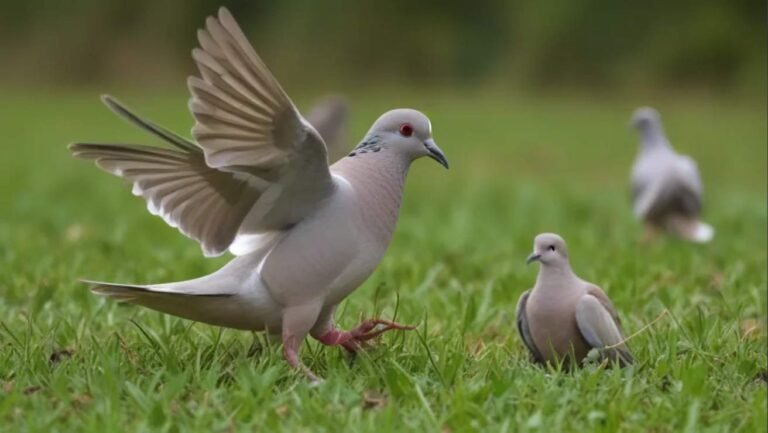
- Mind the difference between collared and mourning. Collared doves are bigger, paler, and have a black neck-bar — they don’t count against your bag.
- Watch the sagebrush. Around mid-September, collared doves often pour out of small-town grain elevators and into big sage clumps to roost.
- Comb the Snake River Breaks. Many productive spots require a short walk through lava rock. Hiking boots earn their keep here.
🔄 Recent Regulation Changes for 2026–2027
Idaho’s dove regulations have been substantially stable for several years. Major framework adjustments the agency is considering in its 2026–2027 scoping process include:
- Three-shot magazine limit continues to apply — no change.
- Continuous 60-day season (September 1–October 30) remains the proposal rather than the older three-day split plus a 50-day re-open.
- 15 mourning / 15 white-winged aggregate daily limit carried forward.
- HIP certification continues at point-of-sale for hunters 16 and older.
- Eurasian collared-dove remains unclassified and unregulated for season/limit.
If you’d like a complete overview of how Idaho compares to its neighbors across this part of the West, you can also browse the Montana Dove Season and Washington Dove Season guides to see how timeframes and bag limits differ west and north.
🦺 Hunter Safety Tips
A safe opener is a successful opener. Keep these basics front of mind.
- Firearm safety. Treat every shotgun as loaded; keep the action open when crossing fences.
- Sun and heat. August/September temps in southern Idaho regularly hit the 90s. Wear a hat, sunscreen, and loose-fitting layers.
- Bird identification. Eurasian collared-doves, feral pigeons, and band-tailed doves can all be confused with mourning doves. Know your targets.
- Dog safety. If you hunt with a pointing dog or retriever, carry water for them, watch for rattle-snakes in the breaks, and check paws after every walk.
- Eye and ear protection. Dove shooting is light-recoil but the volume adds up — pack foam plugs and shooting glasses.
- Ethical shooting. Always know what lies beyond your target. Cereal-grain country often conceals livestock or other hunters.
- Report poachers. If you see elk or salmon violations or anything suspicious, the Citizens Against Poaching (CAP) hotline is anonymous: 1-800-632-5999.
🐦 Common Dove Species Found in Idaho
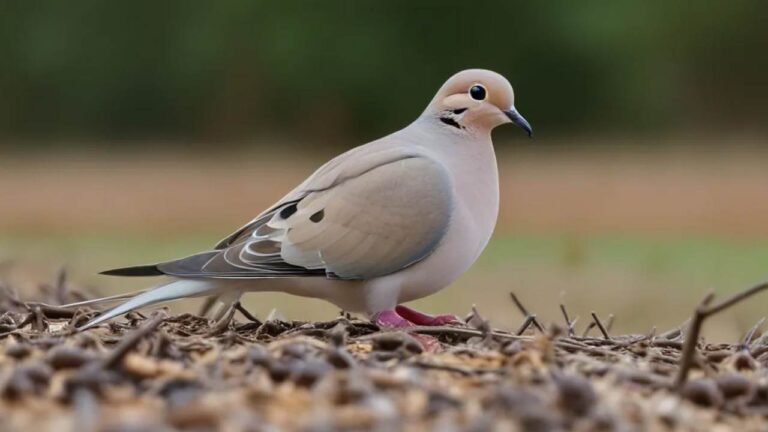
Mourning Dove (Zenaida macroura)
- Identification: soft tan-buff body, dark spots on the wings, long pointed tail with white edges; mournful “coo-OO-oo-oo-oo” call.
- Habitat: open farmland, ranch country, irrigated meadows, and rural homesteads.
- Migration: strong migratory; arrives in Idaho in early April, peaks in September, departs for Mexico by mid-October.
- Best hunting strategy: set up between morning water and a milo or millet field; boulder-strewn field edges are deadly.
Eurasian Collared-Dove (Streptopelia decaocto)
- Identification: sandy gray-cream body, black half-collar on the back of the neck, square (not pointed) tail, slightly larger than a mourning dove.
- Habitat: feedlots, grain elevators, small towns, ranch yards, and rural farms.
- Migration: essentially non-migratory — birds are here year-round.
- Best hunting strategy: scout town-edge grain elevators; sit under a single big cottonwood in late afternoon and intercept birds commuting to roost.
White-winged Dove (Zenaida asiatica)
- Identification: bold white wing patch in flight, blue eye-ring, shorter tail, white stripe on the face.
- Habitat: rare in Idaho but expanding — usually seen feeding in date-palm skirts or shed grain near the Snake River canyon.
- Migration: long-distance migrant from Mexico.
- Best hunting strategy: opportunistic; usually taken incidental to mourning-dove hunts on the southwestern edge of the state.
❓ Frequently Asked Questions
When does Idaho Dove Season 2026–2027 open?
Idaho Dove Season 2026–2027 is currently proposed to open on September 1, 2026 and close on October 30, 2026. The Idaho Fish and Game Commission finalizes the migratory-bird package each July, so check the official IDFG site the week before opening day for confirmation.
Do I need a federal duck stamp to hunt doves in Idaho?
No. The federal duck stamp (Duck Stamp) is required only for waterfowl hunters 16 and older. Dove hunters only need a state hunting license, the HIP permit, and proof of hunter education if it applies to their age.
How many doves can I shoot in one day in Idaho?
The mourning-dove daily limit is 15 birds combined with white-winged doves. Your possession limit is three times the daily bag, or 45 doves. Eurasian collared-doves are unlimited.
Are there dove hunting zones in Idaho?
No. Idaho does not divide its mourning-dove season into north, south, or coastal zones. The dove season is statewide — one set of dates, one bag limit, one set of rules.
Can I hunt Eurasian collared-doves year-round in Idaho?
Yes. Collared-doves are an unclassified, non-native species. You can take them in any number, at any time, as long as you hold a valid Idaho hunting license. They do not count against the mourning-dove bag.
What is the HIP permit and how much does it cost?
HIP stands for Harvest Information Program. It is a quick three-question survey that helps the U.S. Fish & Wildlife Service track hunter activity and harvest. The Idaho HIP permit costs about $1.75 for residents and $4.75 for nonresidents and is required for every hunter 16 or older who pursues any migratory bird.
Is baiting legal for doves in Idaho?
No. Federal rules prohibit migratory-bird hunting over any baited area, including grain or salt that has been deposited in a way that “bait” applies. Normal, unharmed agricultural operations are not considered baiting.
Can I use lead shot for doves in Idaho?
Yes. The nontoxic-shot requirement applies to waterfowl (and coots in some areas), not doves. Lead shot in #7½, #8, or #9 is standard and legal for doves.
Do I need Hunter Education to hunt doves in Idaho?
If you were born on or after January 1, 1975 and have not previously held a hunting license, you must complete an Idaho-approved Hunter Education course before buying a license. First-time hunters can also buy a $1.75 Hunting Passport and hunt small game with a mentor as they go through the course.
Where can I find an updated Idaho Migratory Game Bird brochure near season?
IDFG publishes a free Migratory Game Bird Seasons and Rules brochure online in early July each year, with print copies at regional offices in Boise, Nampa, Lewiston, Pocatello, Idaho Falls, Salmon, and Coeur d’Alene. Reference it the morning you hunt.
🎬 Final Thoughts
Idaho Dove Season 2026–2027 is shaping up as another strong early-season opener for sportsmen and women in the Gem State. If final dates are adopted as proposed, hunters can expect a single, continuous September 1 through October 30 season statewide, an aggregated 15-bird daily bag for mourning and white-winged doves, a 45-bird possession limit, and unlimited opportunity on non-native Eurasian collared-doves. A valid Idaho hunting license plus the HIP permit gets you through the gate, and millions of acres of public land — including the famous Snake River Birds of Prey area, scattered Wildlife Management Areas, and federal Walk-In Access parcels — give plenty of room to roam.
Always confirm the season, limits, and licensing with IDFG before stepping into a field in September. Regulations update yearly, and the final version published by the Commission each July is the legal authority. Tie that in with scouting milo and millet fields the week before, picking up your HIP permit from any license vendor, packing a 3-shell plug for your 12-gauge, and you’ll give yourself the best possible shot at clean, fast opener volume.
Whether you spend opening morning in a desert WMA shotgun-shoulder-to-shoulder with friends, or hunting a quiet four-acre field with your oldest pointing dog, this is the time of year when Idaho’s short, sharp summer makes a sudden pivot toward fall. Take advantage of it. See you on the field September 1.
For the most up-to-date rules, brochures, and licensing information, visit Idaho Department of Fish and Game directly, or check the latest official migratory game bird regulations in the U.S. Fish & Wildlife Service Federal Register frameworks page. For additional context across western state comparisons, browse the full Idaho Dove Hunting Season resource guide.
🕊️ Safe hunting. Good shooting. Tight patterns. 🎯